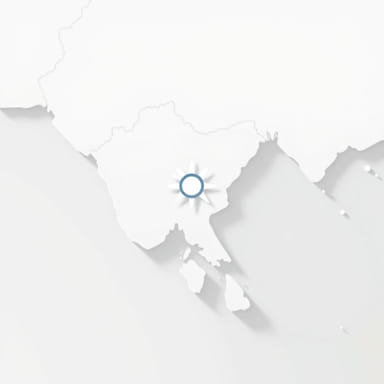
The Srivijaya Empire was one of the most influential maritime kingdoms in Southeast Asian history, thriving between the 7th and 13th centuries. Known for its command over major sea trade routes, Srivijaya’s geographic location played a central role in its rise to power and lasting cultural influence. Rather than being a centralized kingdom, it was a thalassocracy a maritime empire that exerted control through naval supremacy, tributary relationships, and strategic port settlements. Its location allowed it to control vital trade links between China, India, and the rest of the archipelago, marking it as a hub of commerce, culture, and religion.
Strategic Position in Maritime Southeast Asia
The Srivijaya Empire was centered in what is now Palembang, located on the island of Sumatra in present-day Indonesia. This city sat along the Musi River, which opens into the Strait of Malacca one of the busiest and most strategically significant waterways in the world. From this position, Srivijaya was able to monitor, tax, and protect ships passing through the Strait of Malacca, connecting the Indian Ocean with the South China Sea. This gave the empire a unique advantage in controlling international maritime trade.
Furthermore, Srivijaya expanded its influence to include other important port cities along both coasts of Sumatra, the Malay Peninsula (now part of Malaysia and southern Thailand), western Java, and parts of Borneo. These coastal regions provided the empire with a network of trade and military outposts, enhancing its geographic dominance.
Control Over Trade Routes
Srivijaya’s geographic position enabled it to become a powerful intermediary between East and West. It was situated at the crossroads of the India-China maritime trade route, making it an essential stopover for ships. Merchants from China, India, the Middle East, and even Africa would dock at Srivijaya’s ports to trade goods such as spices, resins, gold, ivory, textiles, and ceramics.
- Indian Ocean Trade: Srivijaya benefited from the monsoon wind patterns that facilitated travel between the Indian subcontinent and Southeast Asia.
- South China Sea Trade: Chinese merchants heading south often stopped in Srivijayan territories to restock and exchange goods.
- Spice Trade: The empire acted as a collection and redistribution center for spices sourced from the Moluccas and other parts of the archipelago.
This geographic role helped Srivijaya become one of the wealthiest and most cosmopolitan centers in the pre-modern world, often compared to other powerful maritime empires like Venice or the Abbasid Caliphate.
Expansion and Influence Across the Region
The empire’s location allowed for rapid expansion through naval power. Srivijaya developed an extensive maritime network encompassing various vassal states and tributary ports. These included:
- Southern Thailand (Chaiya, Nakhon Si Thammarat)
- The Malay Peninsula (Kedah, Langkasuka)
- Western Java (possibly Tarumanagara or Sunda Kingdoms)
- Western Borneo
This expansion was not just political but also cultural and religious. The empire facilitated the spread of Mahayana Buddhism throughout the region. Monasteries and temples were established, and Palembang itself became a center of Buddhist learning. The famous Chinese Buddhist monk Yijing traveled to Srivijaya in the 7th century and praised it as a great center of Buddhist scholarship.
Natural Geographic Advantages
Sumatra’s natural geography contributed greatly to Srivijaya’s success. The island was rich in natural resources such as gold, camphor, sandalwood, and spices all highly valued in international markets. Dense rainforests and highland areas protected the inland regions from easy invasion, allowing Srivijaya to focus its defense on coastal areas and naval operations.
Additionally, the numerous rivers like the Musi, Batanghari, and others provided internal transportation networks that connected inland resources to the coast. These rivers also allowed for trade and communication between different parts of the empire, reinforcing centralized control from Palembang.
Relations with Neighboring Regions
Srivijaya’s geographic centrality helped foster diplomatic and commercial relations with major civilizations such as the Tang and Song Dynasties in China, the Gupta and Chola Empires in India, and the Abbasid Caliphate in the Middle East. It sent embassies to China and received recognition as a powerful state in the region. These diplomatic exchanges further cemented Srivijaya’s status as a dominant maritime power.
Conflict and Competition
While the location was advantageous, it also invited conflict. The Chola Empire from southern India launched naval expeditions in the 11th century that reached Srivijaya. In 1025, King Rajendra Chola I attacked and sacked several important Srivijayan ports, including Kedah and possibly Palembang. Although the empire recovered from these invasions, they marked the beginning of its decline as newer trade centers rose in Java and the Malay Peninsula.
Decline and Legacy
By the 13th century, Srivijaya’s control over maritime trade routes weakened. The emergence of rival kingdoms such as Majapahit in Java and the influence of Islamic sultanates in the region contributed to Srivijaya’s gradual loss of territory and influence. Still, the geographic position that once made Srivijaya powerful ensured that the region remained important in global trade for centuries to come.
Modern-day Indonesia and Malaysia still reflect the historical significance of Srivijaya’s geography. The city of Palembang remains a major port, and the Strait of Malacca continues to be a vital artery for global commerce. Archaeological finds in Sumatra and the Malay Peninsula including inscriptions, temples, and relics confirm the empire’s extensive reach and lasting cultural footprint.
The geographic location of the Srivijaya Empire was central to its historical importance and prosperity. Positioned at the heart of Southeast Asian maritime routes, the empire capitalized on its surroundings to become a dominant commercial, cultural, and religious force. Its influence stretched across oceans, connected continents, and left a legacy that still echoes in the geography, culture, and history of the region. Understanding Srivijaya’s geographic setting helps us grasp the broader patterns of trade, power, and cultural exchange in pre-modern Asia.