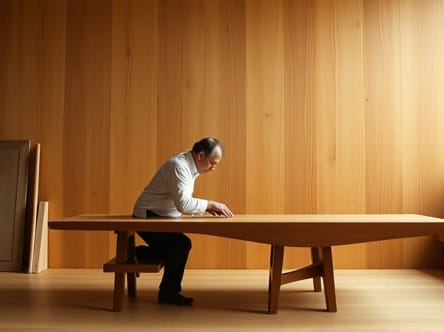
George Nakashima was not just a woodworker he was a visionary artist who saw spiritual potential in every slab of wood he touched. His approach to furniture-making blended Japanese philosophy, American craftsmanship, and a deep reverence for nature. A documentary about George Nakashima’s life and work opens a window into his world, exploring not just the techniques he used, but the values that guided his creations. These films serve as visual archives, preserving the story of a man who turned woodworking into a spiritual practice, and who left behind a legacy that continues to influence design, architecture, and sustainable craft today.
Who Was George Nakashima?
George Nakashima was an American woodworker and architect, born in 1905 in Spokane, Washington, to Japanese immigrant parents. After earning degrees in architecture from the University of Washington and the Massachusetts Institute of Technology, Nakashima traveled extensively, gaining firsthand experience in international design styles. His time in Japan and India was especially influential, shaping his aesthetic and philosophical approach to craftsmanship.
In the 1940s, after being interned during World War II due to his Japanese heritage, Nakashima began developing his woodworking philosophy. He believed that trees had a soul, and that his work as a craftsman was to reveal their inner beauty rather than alter it. This spiritual connection with wood defined the entirety of his career.
A Life Captured on Film
A documentary focused on George Nakashima gives viewers an intimate look into his personal life, design ethos, and the workshop where he brought raw wood to life. These films often include interviews with family members, former apprentices, scholars, and collectors. Archival footage, combined with sweeping views of his handmade furniture, creates a sensory experience that mirrors Nakashima’s relationship with his materials.
Key Themes Explored in the Documentary
Documentaries about George Nakashima tend to focus on several core themes that define his legacy. These themes help contextualize his contributions within the larger framework of 20th-century design and philosophy.
The Spiritual Nature of Craft
Nakashima often spoke of working in harmony with nature. In the documentary, viewers see how he selected wood with care, often using pieces others might discard. He embraced imperfections such as knots, cracks, and live edges, believing they added character and revealed the tree’s life story. For Nakashima, furniture wasn’t just functional it was a vessel for the soul of the tree.
Influence of Japanese and Zen Aesthetics
George Nakashima’s Japanese roots are apparent in both his philosophy and design. The documentary usually highlights how he drew inspiration from Japanese tea houses, Zen minimalism, and wabi-sabi the idea of beauty in imperfection. These influences translated into simple, elegant pieces that retained the natural form of the wood.
Legacy and Family Continuation
Today, the Nakashima legacy is carried forward by his daughter, Mira Nakashima. Many documentaries include footage of Mira in the original New Hope, Pennsylvania studio, discussing her father’s vision and how she honors his legacy. The film often follows her as she continues creating furniture using the same tools, methods, and philosophies passed down by George.
Behind the Scenes: The Nakashima Workshop
A highlight of any documentary on George Nakashima is a tour of the Nakashima compound, which includes his workshop, home, and showroom. Located in a tranquil woodland setting, this place serves as a physical manifestation of Nakashima’s ideals. Every building on the property, many designed by Nakashima himself, reflects his commitment to harmony, simplicity, and natural beauty.
- The Workshop: The heart of the studio, where slabs of walnut, maple, and cherry are transformed into benches, tables, and chairs.
- The Showroom: Displays finished works in their intended form functional art meant to be used and appreciated.
- The Conoid Studio: A geometric structure built in 1957, used today for both creating and exhibiting works.
The documentary often uses these spaces to show how the environment itself supports the craft. It captures the quiet reverence of the workshop, where sawdust and natural light dance across the surface of unfinished wood.
Crafting the Iconic Pieces
One of the most visually compelling segments in a Nakashima documentary is watching the step-by-step process of crafting a signature piece. Viewers witness the careful selection of wood, the precise joinery techniques, and the hand-finishing that brings out the grain. Highlights might include the making of his famous ‘Minguren’ tables or the elegant ‘Conoid’ chairs, each marked by signature butterfly joints and live-edge slabs.
Interviews and Personal Insights
Personal interviews are a crucial element of these documentaries. They often feature Mira Nakashima sharing memories of working alongside her father, along with insights from former apprentices who learned under his strict but respectful guidance. Collectors, historians, and curators contribute perspectives on how Nakashima’s work fits into the larger history of American design.
These conversations reveal Nakashima’s depth of character a man of quiet strength, intellectual curiosity, and spiritual integrity. His commitment to doing meaningful work over commercial mass production resonates deeply in today’s culture of fast manufacturing and disposable goods.
Global Influence and Cultural Legacy
The documentary typically explores how George Nakashima’s work impacted not only American furniture design but also global conversations about sustainability, simplicity, and handmade art. His philosophy aligns with modern principles of ethical design, making his work more relevant than ever.
Nakashima’s pieces can be found in major museums, private collections, and sacred spaces around the world. The United Nations even commissioned him to build a ‘Peace Altar,’ using wood from all continents, symbolizing unity and spiritual balance through craft.
A Lasting Message
At its core, any documentary about George Nakashima is a meditation on patience, respect, and purpose. It teaches that true craftsmanship goes beyond skill it is about being in tune with material, history, and the world around us. Nakashima’s message endures in every plank of wood he touched and in every artisan who seeks to follow his path.
Why the Documentary Matters
In an age where mass production dominates the furniture industry, George Nakashima’s story reminds us of the value of slow, intentional work. A well-made documentary helps preserve his voice and philosophy, giving future generations a chance to connect with a deeper form of artistry. These films are more than just biographies they are tributes to a man who elevated woodworking into a spiritual practice and who saw every tree as a partner in creation.
Takeaways from the Documentary
- George Nakashima fused Japanese tradition and American craftsmanship to create soulful furniture.
- He believed in honoring the natural form of wood, rather than shaping it into something unnatural.
- The Nakashima studio in Pennsylvania remains an active workshop and pilgrimage site for design lovers.
- Documentaries reveal his philosophy through visuals, interviews, and behind-the-scenes moments.
- His legacy continues through Mira Nakashima and a new generation of artisans inspired by his work.
By watching a documentary on George Nakashima, viewers not only learn about the man and his creations but also gain a deeper appreciation for the timeless values of beauty, nature, and quiet craftsmanship. It is a reminder that true design is not only about aesthetics, but also about spirit and story.