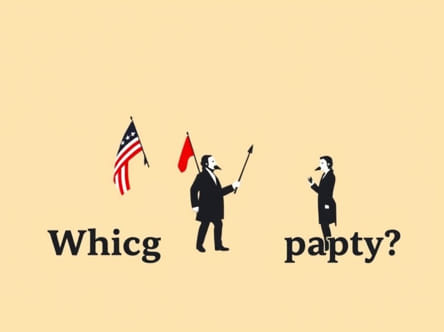
The Whig Party was one of the major political parties in the United States during the mid-19th century, and it emerged during a time of growing tension over presidential power, economic policy, and regional divisions. Formed in the 1830s, the Whig Party stood in opposition to the policies of President Andrew Jackson and his Democratic supporters. Its creation was driven by a coalition of individuals who feared the rise of executive authority and sought a more balanced approach to governance. Understanding why the Whig Party was formed requires exploring the political, economic, and ideological factors that shaped the early American republic.
Origins of the Whig Party
Opposition to Andrew Jackson
The most direct cause for the formation of the Whig Party was resistance to President Andrew Jackson’s leadership style and policies. Jackson, a Democrat, was accused by his critics of ruling like a monarch rather than an elected leader. His opponents especially disliked his use of the presidential veto and his dismantling of the Second Bank of the United States, which they saw as an attack on economic stability.
Jackson’s critics began to label him as King Andrew, drawing parallels between his exercise of executive power and the tyranny of British monarchs. In response, his opponents adopted the name ‘Whigs,’ a reference to the British Whig Party, which had historically opposed royal absolutism. This was a symbolic way to portray themselves as defenders of republican values against centralized tyranny.
The Bank War and Economic Policy
One of the central issues that triggered the Whig Party’s formation was the Bank War. Jackson vehemently opposed the Second Bank of the United States, which he viewed as an institution that favored the wealthy elite and undermined democracy. In 1832, he vetoed a bill to renew the Bank’s charter, and later, he withdrew federal funds, effectively killing the bank.
Many Americans particularly merchants, bankers, and urban workers believed that Jackson’s actions would destabilize the economy. These individuals, who valued a strong national banking system and federally-funded infrastructure projects, began to rally around a new party that would promote economic modernization and national development. These economic disagreements played a major role in bringing together diverse political factions under the Whig banner.
Ideological Foundations of the Whig Party
Support for the American System
Another foundational pillar of the Whig Party was its support for Henry Clay’s American System. This economic program promoted a protective tariff to shield American industries, a national bank to regulate currency, and federal investment in internal improvements like roads, bridges, and canals.
Whigs believed these policies would stimulate economic growth, unify the nation, and promote industrialization. They contrasted this vision with Jacksonian Democrats, who favored limited government and agricultural interests, particularly those of the South. The Whigs, therefore, appealed more to northern business leaders and entrepreneurs who were interested in building a strong national economy through government support.
Championing Legislative Power
The Whigs also emphasized the importance of legislative supremacy over the executive branch. They believed Congress should be the most powerful arm of government, a view that reflected their distrust of Jackson’s bold use of presidential authority. The party attracted many former National Republicans and moderate Democrats who were wary of executive overreach.
In this regard, the Whigs saw themselves as protectors of constitutional checks and balances. They feared that a strong presidency could lead to demagoguery or tyranny, and they promoted a political system rooted in compromise, consensus, and representative decision-making.
Coalition of Regional Interests
Broad-Based Membership
One reason for the initial success of the Whig Party was its ability to unite a wide range of regional and political interests. The party drew support from former Federalists, National Republicans, anti-Masons, and disaffected Democrats. Though these groups often disagreed on specific issues, they shared a common opposition to Jacksonian populism and authoritarianism.
Whigs found strong support in the North and among urban professionals, industrialists, and Protestant reformers. In the South, their support came from those who prioritized internal improvements and commercial growth over Jackson’s agricultural populism. The party’s inclusive coalition allowed it to compete successfully in national elections during the 1840s.
Presidential Victories
The Whig Party saw two of its candidates win the presidency: William Henry Harrison in 1840 and Zachary Taylor in 1848. Both men were war heroes and seen as unifying national figures. However, both presidencies were short-lived Harrison died just a month after taking office, and Taylor died after only 16 months. Their deaths created challenges for party unity and leadership continuity.
Whig Policies and Reforms
Infrastructure and Innovation
During its peak, the Whig Party pushed for policies that promoted infrastructure, industrial development, and public education. Whigs supported government investment in railroads, canals, and telegraphs, viewing these as essential to national progress. They also supported efforts to modernize the economy and promote innovation, aligning themselves with the emerging industrial revolution.
Social Reform Movements
Many Whigs were aligned with religious and moral reform movements of the time. They supported temperance, public schools, and in some cases, abolition. Although the party was not united on slavery, it attracted many reform-minded citizens who believed in moral responsibility and civic virtue.
Decline and Legacy
Sectional Tensions Over Slavery
The issue of slavery ultimately led to the decline of the Whig Party. As tensions between North and South escalated in the 1850s, the party struggled to maintain unity. Northern Whigs increasingly opposed the expansion of slavery, while many Southern Whigs defended it. This division became unmanageable, particularly after the passage of the Kansas-Nebraska Act in 1854, which allowed territories to decide for themselves whether to allow slavery.
Collapse and Rise of New Parties
By the late 1850s, the Whig Party had collapsed, and its members joined new political movements. Many Northern Whigs helped form the Republican Party, which took a firm anti-slavery stance. Others drifted toward the Know-Nothing Party or returned to the Democratic Party. Though the Whig Party disappeared from the political scene, its ideas lived on through other political groups.
Enduring Influence
The Whig Party’s legacy includes its support for economic modernization, its commitment to balanced government, and its role in shaping mid-19th-century political debates. It also played a crucial role in defining opposition to unchecked executive power. While the party no longer exists, its principles influenced the development of modern American political thought and institutions.
The Whig Party was formed as a reaction to what its founders saw as an abuse of presidential power under Andrew Jackson. It was built on a foundation of economic nationalism, legislative supremacy, and a belief in moral governance. Drawing together a broad coalition of interests, the party offered an alternative vision for America’s future one centered on progress through federal action and constitutional restraint. Though the Whig Party eventually dissolved, it left a lasting imprint on the structure and evolution of American politics.