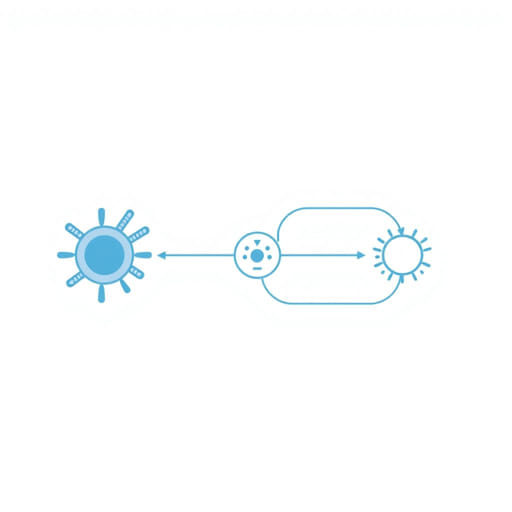
The classical pathway of the complement system is a critical component of the innate and adaptive immune responses, providing a first line of defense against pathogens and facilitating the clearance of immune complexes and apoptotic cells. It represents one of the three complement activation pathways, alongside the lectin and alternative pathways, and is primarily triggered by antibodies bound to antigens. Understanding the classical pathway is essential for comprehending how the immune system identifies and neutralizes threats while maintaining homeostasis. This pathway involves a cascade of protein interactions that amplify immune responses and lead to the formation of the membrane attack complex, ultimately resulting in pathogen lysis and enhanced phagocytosis.
Overview of the Complement System
The complement system consists of over 30 soluble and membrane-bound proteins that work together to protect the host from infection. Its functions include opsonization, inflammation, chemotaxis, and direct killing of pathogens. The system can be activated via three pathways the classical, lectin, and alternative pathways. Each pathway converges on the activation of the central component C3, which plays a pivotal role in immune defense. The classical pathway is unique because it is triggered specifically by antigen-antibody complexes, linking innate immunity with adaptive immune responses.
Triggering the Classical Pathway
The classical pathway is initiated when the complement protein C1 recognizes and binds to antibodies that are attached to antigens on the surface of pathogens or infected cells. Immunoglobulin M (IgM) and Immunoglobulin G (IgG) are the primary antibodies that activate this pathway. When antibodies bind to antigens, they undergo a conformational change that allows the C1 complex to attach, leading to a series of enzymatic activations. This connection between antibodies and the complement system ensures that the immune response is both specific and effective in targeting invading microorganisms.
The C1 Complex
The C1 complex is the first component of the classical pathway and consists of three subcomponents C1q, C1r, and C1s. C1q binds directly to the Fc region of antibodies that are attached to antigens. Upon binding, C1q undergoes a structural change that activates C1r, which subsequently activates C1s. The activation of C1s is crucial because it initiates the cleavage of downstream complement proteins, specifically C4 and C2, which form the classical C3 convertase.
Activation of C4 and C2
Activated C1s cleaves C4 into C4a and C4b. The C4b fragment binds covalently to the pathogen surface near the site of antibody attachment, providing a platform for further complement protein assembly. C2 then binds to C4b and is cleaved by C1s into C2a and C2b, resulting in the formation of the C4b2a complex, also known as the classical C3 convertase. This enzyme complex is essential for the amplification phase of the classical pathway, as it cleaves C3 into C3a and C3b, initiating multiple immune defense mechanisms.
C3 Activation and Opsonization
C3 activation is a critical step in the classical pathway. The C3 convertase cleaves C3 into C3a and C3b. C3b attaches to the surface of pathogens, tagging them for destruction in a process called opsonization. Phagocytic cells, such as macrophages and neutrophils, recognize C3b through complement receptors, facilitating the engulfment and digestion of the pathogen. Meanwhile, C3a functions as an anaphylatoxin, promoting inflammation by stimulating mast cells and recruiting immune cells to the site of infection. This dual role of C3 ensures both direct and indirect defense against microbial invaders.
Formation of the Classical C5 Convertase
The C4b2a complex can bind an additional C3b molecule to form C4b2a3b, which acts as the classical C5 convertase. This enzyme cleaves C5 into C5a and C5b. C5a is a potent anaphylatoxin and chemoattractant, enhancing inflammatory responses and recruiting neutrophils and monocytes to the infection site. C5b initiates the assembly of the terminal complement components, leading to the formation of the membrane attack complex (MAC). The MAC is capable of forming pores in the pathogen’s cell membrane, resulting in lysis and cell death, which is a direct mechanism for eliminating invasive microorganisms.
Membrane Attack Complex (MAC)
The membrane attack complex is the terminal step of the classical pathway and consists of complement proteins C5b, C6, C7, C8, and multiple C9 molecules. C5b binds sequentially to C6, C7, and C8, which insert into the pathogen membrane. C9 molecules then polymerize to form a transmembrane pore, disrupting cellular integrity and causing cell lysis. The formation of MAC is particularly effective against Gram-negative bacteria, enveloped viruses, and certain eukaryotic pathogens, providing a direct antimicrobial effect of the complement system.
Regulation of the Classical Pathway
To prevent excessive or inappropriate complement activation that could damage host tissues, the classical pathway is tightly regulated. Regulatory proteins such as C1 inhibitor (C1-INH) prevent uncontrolled activation of C1. Other regulators like decay-accelerating factor (DAF) and membrane cofactor protein (MCP) inhibit the formation and activity of C3 and C5 convertases. These safeguards ensure that complement activity is focused on pathogens and does not harm the host’s own cells, maintaining immune system balance.
Clinical Significance
The classical pathway plays a critical role in defending against infections and clearing immune complexes. Deficiencies or dysfunctions in complement components can lead to increased susceptibility to bacterial infections, autoimmune diseases, and immune complex-related disorders. For example, C1q deficiency is associated with systemic lupus erythematosus, highlighting the pathway’s importance in immune regulation. Therapeutic interventions targeting the classical pathway are also being explored to modulate immune responses in various diseases.
Research and Therapeutic Applications
Understanding the classical pathway has significant implications for medical research and treatment development. Drugs that inhibit specific components of the pathway can help manage autoimmune diseases and inflammatory conditions. Conversely, enhancing complement activity may improve responses to vaccines and bacterial infections. Ongoing research continues to explore the balance between complement activation and regulation, aiming to harness its protective effects while minimizing potential tissue damage.
The classical pathway of the complement system is an essential mechanism that connects innate and adaptive immunity. By initiating a cascade of protein activations, it promotes pathogen recognition, opsonization, inflammation, and direct cell lysis through the membrane attack complex. Its proper regulation is crucial for preventing host tissue damage and maintaining immune system balance. Understanding this pathway not only provides insight into fundamental immune processes but also opens avenues for therapeutic interventions in infections, autoimmune diseases, and inflammatory disorders. Continued research on the classical complement pathway will enhance our ability to manipulate immune responses for better human health outcomes.