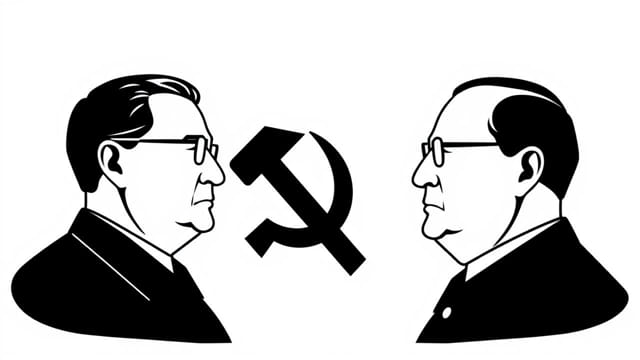
Leonid Brezhnev and Erich Honecker were two pivotal figures during the Cold War era, representing the Soviet Union and East Germany, respectively. Their leadership defined much of the political, social, and ideological landscape of the Eastern Bloc from the late 1960s through the 1980s. Both men were committed communists who maintained a strong alliance between their countries while managing the challenges posed by the Cold War tensions, economic stagnation, and increasing pressures for reform. Understanding their relationship and leadership styles provides valuable insight into the dynamics of communist governance during a critical period of 20th-century history.
Leonid Brezhnev: Soviet Leadership and Influence
Leonid Brezhnev served as the General Secretary of the Communist Party of the Soviet Union from 1964 until his death in 1982. His tenure was marked by a focus on maintaining Soviet dominance within the Eastern Bloc and expanding influence globally, while dealing with both internal and external challenges.
Brezhnev’s Domestic Policies
Brezhnev’s era is often characterized by political stability but economic stagnation, sometimes referred to as the Era of Stagnation. His government emphasized heavy industry, military buildup, and centralized control, which ultimately hindered innovation and economic growth. Despite this, Brezhnev maintained strict control over political dissent and reinforced the Soviet ideological framework.
Foreign Policy and the Brezhnev Doctrine
One of Brezhnev’s most significant contributions to Cold War politics was the formulation of the Brezhnev Doctrine. This policy asserted the right of the Soviet Union to intervene in any socialist country if communist rule was threatened. The doctrine justified Soviet military interventions, such as the invasion of Czechoslovakia in 1968, and had a profound impact on relations within the Eastern Bloc, including East Germany.
Erich Honecker: East Germany’s Staunch Communist Leader
Erich Honecker led the German Democratic Republic (East Germany) as the General Secretary of the Socialist Unity Party from 1971 to 1989. His leadership focused on maintaining the socialist state, ensuring loyalty to Moscow, and suppressing opposition within East Germany.
Honecker’s Political and Social Policies
Honecker prioritized strengthening the state security apparatus, notably the infamous Stasi secret police, to control dissent. He also invested heavily in social programs, housing, and education to promote socialist ideals. However, economic challenges and restrictions on freedom led to growing dissatisfaction among East Germans.
Relationship with the Soviet Union
Honecker was a loyal ally of Brezhnev, closely aligning East Germany’s policies with Soviet directives. The close cooperation ensured that East Germany remained one of the most tightly controlled and ideologically rigid states within the Eastern Bloc. Honecker depended on Soviet political and economic support to sustain his regime.
The Dynamics Between Brezhnev and Honecker
The relationship between Leonid Brezhnev and Erich Honecker was emblematic of the broader ties between the Soviet Union and its satellite states. While Brezhnev held the ultimate authority, Honecker exercised significant control over East Germany, operating within the limits set by Moscow.
Mutual Support and Political Alignment
Brezhnev and Honecker shared a commitment to preserving socialist governance and suppressing any reformist or dissenting movements. Their governments coordinated on security matters, economic planning, and ideological campaigns, reinforcing the division of Europe during the Cold War.
Managing Challenges within the Eastern Bloc
Both leaders faced pressures from their populations, including demands for greater freedoms and economic reforms. While Brezhnev’s policies leaned toward maintaining the status quo, Honecker occasionally introduced limited reforms aimed at improving living standards. However, these were carefully controlled to avoid undermining socialist rule.
Legacy and Historical Impact
The legacies of Leonid Brezhnev and Erich Honecker are deeply intertwined with the Cold War’s complex history. Their leadership represents a period marked by ideological rigidity, repression, and the eventual signs of systemic decay within communist regimes.
Brezhnev’s Legacy
Brezhnev’s rule is remembered for its mix of political stability and economic decline. While he maintained Soviet influence globally, his resistance to significant reforms contributed to the eventual unraveling of the Soviet system in the late 1980s and early 1990s.
Honecker’s Legacy
Honecker’s tenure ended as East Germany faced mounting unrest, culminating in the fall of the Berlin Wall in 1989. His legacy is often associated with repression and the failure to adapt to changing political realities, which led to the collapse of the East German state and German reunification.
Leonid Brezhnev and Erich Honecker played crucial roles in shaping the political landscape of the Eastern Bloc during the Cold War. Their leadership was defined by a shared commitment to communism, close cooperation, and an emphasis on control and stability. However, their resistance to reform and inability to address underlying economic and social issues set the stage for the eventual collapse of communist regimes in Europe. Studying their lives and partnership offers important lessons about governance, ideology, and the challenges of political leadership in times of profound change.