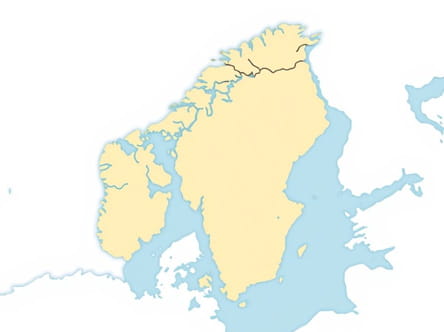
Lapland is a fascinating region that sparks curiosity and imagination, often associated with snow-covered landscapes, the Northern Lights, and the legendary home of Santa Claus. However, when people try to locate Lapland on a map, they may discover that it does not correspond to a single country or a clearly defined political region. Instead, Lapland is a vast cultural and geographical area in Northern Europe that stretches across several countries. Understanding where Lapland is located involves more than just looking at borders; it also requires exploring the broader geography, cultural identity, and historical context of this Arctic region.
Geographical Location of Lapland
Countries That Include Parts of Lapland
Lapland is not a country itself, but a large region that spans across four northern countries in Europe
- Norway
- Sweden
- Finland
- Russia
Each country has its own portion of Lapland, often called by different names depending on the local language and administrative divisions. For example, in Finland, Lapland is recognized as one of the official regions (or maakunta”), while in Sweden and Norway, it is often referred to in terms of provinces or Sami cultural areas. In Russia, the Kola Peninsula contains the easternmost part of what is considered Lapland.
Position on the World Map
Lapland is situated in the northernmost part of Europe, inside the Arctic Circle. If you are looking for Lapland on a world map, focus on the far north of the Scandinavian Peninsula and parts of northwestern Russia. It covers much of the land above the 66th parallel north. Major towns in Lapland include Rovaniemi in Finland, Kiruna in Sweden, and Kautokeino in Norway.
Physical Features of Lapland
Climate and Environment
Lapland is known for its subarctic and arctic climate. Winters are long, cold, and snowy, while summers are short and cool. During the winter months, the region experiences polar nights, where the sun does not rise for weeks. In contrast, summer brings the Midnight Sun, where the sun remains visible even at midnight.
The landscape of Lapland includes
- Taiga forests and tundra plains
- Mountains, especially in the Scandinavian portions
- Numerous lakes, rivers, and bogs
- Vast stretches of unspoiled nature
Wildlife and Natural Attractions
Lapland is home to reindeer, moose, bears, lynx, and various Arctic birds. It is also a top destination for witnessing the aurora borealis (Northern Lights) due to its clear skies and high latitude. National parks, such as Urho Kekkonen in Finland and Abisko in Sweden, are part of the region’s attraction for tourists and nature lovers.
Cultural and Ethnic Identity of Lapland
The Indigenous Sami People
One of the most important aspects of Lapland is its indigenous population, the Sami people. They are the only officially recognized indigenous group in the European Union. The traditional territory of the Sami, known as Sápmi, overlaps with the Lapland area and extends across the same four countries.
The Sami have their own languages, customs, and traditional livelihoods, such as reindeer herding, fishing, and handicrafts. Their cultural presence adds significant historical and social depth to the identity of Lapland. Sami flags, festivals, and education systems continue to preserve this unique heritage.
Language and Religion
The main languages spoken in Lapland include Finnish, Swedish, Norwegian, Russian, and various Sami languages. Christianity is the predominant religion, but Sami spiritual traditions are still remembered and sometimes practiced in modern forms.
Administrative Divisions and Regional Terms
Lapland in Finland
In Finland, Lapland (called “Lappi” in Finnish) is an official region with its own administrative capital, Rovaniemi. This part of Lapland is perhaps the most internationally recognized due to its connection with Santa Claus tourism and Northern Lights tours. It is also home to the University of Lapland and several indigenous organizations.
Lapland in Sweden and Norway
In Sweden, Lapland refers to the province known as “Lappland,” which includes areas like Kiruna, Gällivare, and Jokkmokk. Although the term is still used, Sweden’s administrative divisions now follow county lines rather than historical provinces.
In Norway, the region that overlaps with Lapland is part of Finnmark and Troms counties. The Sami population in this area is politically active and culturally influential. Norway recognizes Sami as an official language in several municipalities.
Lapland in Russia
Russia’s portion of Lapland lies mainly in the Murmansk Oblast, particularly on the Kola Peninsula. This area includes Sami settlements, though they are fewer than in the Scandinavian countries. The Russian government has designated some territories for Sami communities, but cultural preservation faces more challenges here.
Tourism and Economy in Lapland
Key Tourist Attractions
Lapland is a major destination for both winter and summer tourism. Some popular activities and sights include
- Husky sledding and reindeer safaris
- Snowmobiling and ice fishing
- Visiting Santa Claus Village in Rovaniemi
- Hiking in Arctic national parks
- Seeing the Northern Lights and Midnight Sun
These attractions draw visitors from all over the world, contributing significantly to the regional economy, especially in Finland and Sweden.
Other Economic Activities
Besides tourism, Lapland’s economy includes mining, forestry, fishing, and traditional Sami livelihoods. The region is also increasingly investing in sustainable energy, including wind and hydroelectric power. Despite its remote location, Lapland plays a growing role in the green economy of Northern Europe.
How to Identify Lapland on a Map
Tips for Map Reading
To find Lapland on a map, follow these steps
- Locate the northernmost parts of Finland, Sweden, Norway, and Russia.
- Look above the Arctic Circle, which cuts through the region around 66.5°N latitude.
- Identify major towns like Rovaniemi (Finland), Kiruna (Sweden), and Murmansk (Russia).
- Notice the large stretches of wilderness, few road networks, and proximity to the Barents Sea and Arctic Ocean.
Map Labels and Regional Names
Depending on the map, Lapland may be labeled directly, especially in Finland. In Sweden and Norway, the area might be identified by provinces or Sami territories. Russian maps may refer to the Kola Peninsula. Using both physical and political maps helps provide a complete view of where Lapland is located.
Understanding Lapland’s Place on the Map
Lapland is not a single country or a sharply defined region, but a broad cultural and geographic area that spans the Arctic north of Europe. It lies within Finland, Sweden, Norway, and Russia, covering some of the coldest, most remote, yet most enchanting landscapes on the continent. Knowing where Lapland is on the map involves understanding its physical geography, climate, indigenous heritage, and unique attractions. From the magical lights of the aurora borealis to the deep traditions of the Sami people, Lapland offers a rich and diverse experience that extends far beyond what can be captured by borders alone. Whether you are a traveler, a student of geography, or simply curious, Lapland’s location and identity offer something memorable for everyone.