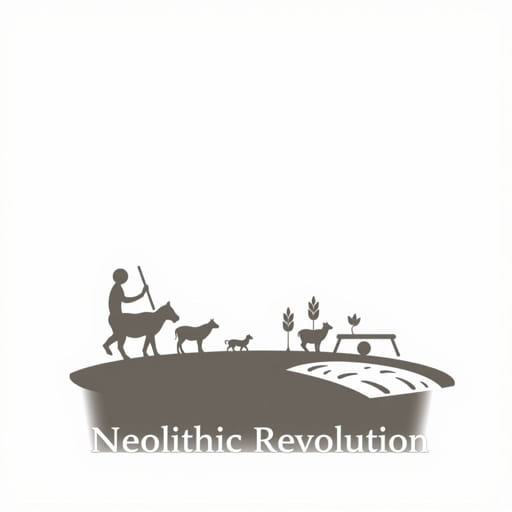
The concept of the Neolithic Revolution, as proposed by archaeologist V. Gordon Childe, represents a major turning point in human history. This transformative period, marked by the shift from hunting and gathering to agriculture and settlement, redefined how human societies functioned. Gordon Childe was one of the first scholars to conceptualize this dramatic change as a revolution, emphasizing its profound impact on the development of civilization. His work not only introduced a new understanding of prehistoric life but also highlighted the significance of economic and social change during the Neolithic era. By analyzing archaeological findings, Childe provided a comprehensive explanation of how early humans began to control their environment in unprecedented ways.
Understanding the Neolithic Revolution
The Term ‘Neolithic Revolution’
Gordon Childe coined the phrase Neolithic Revolution in the 1930s to describe the radical transformation of human societies during the Neolithic Age. According to Childe, this revolution involved the transition from nomadic lifestyles based on hunting and gathering to settled agricultural communities. This change did not occur overnight but evolved gradually over generations. However, its effects were so significant that Childe regarded it as revolutionary.
This period saw the domestication of plants and animals, the development of permanent dwellings, and the creation of surplus food. These innovations allowed populations to grow and gave rise to complex societies. In Childe’s view, the Neolithic Revolution was not just a technological shift but a complete overhaul of the human relationship with nature and community structure.
Causes Behind the Shift to Agriculture
Childe argued that environmental and economic factors played a central role in this transition. As the Ice Age ended and climates warmed, large herds of game animals became scarce in certain regions, pushing human groups to seek new food sources. People began to experiment with planting seeds and domesticating animals, leading to the gradual rise of farming.
The Fertile Crescent, encompassing parts of modern-day Iraq, Syria, Turkey, and Iran, was one of the first regions to see these changes. The abundance of wild cereals and domesticable animals in this area made it a suitable setting for agricultural development. Childe believed that these geographical advantages were key to the early success of farming communities.
Key Features of the Neolithic Revolution
Domestication of Plants and Animals
The domestication process fundamentally altered the way humans interacted with the natural world. Early Neolithic farmers selectively bred plants for desirable traits such as larger seeds or more palatable fruit. Wheat, barley, and legumes became staple crops. Simultaneously, humans began domesticating animals like sheep, goats, and cattle, which provided meat, milk, and labor.
- Domesticated plants offered reliable food sources throughout the year.
- Domesticated animals contributed not only food but also clothing (wool and hides) and fertilizer (manure).
- Farming allowed for food surplus, which led to population growth and labor specialization.
Permanent Settlements
Before the Neolithic period, human groups lived in temporary shelters and moved frequently in search of food. The advent of agriculture made it possible to remain in one place, leading to the construction of permanent homes and villages. One of the most famous examples of early Neolithic settlements is Çatalhöyük in modern Turkey, which provides insight into the lives of early agriculturalists.
Permanent settlements brought new social dynamics. People began to form communities with shared responsibilities and resources. These societies laid the groundwork for social hierarchies, governance, and cooperation beyond kinship ties.
Childe’s Theoretical Contributions
Urban Revolution and the Next Step
Gordon Childe saw the Neolithic Revolution as a precursor to another major societal leap: the Urban Revolution. According to his theory, once agriculture was established and food surplus became common, some individuals could focus on tasks other than food production. This division of labor led to the rise of artisans, priests, rulers, and merchants.
The Urban Revolution involved the development of cities, writing systems, organized religion, and complex political structures. Childe argued that without the Neolithic Revolution, none of these advancements would have been possible. The surplus of food not only supported larger populations but also enabled innovation and cultural growth.
Criticism and Modern Re-evaluation
While Childe’s ideas were groundbreaking, they have also been the subject of debate. Some modern archaeologists believe that the transition to agriculture was not as sudden or revolutionary as Childe proposed. Instead, they argue it was a slow and varied process, with many societies continuing to rely on hunting and gathering alongside farming for centuries.
Others have challenged Childe’s focus on environmental determinism and the idea of a linear progression toward civilization. Nevertheless, his emphasis on the importance of material and economic factors remains influential in archaeological theory.
Impact on Human Society
Social and Economic Changes
The Neolithic Revolution marked the beginning of economic diversification. With stable food supplies, people could engage in other activities such as tool-making, weaving, and pottery. Trade between communities also became more common, fostering cultural exchange and innovation.
Socially, this period saw the emergence of inequality. As individuals or families accumulated surplus goods and land, differences in wealth and status began to appear. These disparities laid the foundation for more stratified societies in the future.
Cultural and Religious Developments
Permanent settlements and predictable agricultural cycles influenced religious beliefs and practices. People began to worship fertility deities, honor the seasons, and construct shrines or temples. Burials became more elaborate, reflecting beliefs in an afterlife and a growing concern with legacy and social status.
Art and symbolic expression also flourished. Wall paintings, figurines, and carvings from the Neolithic period provide evidence of early spirituality and cultural identity.
Gordon Childe’s interpretation of the Neolithic Revolution reshaped how historians and archaeologists understand the origins of civilization. By identifying the shift from foraging to farming as a critical moment in human development, he highlighted the interconnectedness of environment, technology, and society. Although modern research has added nuance to Childe’s theory, his core idea that agriculture fundamentally changed human life remains a central concept in the study of prehistory. The Neolithic Revolution not only altered how humans sustained themselves but also paved the way for the complex world we live in today.