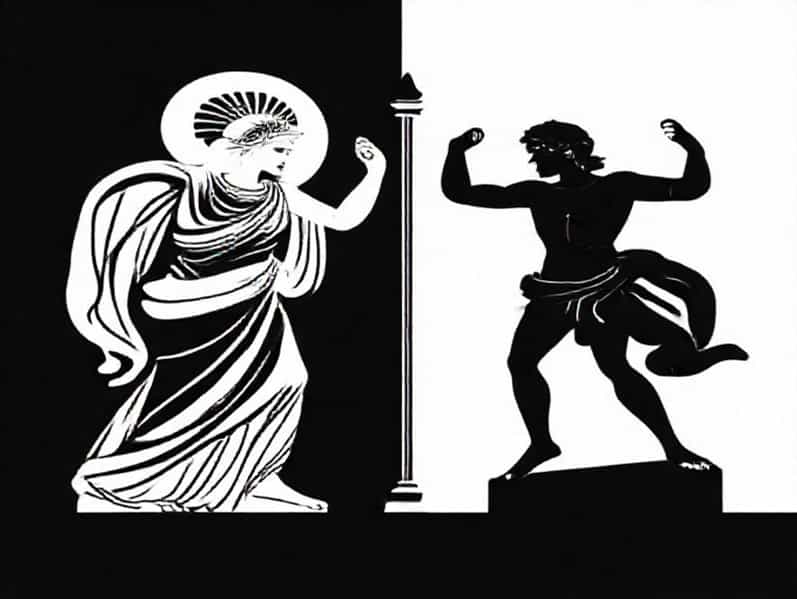
In the study of literature, contrasting forces often shape the narrative, themes, and characters within a work. One of the most influential dichotomies in literary theory is the Apollonian versus Dionysian concept, first articulated by the German philosopher Friedrich Nietzsche in his book The Birth of Tragedy. These two opposing principles, derived from the ancient Greek gods Apollo and Dionysus, represent different aspects of human experience and artistic expression. The Apollonian embodies order, reason, and harmony, while the Dionysian symbolizes chaos, passion, and instinct. Understanding this contrast offers a profound lens through which to analyze literature, revealing deeper insights into the tension between structure and freedom, logic and emotion, or restraint and indulgence in storytelling.
Origins of the Apollonian and Dionysian Concepts
Friedrich Nietzsche introduced the Apollonian and Dionysian dichotomy as a framework to interpret Greek tragedy, suggesting that the interplay between these forces created the depth and complexity of the art form. Apollo, the god of the sun, light, and prophecy, represents clarity, order, and rationality. In contrast, Dionysus, the god of wine, ecstasy, and fertility, embodies instinct, emotion, and unrestrained creativity. Nietzsche argued that Greek tragedies achieved their power by balancing these two forces Apollonian structure provided coherence, while Dionysian chaos injected life, emotion, and intensity.
Apollonian Characteristics
- Order and structure in storytelling
- Emphasis on reason, logic, and intellectual clarity
- Focus on form, symmetry, and aesthetic beauty
- Self-control and restraint in characters and plot
- Reflection, contemplation, and moral clarity
The Apollonian aspect of literature often manifests in works that prioritize plot coherence, structured narrative arcs, and disciplined character development. It represents the human desire to understand and categorize experiences, turning chaos into manageable and meaningful stories.
Dionysian Characteristics
- Chaos, unpredictability, and emotional intensity
- Celebration of instinct, passion, and sensuality
- Emphasis on collective experience, ritual, and ecstasy
- Subversion of order and conventional norms
- Exploration of primal instincts and the unconscious
The Dionysian element, in contrast, emphasizes the raw, untamed aspects of human existence. Literature with Dionysian influence often highlights emotions over reason, spontaneity over structure, and ecstasy over restraint. It evokes the deep, sometimes unsettling truths of the human condition, where boundaries are blurred and conventional logic gives way to experience and feeling.
Apollonian and Dionysian in Narrative Structure
The interplay between Apollonian and Dionysian forces shapes narrative structure in profound ways. Apollonian-driven narratives tend to follow a logical sequence, with clear exposition, rising action, climax, and resolution. The storytelling is disciplined, aiming for harmony and coherence. Characters are developed methodically, and their decisions often reflect reason and forethought. These stories appeal to readers who seek clarity, understanding, and a sense of order in the unfolding events.
Examples of Apollonian Narratives
- Classic epics like Homer’s The Iliad and The Odyssey, which rely on structured storytelling and heroic ideals.
- Jane Austen’s novels, emphasizing social order, reasoned dialogue, and moral clarity.
- Detective fiction, where logical deduction and structured investigation are central.
In contrast, Dionysian narratives often disrupt conventional plot structures, embracing unpredictability and emotional intensity. These works focus less on logical sequence and more on the experience itself, exploring themes of passion, chaos, and transformation. Characters in Dionysian stories may act impulsively or irrationally, reflecting the dominance of instinct over reason. The narrative itself may break traditional rules, using fragmented structure, stream of consciousness, or heightened sensory imagery to convey the intensity of human experience.
Examples of Dionysian Narratives
- Fyodor Dostoevsky’s Crime and Punishment, exploring inner turmoil, moral ambiguity, and extreme psychological states.
- William Blake’s poetry, emphasizing visionary ecstasy and emotional intensity.
- Modernist literature, such as James Joyce’s Ulysses, with its fragmented and experimental narrative forms.
The Interplay of Apollonian and Dionysian Forces
While some works lean heavily toward one principle, many of the most compelling literature integrates both Apollonian and Dionysian elements. The tension between order and chaos, reason and emotion, creates depth, complexity, and resonance. In Greek tragedy, for example, the structured dialogue and chorus (Apollonian) are juxtaposed with moments of intense emotional release and catharsis (Dionysian). This balance allows readers to engage intellectually while experiencing profound emotional responses.
Balancing the Two Forces
- Apollonian elements provide clarity, allowing readers to navigate complex plots and themes.
- Dionysian elements inject vitality, emotion, and unpredictability, making the narrative immersive.
- The combination encourages reflection on both rational thought and human instinct.
By balancing these forces, literature mirrors the duality of human experience, acknowledging that life is composed of both structure and chaos, reason and passion. Authors who skillfully combine Apollonian and Dionysian aspects create works that resonate across time, appealing to both the intellect and the emotions of readers.
Applications in Literary Analysis
The Apollonian versus Dionysian framework provides a valuable tool for literary analysis. Critics and scholars use it to explore thematic contrasts, character development, and stylistic choices within a work. For example, analyzing a novel through this lens might reveal how an author balances reason and emotion, or how the narrative structure reflects the tension between societal order and human instinct. It also helps readers understand the deeper psychological and philosophical dimensions of literature, highlighting the interplay between conscious control and unconscious impulse.
Examples of Analytical Insights
- Examining Shakespeare’s tragedies, such as Hamlet, through the lens of Apollonian restraint versus Dionysian passion.
- Exploring the tension between social order and primal instincts in Charlotte Brontë’s Jane Eyre.
- Understanding modernist literature’s fragmented style as a Dionysian disruption of Apollonian conventions.
The Apollonian and Dionysian concepts in literature offer a profound framework for understanding the dual nature of storytelling and human experience. Apollonian elements provide structure, reason, and harmony, while Dionysian elements introduce chaos, passion, and emotional intensity. Together, they create the dynamic tension that makes literature engaging, meaningful, and reflective of the complexities of life. From Greek tragedy to modern novels, the interplay of these forces continues to influence narrative form, character development, and thematic exploration, highlighting the enduring relevance of Nietzsche’s insight. Recognizing the Apollonian and Dionysian in literature allows readers and scholars alike to appreciate not only the artistry of storytelling but also the ways in which literature mirrors the balance between order and chaos in human existence.
By analyzing works through this duality, we gain a richer understanding of literary craft, emotional resonance, and philosophical depth. The Apollonian versus Dionysian framework remains a timeless tool for exploring the interplay of reason and instinct, structure and passion, offering insights that enhance both reading and interpretation. Ultimately, this dichotomy underscores the power of literature to capture the full spectrum of human experience, providing a lens through which to examine the complexities, contradictions, and beauty of the written word.