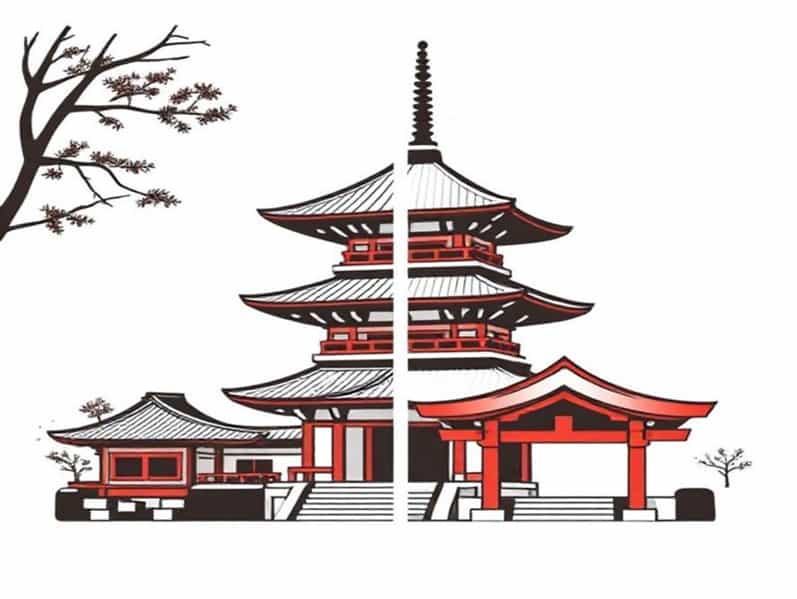
In Japan, two of the most iconic religious structures are Buddhist temples and Shinto shrines, each reflecting distinct spiritual traditions, architectural styles, and cultural practices. While both serve as places of worship and community gathering, they differ significantly in their religious symbolism, rituals, and historical origins. Understanding the differences and similarities between Buddhist temples and Shinto shrines provides insight into Japanese culture, religious syncretism, and the ways in which spiritual practices are intertwined with daily life. These sacred spaces are not only architectural landmarks but also serve as centers for festivals, meditation, and the preservation of traditional art and practices.
Origins and Religious Significance
Buddhist temples in Japan trace their origins to the introduction of Buddhism from China and Korea around the 6th century. These temples serve as centers for Buddhist practice, meditation, and teaching, reflecting the principles of Buddhism such as impermanence, mindfulness, and the path to enlightenment. Shinto shrines, on the other hand, are rooted in the indigenous religion of Japan, Shinto, which predates Buddhism. Shinto emphasizes the worship of kami, or spirits associated with nature, ancestors, and sacred spaces, highlighting a deep connection to the natural world and Japanese cultural heritage.
Architectural Features
One of the most noticeable differences between Buddhist temples and Shinto shrines is their architecture. Buddhist temples are typically characterized by large halls, pagodas, and ornate decorations that often feature images of Buddha, bodhisattvas, and intricate carvings. Temples often have a main hall (hondo) for worship, a lecture hall (kodo), and living quarters for monks.
Shinto shrines, in contrast, are usually simpler in design and integrate harmoniously with their natural surroundings. Common features include the torii gate at the entrance, which marks the transition from the mundane to the sacred, and the honden, the main sanctuary where the kami is enshrined. Shinto shrines often have purification troughs (temizuya) for ritual cleansing before entering the sacred space.
Rituals and Practices
Buddhist temples focus on meditation, chanting, and ceremonies such as funerals, memorial services, and seasonal festivals like Obon, which honors ancestors. Worshipers may offer incense, flowers, and prayers, often following structured rituals guided by monks or priests. Buddhist rituals emphasize mindfulness, reflection, and the attainment of spiritual insight.
Shinto practices, in contrast, emphasize purification, offerings, and festivals (matsuri) that celebrate the kami and seasonal events. Rituals often include clapping, bowing, and presenting offerings of food, sake, or symbolic items. Shinto priests perform ceremonies to bless new buildings, agricultural activities, and other community events, reflecting the religion’s close tie to daily life and nature.
Symbols and Sacred Objects
Symbols play a key role in differentiating Buddhist temples from Shinto shrines. Buddhist temples often feature statues of Buddha, lotus motifs, bells, and sacred texts such as sutras. Prayer wheels, incense burners, and ritual implements are common in temple grounds, symbolizing spiritual practice and devotion.
Shinto shrines prominently feature torii gates, shimenawa (sacred ropes), and ema (wooden plaques for wishes). Sacred objects may include mirrors, swords, and other items representing the presence of kami. Nature is often an integral part of the shrine, with sacred trees, rocks, or springs considered spiritually significant.
Role in Community and Culture
Buddhist temples and Shinto shrines both serve as cultural and social hubs, hosting festivals, educational activities, and community gatherings. Temples often provide spaces for meditation classes, lectures, and charitable activities, while shrines host vibrant seasonal festivals that include processions, performances, and traditional games.
The coexistence of Buddhist temples and Shinto shrines in Japan illustrates religious syncretism, where individuals may participate in both traditions. For example, it is common for Japanese families to celebrate Shinto ceremonies for birth and marriage while holding Buddhist rituals for funerals and memorial services.
Festivals and Celebrations
- Buddhist festivals Obon, Hana Matsuri (Buddha’s birthday), and memorial ceremonies.
- Shinto festivals New Year (Shogatsu), seasonal matsuri, and purification ceremonies.
- Community involvement Both temples and shrines provide spaces for local traditions, performances, and social bonding.
Visiting Etiquette
Visitors to Buddhist temples are expected to maintain quiet, show respect for statues and sacred objects, and participate in rituals such as lighting incense or offering prayers. Shoes are often removed before entering certain areas, reflecting the sanctity of the space.
At Shinto shrines, visitors perform purification rituals at the temizuya, bow at the torii gate, and may offer coins and prayers at the honden. Clapping twice and bowing after prayers is a common practice to attract the attention of the kami. Both spaces emphasize reverence, mindfulness, and respect for spiritual and cultural traditions.
Tourism and Preservation
Buddhist temples and Shinto shrines are major attractions for tourists seeking to experience Japanese culture, architecture, and spirituality. Many temples, such as Kinkaku-ji and Todai-ji, and shrines like Fushimi Inari Taisha and Meiji Jingu, are iconic landmarks. Preservation efforts focus on maintaining architectural integrity, safeguarding sacred objects, and protecting natural surroundings. Both types of sites provide educational experiences, allowing visitors to understand the historical and religious context of Japanese traditions.
Buddhist temples and Shinto shrines, while sharing the role of spiritual centers in Japan, represent distinct religious traditions with unique architecture, rituals, and cultural significance. Temples emphasize meditation, devotion, and teachings of Buddha, with ornate halls and sacred statues, while shrines focus on nature, purification, and reverence for kami, featuring torii gates and simpler designs. Both play integral roles in Japanese society, hosting festivals, community events, and preserving cultural heritage. Understanding the differences and similarities between these sacred spaces provides a deeper appreciation of Japanese religion, art, and tradition, highlighting the harmonious coexistence of two major spiritual paths in shaping the nation’s identity.