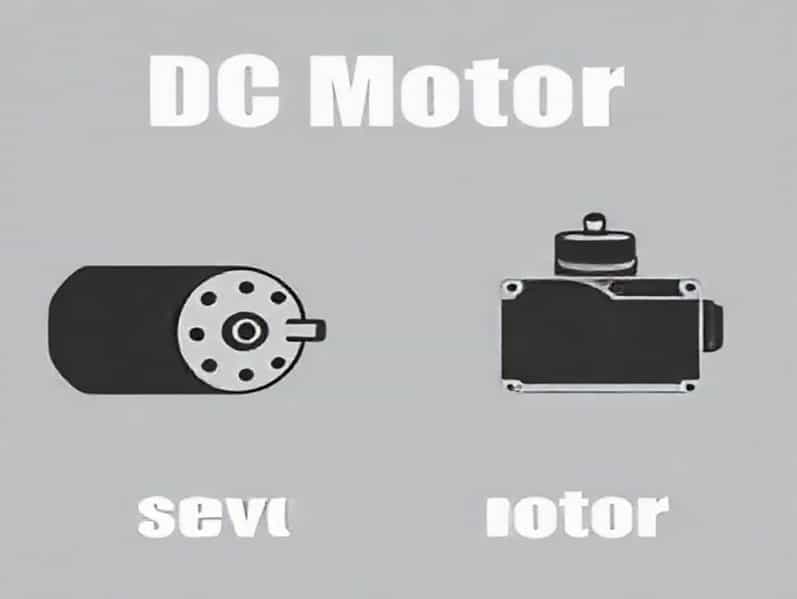
In the world of electrical engineering and automation, understanding the different types of motors is essential for designing efficient systems. Two of the most commonly used motors are DC motors and servo motors. Both serve important purposes in various applications, yet they function differently and offer distinct advantages depending on the requirements of speed, precision, torque, and control. Comparing DC motors and servo motors provides insight into their operational principles, uses, and limitations, helping engineers and hobbyists make informed decisions for projects ranging from robotics to industrial machinery.
What is a DC Motor?
A DC motor, or direct current motor, is an electric motor that converts electrical energy from a direct current supply into mechanical energy. The basic principle of a DC motor relies on the interaction between a magnetic field and an electric current, which produces a force that rotates the motor shaft. DC motors are known for their simplicity, reliability, and ability to provide continuous rotation, making them suitable for a wide range of applications including fans, pumps, conveyor belts, and small robotics projects.
Types of DC Motors
- Brushed DC MotorsThese motors use brushes and a commutator to transfer current to the motor windings. They are simple and cost-effective but require maintenance due to brush wear.
- Brushless DC MotorsThese motors use electronic controllers instead of brushes to switch current in the windings, offering higher efficiency, longer lifespan, and reduced maintenance.
Key Features of DC Motors
- Continuous rotation without feedback systems.
- Easy speed control using voltage variation.
- Simple design, making them affordable and widely available.
- Suitable for applications requiring moderate precision.
What is a Servo Motor?
A servo motor is a rotary actuator that allows precise control of angular position, velocity, and acceleration. Unlike a standard DC motor, a servo motor is equipped with a feedback mechanism, typically a potentiometer or encoder, which provides information about the current position of the motor shaft. This feedback allows the servo motor to adjust its movement accurately according to the control signal, making it ideal for applications that require precision and repeatability, such as robotics, CNC machines, and automated camera systems.
Types of Servo Motors
- AC Servo MotorsPowered by alternating current, these motors provide high torque and are often used in industrial automation and large machinery.
- DC Servo MotorsPowered by direct current, these motors are commonly used in smaller applications like robotics and hobby electronics.
Key Features of Servo Motors
- Precise control of angular position.
- Feedback mechanism for accurate movement and positioning.
- Ability to hold position under load.
- Ideal for applications requiring high precision and controlled motion.
DC Motor vs Servo Motor Comparison
While both DC motors and servo motors are used to convert electrical energy into mechanical motion, their operation, control, and application vary significantly. Here is a detailed comparison of their main characteristics
Control and Precision
- DC MotorProvides continuous rotation but lacks inherent position feedback, so precision control requires additional sensors or controllers.
- Servo MotorComes with built-in feedback mechanisms, enabling precise control over position, speed, and acceleration.
Speed and Torque
- DC MotorCan achieve high speeds and variable torque but requires external control for precise torque management.
- Servo MotorOptimized for controlled torque and precise movements, often capable of maintaining torque at specific positions.
Applications
- DC MotorUsed in applications where continuous rotation is needed without highly precise positioning, such as fans, pumps, electric vehicles, and conveyor systems.
- Servo MotorEmployed in applications requiring accurate positioning and motion control, including robotic arms, CNC machines, camera gimbals, and automated assembly lines.
Complexity and Cost
- DC MotorSimpler design and lower cost, especially for brushed DC motors, with minimal electronic control requirements.
- Servo MotorMore complex due to feedback and control electronics, which increases cost but provides high performance and precision.
Advantages and Disadvantages
DC Motor
- AdvantagesSimple, reliable, cost-effective, easy to control speed, suitable for continuous rotation applications.
- DisadvantagesLimited precision without additional sensors, wear and tear on brushes (for brushed motors), less efficient than brushless designs.
Servo Motor
- AdvantagesHigh precision, controlled torque and speed, ability to maintain position, ideal for automation and robotics.
- DisadvantagesHigher cost, more complex control systems, requires careful integration with controllers.
Choosing Between DC Motors and Servo Motors
The choice between a DC motor and a servo motor depends largely on the requirements of the application. If the project demands simple continuous rotation and moderate precision, a DC motor may be sufficient. Examples include small fans, basic robotic wheels, or conveyor belts. On the other hand, if the project requires exact positioning, controlled motion, or torque at specific angles, a servo motor is the better choice. Applications like robotic arms, precision CNC machining, and pan-tilt camera mechanisms benefit from the accuracy and control provided by servo motors.
Factors to Consider
- Required precision and positioning accuracy.
- Speed and torque requirements.
- Budget constraints and complexity tolerance.
- Type of control system available.
- Application environment and operational demands.
DC motors and servo motors each offer unique benefits that make them indispensable in different areas of electrical and mechanical engineering. DC motors excel in applications needing straightforward continuous rotation and cost efficiency, while servo motors provide unmatched precision, control, and reliability for complex and high-performance tasks. Understanding the differences between these two types of motors helps engineers, hobbyists, and students select the right motor for their projects, ensuring optimal performance, efficiency, and reliability. Whether designing a robotic system, industrial automation, or hobby electronics, knowing when to use a DC motor versus a servo motor is critical for achieving the desired outcome in both speed and precision.