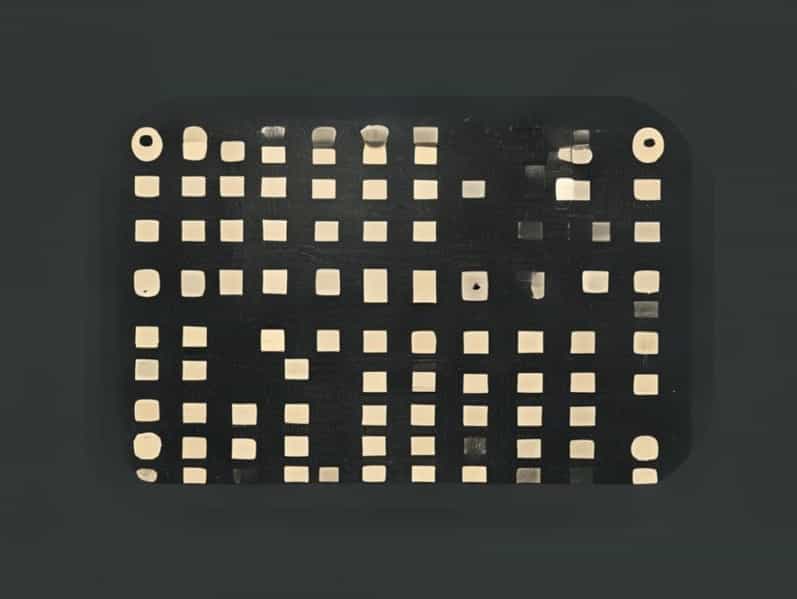
In the late 19th century, the world was undergoing rapid industrial and technological transformation, and one of the most influential inventions of that era was the punch card system created by Herman Hollerith. His invention revolutionized the way data was collected, processed, and stored long before modern computers existed. The Herman Hollerith punch card became a foundation for early computing technology, paving the way for machines that could think using data. To understand its significance, we must look at its design, purpose, and lasting impact on information processing and computer history.
Who Was Herman Hollerith?
Herman Hollerith was an American inventor and statistician born in 1860. He worked for the U.S. Census Bureau, where he faced the challenge of handling massive amounts of data. At that time, census information was recorded manually, and analyzing the data took years to complete. For example, the 1880 U.S. Census took nearly a decade to process. This inefficiency inspired Hollerith to find a faster and more accurate way to count and organize data. His solution was the punched card tabulating system, which used mechanical means to read and process information encoded on cards with holes.
Hollerith’s background in engineering and his experience working with data gave him the skills needed to develop this groundbreaking idea. He later founded the Tabulating Machine Company, which eventually became part of International Business Machines (IBM), one of the most influential technology companies in history. The punch card system, therefore, is not just an invention it is a milestone that led directly to the rise of modern computing.
The Concept Behind the Punch Card
The basic idea behind the Herman Hollerith punch card was simple yet revolutionary. Instead of writing information on paper, data was represented by holes punched in specific locations on a card. Each position corresponded to a particular value or piece of information. When the card was placed in a tabulating machine, electrical contacts would detect the holes and record the data automatically. This allowed for rapid and accurate counting and categorization of large datasets.
The card itself was about the size of a dollar bill and made of thick paper. Each card contained rows and columns of possible punch positions, which represented data points such as age, gender, occupation, or place of residence. Hollerith’s system was particularly valuable for repetitive and large-scale data analysis tasks, such as government censuses, business accounting, and scientific research.
Key Features of the Hollerith Punch Card
- Each card could store up to 80 columns of information.
- Data was encoded by punching holes in specific locations.
- Cards were read by electrical contacts in a tabulating machine.
- Output data could be printed or tallied automatically.
- Cards could be sorted and counted rapidly using mechanical sorters.
This system allowed users to perform data operations at unprecedented speed compared to manual methods. It became the first practical form of machine-readable data storage a concept that remains central to computing today.
The 1890 U.S. Census and the Punch Card Revolution
The true test of Hollerith’s invention came with the 1890 U.S. Census. The Census Bureau adopted his tabulating system to handle the immense workload of counting millions of people across the country. Using the punch card system, the census data that once took eight years to process was completed in just one year. This remarkable improvement demonstrated the power of automation in data handling and marked the first large-scale use of mechanical data processing in history.
Each census worker used a machine to punch holes in cards corresponding to individuals’ demographic information. The cards were then fed into Hollerith’s tabulating machine, which counted and sorted them using electrical circuits. The system was so successful that it was later adopted by other governments and large organizations worldwide.
Results of the 1890 Census Experiment
- Processing time was reduced from eight years to one year.
- Data accuracy improved dramatically compared to manual counting.
- The U.S. government saved millions of dollars in labor costs.
- Hollerith’s company gained international recognition and commercial success.
This event not only changed the way governments managed information but also proved that machines could assist humans in logical and repetitive tasks. The punch card became a symbol of efficiency, precision, and innovation in the age of data processing.
How the Hollerith Tabulating Machine Worked
The Hollerith machine consisted of three main parts the punch, the reader, and the tabulator. Each component had a specific function that contributed to the overall process of data handling.
1. The Punch
The punch was a manual or semi-automatic device used to create holes in the cards. Each hole represented a data point, and the pattern of holes encoded the information. Operators used metal punches and templates to ensure accuracy and consistency across thousands of cards.
2. The Reader
The reader was an electrical machine that detected the presence or absence of holes in each card. As the card passed through the reader, metal pins or brushes would make contact through the holes, completing electrical circuits. These circuits sent signals to counters that recorded the data automatically.
3. The Tabulator
The tabulator was the component that summarized and printed results. It counted data entries, sorted cards into categories, and produced summary reports. Some versions of the tabulator could even perform basic calculations, such as addition or averaging, making it one of the earliest examples of a programmable machine.
Although simple by today’s standards, Hollerith’s tabulating system laid the foundation for modern computers, which still use binary principles representing data as on or off states, much like the presence or absence of holes on a punch card.
The Legacy of the Herman Hollerith Punch Card
Hollerith’s punch card technology had a lasting influence on data processing and computer science. For more than half a century, punch cards remained a standard data storage medium for both government and business operations. IBM, which evolved from Hollerith’s original company, refined and expanded the punch card system, using it for payroll, accounting, and scientific computation well into the 1960s and 1970s.
Early computers such as the IBM 1401 and UNIVAC also relied heavily on punch cards to input and store programs. Even programming languages like FORTRAN were first distributed using punched cards. The iconic Do not fold, spindle, or mutilate warning on punch cards became a symbol of the digital age’s beginnings.
Applications Beyond the Census
- Business accounting and payroll management.
- Scientific research and data analysis.
- Military logistics and record-keeping.
- University data management and grading systems.
- Early computer programming and software input.
The influence of Hollerith’s system went beyond technology it transformed how organizations thought about information. Data became something that could be measured, categorized, and processed mechanically, leading directly to the birth of information technology as a discipline.
From Mechanical Cards to Digital Memory
As technology advanced, punch cards eventually gave way to magnetic tapes, disks, and digital memory. However, the principles that Hollerith introduced data representation, automation, and mechanical computation remained at the heart of all later developments. Modern databases and data analytics tools can trace their conceptual origins back to the Hollerith system.
The binary structure of the punch card hole or no hole foreshadowed the binary code used in digital computers. Just as Hollerith’s cards represented information through holes, computers use ones and zeros to represent electronic states. In this sense, every modern computer owes part of its design philosophy to Herman Hollerith’s innovation.
The Lasting Impact of Hollerith’s Innovation
The Herman Hollerith punch card was far more than a clever mechanical invention it was the first practical step toward automated data processing and the dawn of the information age. By creating a system that allowed machines to interpret and process human-recorded data, Hollerith bridged the gap between manual calculation and electronic computation. His ideas shaped the future of technology, influencing everything from government administration to early computer design.
Even though punch cards are now obsolete, their legacy endures in every modern data storage and processing system. Hollerith’s work demonstrated that efficiency, accuracy, and automation could transform not only how we count and store information but also how we think about it. In many ways, the humble punch card remains one of the most significant building blocks of the digital world we live in today.