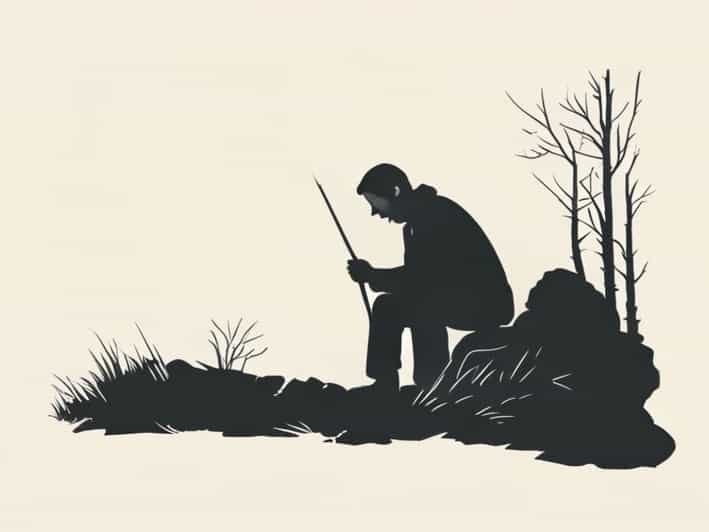
Robert Frost’s Mending Wall is one of the most famous poems in American literature. It explores themes of boundaries, relationships, and human nature through a simple act of two neighbors repairing a stone wall between their properties. The poem uses vivid imagery, conversational tone, and subtle irony to provoke readers to think about the meaning of separation and connection. Understanding the Mending Wall summary helps readers appreciate Frost’s reflection on human habits and traditions that often go unquestioned.
Background of Mending Wall
Mending Wall was first published in 1914 in Frost’s collection North of Boston. The poem reflects the rural life of New England and the poet’s deep connection with nature. Robert Frost often used everyday rural experiences to discuss deeper philosophical ideas. In this poem, the annual ritual of fixing a wall becomes a metaphor for human boundaries both physical and emotional.
The wall mentioned in the poem is a stone barrier that separates the speaker’s property from his neighbor’s. Each spring, they come together to repair the fallen stones caused by natural forces like frost and weather. The poem captures their interaction, the unspoken tension, and the philosophical question of whether walls are necessary at all.
Summary of Mending Wall by Robert Frost
The poem begins with the line, Something there is that doesn’t love a wall. This statement immediately sets the tone of questioning. The speaker notices that nature seems to resist walls freezing ground swells and knocks stones down, and hunters also disturb them while chasing rabbits. Despite these forces that tear the wall apart, the speaker and his neighbor meet every spring to rebuild it.
As they walk along the boundary, each man on his side, the speaker starts to question the purpose of the wall. He says, My apple trees will never get across and eat the cones under his pines. The line is slightly humorous but emphasizes that the wall serves no real purpose between them. Yet, the neighbor insists on the old saying, Good fences make good neighbors.
The speaker finds this repetition frustrating and even ironic. He begins to wonder whether the neighbor is trapped in old ways of thinking, simply following what his father told him without reflection. In contrast, the speaker is open to new ideas and sees no reason for the barrier. However, he does not argue aggressively; instead, he allows the neighbor to continue believing in his tradition.
The poem concludes with the neighbor repeating the same line Good fences make good neighbors. The speaker, however, imagines the neighbor as someone living in darkness, like an old-stone savage armed. This image suggests that the neighbor clings to outdated beliefs, unable to see beyond inherited customs.
Major Themes in Mending Wall
1. Boundaries and Separation
One of the central themes of Mending Wall is the human tendency to create boundaries. These boundaries can be physical, like walls or fences, or psychological, like emotional distance between people. Frost questions whether these divisions are necessary or whether they simply exist because of habit. The speaker seems to prefer openness and connection, while the neighbor values separation and order.
2. Tradition vs. Change
The poem contrasts two opposing viewpoints the speaker’s desire for questioning traditions and the neighbor’s respect for them. The neighbor’s reliance on his father’s saying Good fences make good neighbors represents the power of inherited beliefs. Frost seems to suggest that traditions can be comforting but also restrictive when followed blindly.
3. Nature and Human Interference
Nature plays a symbolic role in Mending Wall. The speaker observes that natural forces like frost and sunlight seem to work against the wall, almost as if nature itself prefers openness. This opposition between natural breakdown and human repair shows the ongoing tension between the natural world and human attempts to control or divide it.
4. Communication and Understanding
Though the two men come together physically to repair the wall, there is an emotional and intellectual distance between them. Their conversation reveals how people often fail to truly communicate. The wall becomes both a literal and metaphorical barrier to understanding. The speaker’s lighthearted questioning is met with the neighbor’s stubborn repetition, showing how difficult it can be to bridge differences.
Symbolism in Mending Wall
Frost’s use of symbolism adds depth to the poem’s simple narrative. The wall itself is the central symbol, representing the boundaries that people maintain in relationships, society, and even within themselves. The act of mending it every year symbolizes the persistence of these divisions, despite their pointlessness.
The speaker and the neighbor also symbolize two opposing aspects of human nature curiosity versus conformity. The speaker represents questioning and change, while the neighbor stands for tradition and resistance to new ideas. Together, they embody the eternal human conflict between innovation and preservation.
Poetic Devices in Mending Wall
- ImageryFrost uses vivid imagery to describe the physical process of rebuilding the wall lifting stones, balancing them, and repairing gaps. This makes the reader visualize the task while sensing its symbolic weight.
- IronyThe poem’s irony lies in the fact that the two neighbors come together to build something that separates them. Their cooperation actually strengthens their division.
- RepetitionThe line Good fences make good neighbors is repeated to emphasize the neighbor’s stubborn adherence to tradition. It also contrasts with the speaker’s reflective attitude.
- MetaphorThe wall functions as a metaphor for emotional and social barriers. It suggests that people often build walls within their hearts to protect themselves or to maintain distance from others.
Analysis of the Speaker’s Perspective
The speaker in Mending Wall is thoughtful, observant, and somewhat amused by the situation. He questions the logic of the wall, not out of rebellion but from genuine curiosity. His tone is conversational, even playful, as he jokes about apple trees and pine cones. Yet beneath his humor lies a serious reflection on why people maintain unnecessary divisions.
He sees the wall as unnatural and outdated, especially since nature itself seems to oppose it. However, he does not force his opinion on his neighbor. Instead, he lets the neighbor hold on to his belief, highlighting the difficulty of changing someone’s deeply rooted mindset.
Interpretation of the Neighbor’s Role
The neighbor, though rarely speaking, embodies the voice of tradition. He does not question the purpose of the wall because he has been taught that it is necessary. His repetition of the proverb Good fences make good neighbors shows his reliance on inherited wisdom. Frost portrays him as firm but limited in understanding, suggesting that blind adherence to custom can prevent growth and connection.
Despite this, the neighbor is not depicted as malicious. He simply represents a way of thinking that values order, boundaries, and privacy. The contrast between him and the speaker is what gives the poem its tension and depth.
Robert Frost’s Mending Wall remains a timeless poem because it captures a universal human dilemma the need for both separation and connection. The summary reveals more than just two men fixing a wall; it uncovers questions about trust, communication, and the boundaries we build in our lives. Through simple language and powerful symbolism, Frost encourages readers to reflect on whether the walls they maintain are truly necessary or merely inherited traditions that no longer serve a purpose.
Ultimately, Mending Wall reminds us that breaking down barriers, whether physical or emotional, can lead to greater understanding and harmony. As the natural world continues to resist walls, so too might the human heart seek openness over division.