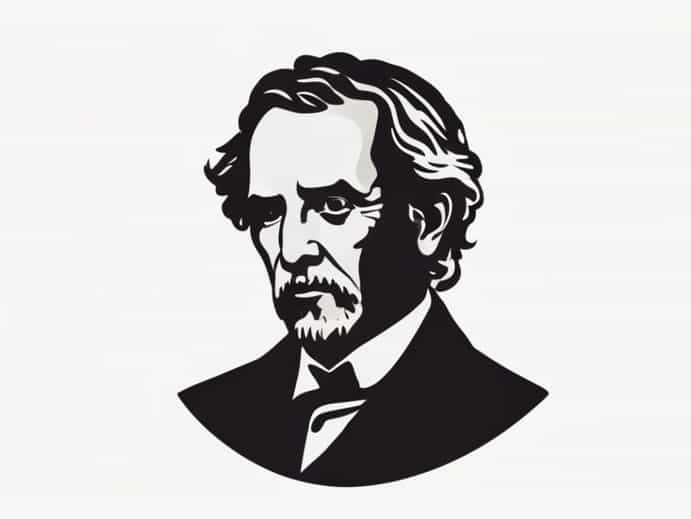
Michael Faraday is widely regarded as one of the most influential scientists in history, particularly in the fields of electromagnetism and electrochemistry. Born in 1791 in Newington Butts, England, Faraday came from a humble background and had little formal education. Despite these early challenges, his curiosity, determination, and dedication to experimentation allowed him to make groundbreaking discoveries that laid the foundation for modern electrical technology. His work not only advanced scientific understanding but also had a lasting impact on practical applications, including electric motors, transformers, and the principles underlying power generation.
Early Life and Education
Michael Faraday was born into a poor family and began working as an apprentice bookbinder at a young age. During his apprenticeship, he developed a strong interest in reading, particularly in science books. Faraday’s exposure to books by eminent scientists such as Isaac Watts and Humphry Davy fueled his passion for chemistry and physics. He attended lectures, took detailed notes, and performed experiments in his spare time. His enthusiasm and self-taught knowledge eventually led him to attend a series of lectures by Humphry Davy at the Royal Institution in London, which would change the trajectory of his career.
Career Beginnings and Mentorship
Faraday’s talent was quickly recognized by Humphry Davy, who became his mentor. In 1813, Faraday joined the Royal Institution as Davy’s laboratory assistant, where he gained hands-on experience in chemical experimentation and laboratory techniques. This mentorship allowed Faraday to learn directly from one of the leading chemists of the era, while also giving him the opportunity to conduct independent experiments. Faraday’s diligent work ethic, creativity, and practical skills enabled him to make early contributions to chemical research, including studies on chlorine and other gases.
Major Contributions to Science
Faraday is best known for his discoveries in electromagnetism and electrochemistry, which have had lasting effects on science and technology. Some of his most notable contributions include
- Electromagnetic InductionFaraday discovered that a changing magnetic field could induce an electric current in a conductor. This principle, known as electromagnetic induction, is fundamental to the operation of electric generators and transformers.
- Faraday’s Laws of ElectrolysisHe formulated quantitative laws describing the relationship between the amount of electric charge passed through an electrolyte and the amount of substance deposited or dissolved. These laws remain essential in electrochemistry.
- DiamagnetismFaraday discovered that certain materials create a magnetic field in opposition to an externally applied magnetic field, leading to the concept of diamagnetism.
- Faraday CageHe demonstrated that a closed conducting shell can shield its interior from external electric fields, creating what is now called a Faraday cage.
- Liquefaction of GasesFaraday’s experiments with gases and liquids helped advance understanding of chemical states, including the liquefaction of chlorine and other gases.
Faraday’s Scientific Philosophy
Michael Faraday emphasized experimental evidence and practical demonstration over abstract mathematics, which was somewhat unconventional for his time. He believed that science should be accessible and understandable to the public. Faraday often conducted public lectures at the Royal Institution, demonstrating principles of electricity and magnetism in engaging ways. His Lectures on the Chemical History of a Candle are particularly famous for explaining scientific concepts using simple, everyday phenomena, inspiring generations of students and amateur scientists alike.
Challenges and Personal Life
Despite his brilliance, Faraday faced several personal and professional challenges. Coming from a poor family and lacking formal education initially made it difficult for him to gain recognition in scientific circles. Additionally, Faraday was offered prestigious academic positions but often declined them, preferring to continue his hands-on experimental work. He was a devout Christian and a member of the Sandemanian Church, which influenced his ethical approach to scientific research and his commitment to humility and service. Faraday never married and devoted much of his life to scientific inquiry and public education.
Honors and Recognition
Although Faraday declined many honors during his lifetime, he received considerable recognition for his contributions. He was elected a Fellow of the Royal Society in 1824 and later served as its Fullerian Professor of Chemistry at the Royal Institution. In addition, Faraday’s legacy has been commemorated through awards, institutions, and scientific terms bearing his name, such as the unit of capacitance farad and Faraday’s constant in electrochemistry. Today, he is remembered as a pioneer whose work laid the groundwork for the development of modern electrical engineering and physics.
Impact on Modern Science and Technology
The discoveries made by Michael Faraday have had profound implications for both science and industry. Electromagnetic induction, for example, forms the basis for modern electrical power generation and distribution. Faraday’s work in electrochemistry has applications in batteries, electroplating, and various chemical processes. His insights into magnetic and electric fields have influenced the development of telecommunications, electronics, and medical imaging technologies such as MRI. Faraday’s legacy extends beyond theoretical science, demonstrating how careful experimentation and observation can lead to practical innovations that transform society.
Educational Influence and Public Outreach
Faraday was committed to educating the public about science. He believed that knowledge should be shared widely and made accessible to everyone. Through his public lectures, demonstrations, and writings, he inspired countless students and amateur scientists to pursue careers in science. His teaching methods emphasized clarity, simplicity, and visual demonstration, making complex scientific concepts easier to understand. Faraday’s educational philosophy continues to influence science communication and public engagement in STEM fields today.
Michael Faraday’s life and work exemplify the power of curiosity, perseverance, and hands-on experimentation. From his humble beginnings to his groundbreaking discoveries in electromagnetism and electrochemistry, Faraday transformed the understanding of electricity, magnetism, and chemical processes. His emphasis on practical demonstration, public education, and ethical scientific practice has left an enduring legacy. The principles he discovered continue to shape modern technology and scientific research, making Faraday one of the most important figures in the history of science. Learning about his contributions provides not only historical insight but also inspiration for future generations of scientists and innovators.