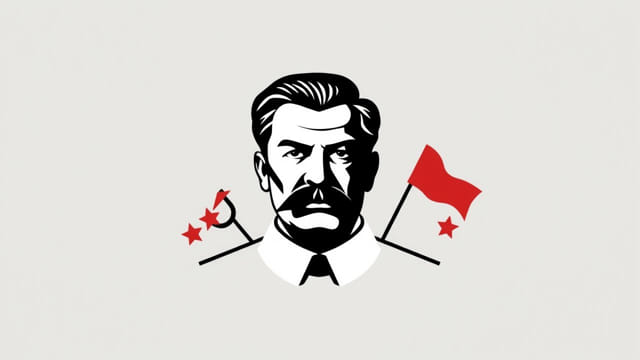
Joseph Stalin, one of the most controversial leaders of the 20th century, played a significant but often overshadowed role in the Bolshevik Revolution. Though not as prominent as Lenin or Trotsky in the early revolutionary period, Stalin’s rise to power and his involvement in the Bolshevik movement were crucial in shaping the Soviet Union’s future. His participation in the revolution, his political maneuvering, and his administrative roles helped secure his influence, allowing him to later dominate Soviet politics for decades.
Early Involvement in Revolutionary Politics
Stalin’s Background and Radicalization
Born as Ioseb Besarionis dze Jughashvili in Gori, Georgia, in 1878, Stalin came from a humble background. His early education in a religious seminary exposed him to revolutionary literature, particularly the works of Karl Marx. Inspired by the call for social equality and resistance against the oppressive Russian monarchy, Stalin joined the Russian Social Democratic Labour Party (RSDLP) in the late 1890s.
He became active in organizing strikes, printing underground newspapers, and raising funds through various means, including expropriations (armed robberies for revolutionary purposes). His reputation as a committed Bolshevik grew, and he gained the attention of key leaders within the movement.
Alignment with the Bolsheviks
In the early 20th century, the RSDLP split into two factions: the Bolsheviks, led by Vladimir Lenin, and the Mensheviks. Stalin aligned himself with the Bolsheviks, who advocated for a tightly organized party of professional revolutionaries. His loyalty to Lenin and his hardline stance on party discipline aligned with the Bolshevik vision of revolution.
- Joined the Bolshevik faction in 1903
- Participated in underground revolutionary activities
- Imprisoned and exiled multiple times by the Tsarist regime
Role During the 1917 Russian Revolutions
The February Revolution
The February Revolution of 1917 led to the abdication of Tsar Nicholas II and the establishment of a Provisional Government. Stalin, then in exile in Siberia, returned to Petrograd shortly after the Tsar’s downfall. Upon his return, he took up editorial duties at Pravda, the Bolshevik newspaper, and began influencing public opinion in favor of radical socialist change.
The October Revolution
In the October Revolution, the Bolsheviks overthrew the Provisional Government and seized control of Petrograd. While figures like Lenin and Trotsky were at the forefront, Stalin played a supporting role. He contributed by managing logistics, communications, and coordination among Bolshevik committees. Though not a battlefield leader, Stalin’s role in maintaining organizational strength was essential.
After the revolution’s success, Stalin was appointed People’s Commissar for Nationalities, a key position that required balancing the interests of non-Russian regions within the new Soviet state.
Stalin’s Political Climb After the Revolution
Building Influence Within the Party
Following the Bolshevik victory, Stalin’s administrative skills became increasingly valuable. He gained Lenin’s trust and was appointed to several important posts, including General Secretary of the Communist Party in 1922. Though the title seemed bureaucratic, it gave Stalin control over appointments, party membership, and internal communication tools he later used to eliminate rivals and centralize authority.
Stalin positioned himself as a loyal follower of Lenin’s vision, though their relationship was complicated. Near the end of his life, Lenin expressed concerns about Stalin’s increasing power and recommended his removal from leadership roles. These warnings were suppressed after Lenin’s death in 1924.
Rivalries and Power Struggles
In the years following Lenin’s death, Stalin clashed with other prominent Bolsheviks, especially Leon Trotsky. While Trotsky was widely seen as the natural successor, Stalin’s behind-the-scenes maneuvering and ability to build alliances allowed him to outmaneuver Trotsky politically. By the late 1920s, Stalin had consolidated power and emerged as the de facto leader of the Soviet Union.
- Outmaneuvered Trotsky, Zinoviev, and Kamenev
- Used his role as General Secretary to build a loyal power base
- Portrayed himself as the guardian of Lenin’s legacy
Stalin’s Vision for the Soviet Union
Economic and Social Reforms
Once in control, Stalin initiated major changes that transformed Soviet society. He launched the first Five-Year Plan in 1928 to rapidly industrialize the economy and shift from agrarian to industrial power. The collectivization of agriculture led to widespread famine and suffering but was aimed at consolidating state control over food production.
Stalin’s model of socialism focused on state-led development, centralized planning, and total party control. While these policies resulted in significant industrial growth, they came at a high human cost, including millions of deaths due to famine, forced labor, and political purges.
Rewriting Revolutionary History
As Stalin strengthened his grip on the Soviet Union, he also sought to rewrite the history of the Bolshevik Revolution to elevate his own role. Textbooks, party literature, and official accounts increasingly downplayed the contributions of rivals like Trotsky and emphasized Stalin’s supposed importance from the earliest days of the revolution.
This revisionism allowed Stalin to frame himself as Lenin’s true heir and the natural leader of the socialist movement, legitimizing his rule in the eyes of the Soviet population.
Legacy of Stalin’s Role in the Bolshevik Revolution
From Revolutionary to Autocrat
Joseph Stalin’s journey from a revolutionary activist to the authoritarian ruler of the Soviet Union highlights the complex legacy of the Bolshevik Revolution. Though not a central figure in the initial uprising, his ability to navigate party politics and expand his influence ultimately made him the dominant force in Soviet history.
Stalin’s tenure was marked by both achievements and atrocities. His economic policies helped turn the USSR into a global power, but his repressive tactics led to widespread suffering. The ideals of the Bolshevik Revolution equality, workers’ control, and democratic socialism were largely abandoned in favor of centralized authority and state surveillance.
Historical Reassessment
Modern historians continue to debate Stalin’s exact role in the Bolshevik Revolution and its aftermath. Some view him as a skilled organizer who preserved the revolution through difficult times. Others see him as a betrayer of the revolution’s original goals, replacing collective leadership with personal dictatorship.
Regardless of interpretation, Stalin’s connection to the Bolshevik movement is undeniable. His rise from a marginal revolutionary figure to the leader of one of the world’s most powerful nations remains one of the most dramatic political transformations in history.
Joseph Stalin may not have been the face of the Bolshevik Revolution in 1917, but his behind-the-scenes work, loyalty to Lenin, and calculated political moves positioned him to seize power in its aftermath. His contributions to the revolution were less about battlefield heroics and more about organization, administration, and political cunning. Stalin’s legacy in the Bolshevik Revolution reflects both the promise and peril of revolutionary movements where ideals can be quickly transformed by the ambitions of those who rise to lead them.