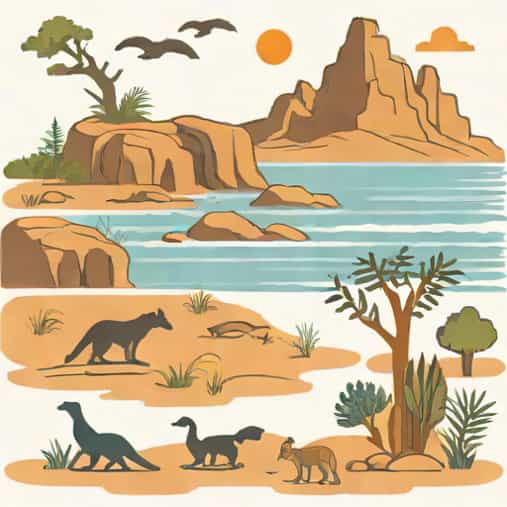
The Devonian Period is a fascinating era in Earth’s history, spanning from approximately 419 to 359 million years ago. It is widely recognized for its significant evolutionary advancements and is often referred to as the Age of Fishes. During this time, the Earth underwent dramatic changes in both marine and terrestrial ecosystems, which laid the foundation for modern life forms. The Devonian Period saw the diversification of fish, the emergence of early amphibians, and the colonization of land by plants, marking a pivotal chapter in the history of life on our planet. Understanding this period provides valuable insights into evolutionary biology, paleontology, and the processes that shaped our current ecosystems.
Overview of the Devonian Period
The Devonian Period is part of the Paleozoic Era, following the Silurian Period and preceding the Carboniferous Period. It lasted approximately 60 million years and is characterized by significant geological, climatic, and biological events. The period is divided into Early, Middle, and Late Devonian, each with distinct environmental conditions and evolutionary milestones. During this time, continents began to shift and collide, forming mountain ranges and shallow seas that created diverse habitats for marine and terrestrial life. The Devonian is especially notable for the development of complex ecosystems and the rapid expansion of life forms both in water and on land.
Why the Devonian is Called the Age of Fishes
The Devonian earned the title Age of Fishes due to the remarkable diversification of fish species during this period. Jawless fish, such as ostracoderms, were gradually replaced by jawed fish, including placoderms and acanthodians. Lobe-finned fish, which later gave rise to amphibians, began to appear and explore shallow waters and terrestrial environments. This explosion in fish diversity reflects significant evolutionary innovation, including the development of paired fins, scales, and advanced respiratory systems. These adaptations allowed fish to dominate marine ecosystems and paved the way for future vertebrate evolution.
Marine Life During the Devonian
Marine ecosystems flourished during the Devonian, supporting a wide variety of organisms. Coral reefs expanded extensively, forming complex habitats for invertebrates and vertebrates alike. Brachiopods, trilobites, ammonites, and crinoids were abundant, contributing to the rich biodiversity of the period. The evolution of predatory fish also introduced new dynamics to the food chain, creating competition and driving further adaptations. Shallow seas and reef systems provided ideal conditions for the diversification of marine life, making the Devonian a critical period for the evolution of oceanic ecosystems.
Terrestrial Plant Evolution
The Devonian Period was equally significant for the colonization of land by plants. Early vascular plants, such as rhyniophytes, began to develop roots, stems, and leaves, allowing them to grow taller and spread across terrestrial environments. These plants played a crucial role in stabilizing soils, increasing oxygen levels, and forming the basis of early terrestrial food webs. By the end of the Devonian, the first forests appeared, providing habitats for emerging terrestrial animals and contributing to global climate regulation. The spread of plants also influenced erosion and sedimentation patterns, shaping the geological landscape for millions of years to come.
Emergence of Early Vertebrates on Land
One of the most remarkable events of the Devonian was the transition of vertebrates from water to land. Lobe-finned fish, such as Tiktaalik, exhibited adaptations that allowed them to venture into shallow waters and eventually onto land. These adaptations included sturdy fins capable of supporting weight, lungs for breathing air, and sensory systems for detecting environmental changes. The evolution of early amphibians marked the beginning of terrestrial vertebrate life and set the stage for the emergence of reptiles and, eventually, mammals. This transition illustrates the Devonian’s critical role in the evolutionary history of vertebrates.
Climate and Environmental Changes
The climate of the Devonian Period was generally warm, with high sea levels and widespread shallow seas covering many continental regions. This warm climate supported the growth of coral reefs and diverse marine habitats. However, the Late Devonian experienced environmental challenges, including glaciation events and changes in sea level. These shifts contributed to the Late Devonian extinction, one of the significant mass extinction events in Earth’s history. Many marine species, including certain fish and reef-building organisms, faced population declines, while terrestrial ecosystems continued to develop and diversify.
Geological Features of the Devonian
Geologically, the Devonian Period saw the assembly of supercontinents and the formation of extensive mountain ranges. Sedimentary rock formations from this period, such as limestones, sandstones, and shales, preserve a wealth of fossils that provide insights into ancient life. The Devonian is also known for the development of large reef systems, which left behind significant limestone deposits. These geological features serve as important records for understanding Earth’s history, paleoclimate, and the evolution of ecosystems over time.
Significance of the Devonian Extinction
The Devonian Period concluded with a series of extinction events that primarily affected marine life. This extinction, known as the Late Devonian extinction, led to significant reductions in biodiversity, particularly among reef-building organisms, jawless fish, and certain invertebrates. The causes of the extinction are still studied but likely include climate change, sea-level fluctuations, and reduced oxygen levels in oceans. Despite these losses, the extinction paved the way for new evolutionary opportunities, including the rise of amphibians and the continued diversification of terrestrial plants and animals.
Legacy of the Devonian Period
The Devonian Period left a lasting legacy on the evolution of life on Earth. By fostering the diversification of fish, the colonization of land by plants, and the emergence of early vertebrates, it set the foundation for modern ecosystems. Fossils from this period provide crucial evidence for understanding evolutionary transitions and environmental changes. The designation of the Devonian as the Age of Fishes reflects its importance in vertebrate evolution, while its role in plant colonization highlights its impact on terrestrial ecosystems. Studying this period helps scientists comprehend the complex interactions between climate, geology, and biology that have shaped our planet over millions of years.
The Devonian Period is known as the Age of Fishes because of the remarkable diversification and evolutionary advancements of aquatic vertebrates. It was also a transformative era for terrestrial life, with the emergence of the first forests and early amphibians. The warm climate, rising sea levels, and rich marine habitats supported unprecedented biodiversity, while geological and environmental changes influenced long-term evolutionary trends. Understanding the Devonian provides valuable insights into the history of life, the evolution of ecosystems, and the processes that continue to shape our planet today. Its significance in the history of life underscores the importance of studying past periods to better understand present and future biological and geological developments.