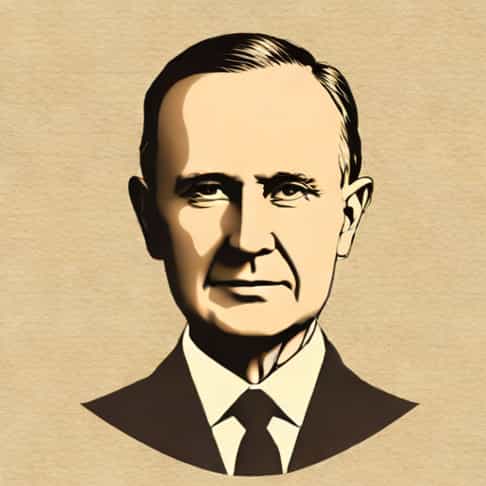
Calvin Coolidge, the 30th President of the United States, served from 1923 to 1929, a period often remembered for economic growth and relative political calm. Many historians and citizens alike debate whether he was a good president, given his quiet demeanor, conservative policies, and approach to governance. Coolidge’s presidency coincided with the Roaring Twenties, an era marked by significant technological advancements, booming stock markets, and a rise in consumer culture. Understanding whether Coolidge was effective as a president requires examining his policies, leadership style, and the long-term impact of his administration on the country.
Calvin Coolidge’s Leadership Style
Coolidge was famously quiet and reserved, earning him the nickname Silent Cal. He believed in limited government intervention and prioritized efficiency and integrity over charisma and spectacle. Unlike some presidents who relied heavily on public speeches and media presence, Coolidge preferred to let his actions speak for themselves. He focused on maintaining fiscal responsibility, reducing government spending, and avoiding unnecessary involvement in foreign conflicts.
Strengths in Governance
One of Coolidge’s most notable strengths was his commitment to reducing the federal budget and national debt. He believed that a smaller government allowed for greater individual freedom and economic growth. During his presidency, he cut taxes, promoted business-friendly policies, and encouraged private enterprise. These measures contributed to economic expansion and low unemployment rates throughout much of the 1920s.
- Economic GrowthCoolidge’s policies supported the booming American economy, making the 1920s a period of prosperity for many citizens.
- Fiscal ResponsibilityBy reducing government spending and maintaining a balanced budget, he strengthened public confidence in the federal government.
- Government IntegrityCoolidge valued honesty and ethics in public office, which helped restore trust after the scandals of previous administrations.
Weaknesses and Criticism
Despite these strengths, Coolidge faced criticism for his lack of social reforms and limited action on important issues. His hands-off approach to governance meant that some social and economic problems went unaddressed, including labor disputes, agricultural struggles, and income inequality. Critics argue that his policies favored big business and the wealthy, leaving vulnerable populations without sufficient support. Additionally, his reluctance to regulate the stock market may have indirectly contributed to the economic instability that led to the Great Depression shortly after he left office.
Domestic Policy Achievements
Coolidge’s domestic policies were primarily centered on promoting economic prosperity through minimal government intervention. He signed the Revenue Acts of 1924 and 1926, which reduced income and inheritance taxes, aiming to stimulate investment and consumer spending. Additionally, he supported infrastructure projects, such as road building, to modernize the country and create jobs. Coolidge’s administration also emphasized law enforcement and social stability, though he avoided major reforms in civil rights or social welfare programs.
Impact on Business and Industry
Coolidge’s pro-business stance encouraged industrial growth, technological innovation, and entrepreneurship. By limiting government interference, he allowed businesses to expand rapidly, contributing to the rise of consumer culture. This approach, while beneficial to the economy in the short term, has been debated by historians who note that the lack of regulation created vulnerabilities that emerged during the stock market crash of 1929.
Foreign Policy and International Relations
Coolidge’s approach to foreign policy reflected his broader philosophy of limited government. He avoided military entanglements and focused on maintaining peace through diplomacy. He supported disarmament treaties, including the Kellogg-Briand Pact, which aimed to prevent future wars. While his presidency did not see major international conflicts, some critics argue that his passive approach may have delayed necessary involvement in global affairs that later affected U.S. interests.
Legacy and Historical Perspective
Assessing Calvin Coolidge’s legacy requires balancing his accomplishments with the limitations of his presidency. On one hand, he maintained political stability, promoted economic growth, and embodied honesty and integrity in leadership. On the other hand, his reluctance to address social inequalities and regulate financial markets presents a more complex picture. Historians often classify Coolidge as a president who excelled in administrative competence and fiscal conservatism but struggled with visionary leadership in social and economic reforms.
Was Calvin Coolidge a good president? The answer depends on the criteria used. If measured by fiscal responsibility, economic growth, and ethical governance, Coolidge was indeed effective and successful. However, if evaluated based on social progress, regulation, and long-term economic foresight, his presidency had notable shortcomings. Ultimately, Calvin Coolidge remains a fascinating figure in American history a president whose quiet leadership and conservative principles left a significant mark on the 1920s, even as debates about his effectiveness continue today.