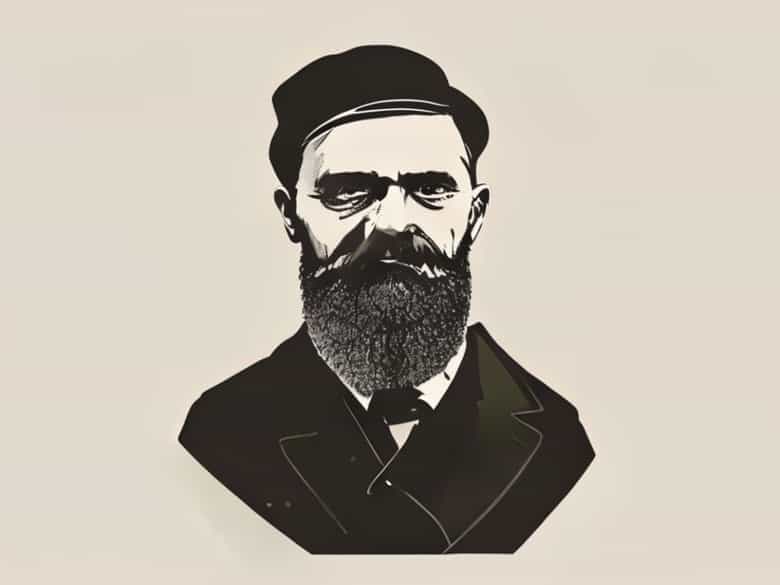
Herman Hollerith was a pioneering American inventor and statistician whose work fundamentally transformed the way data was processed and analyzed. Born in 1860, Hollerith is best known for developing an electromechanical tabulating machine that significantly sped up the processing of large amounts of information. His innovations laid the groundwork for modern computing and influenced the development of early data processing technologies used by governments and businesses around the world. Hollerith’s contributions not only solved practical problems of his era but also established principles that continue to influence data management and computer science today.
Early Life and Education
Herman Hollerith was born on February 29, 1860, in Buffalo, New York. From a young age, he showed a keen interest in mathematics and statistics. He pursued his education at the City College of New York and later at Columbia University, where he studied engineering and physics. His academic background provided him with a strong foundation in problem-solving and technical innovation, skills that would become essential in his later work on data processing. Hollerith’s early exposure to statistical challenges sparked his interest in finding efficient methods for organizing and analyzing information.
Initial Exposure to Census Problems
After completing his studies, Hollerith became involved with the United States Census Bureau. At the time, census data collection and processing were labor-intensive and time-consuming. The 1880 U.S. Census had taken nearly a decade to compile and analyze, highlighting the urgent need for a more efficient method. Hollerith recognized this problem and began developing a mechanical solution to streamline data tabulation, which would eventually lead to his groundbreaking invention.
The Invention of the Tabulating Machine
Hollerith is most famously known for inventing the electromechanical tabulating machine. This device used punched cards to store information and electrical circuits to read and tabulate the data. Each hole in a card represented specific data points, allowing for rapid and accurate counting and sorting of information. This system dramatically reduced the time required to process census data and other large datasets.
Mechanism and Functionality
The tabulating machine consisted of several key components
- Punched CardsCards with perforations representing individual data points.
- Electromechanical ReaderA device that sensed the holes in the cards using electrical circuits.
- Sorting and Counting MechanismEnabled automatic tabulation and aggregation of data.
By automating data processing, Hollerith’s machine significantly increased efficiency, accuracy, and reliability. It became a vital tool for census administration and inspired future innovations in computing technology.
Impact on the U.S. Census
Hollerith’s tabulating machine made its most significant impact during the 1890 United States Census. The machine reduced the processing time from eight years, as seen in the 1880 Census, to just one year. This efficiency allowed census data to be collected, processed, and analyzed much more rapidly, providing timely demographic information that was crucial for government planning and resource allocation. Hollerith’s work demonstrated the practical potential of electromechanical data processing, gaining widespread recognition and paving the way for future technological developments.
Advantages of Hollerith’s System
- Faster data processing and reduced labor costs.
- Higher accuracy in tabulating large volumes of information.
- Improved organization and accessibility of statistical data.
- Scalable design suitable for other government and business applications.
The success of Hollerith’s machine highlighted the transformative potential of mechanized data processing, influencing not only census work but also other statistical and commercial applications worldwide.
Hollerith’s Business Ventures and Legacy
Following the success of his tabulating machine, Herman Hollerith founded the Tabulating Machine Company in 1896. This company produced and sold his machines to governments, businesses, and other organizations. The Tabulating Machine Company eventually became a cornerstone of what is now known as IBM, one of the largest and most influential computing companies in the world. Hollerith’s entrepreneurial vision helped ensure that his technological innovations reached a broad audience, amplifying their impact on data processing and management.
Influence on Modern Computing
Hollerith’s work with punched card systems and tabulating machines laid the foundation for early computers and modern information processing. Principles developed in his machines, such as automated data entry, sorting, and counting, were integral to the design of later computing systems. Punched card technology remained a key method for data processing well into the 20th century, influencing fields ranging from business analytics to scientific research. Hollerith’s pioneering contributions are considered a crucial step in the evolution of computer technology.
Recognition and Honors
During his lifetime and posthumously, Herman Hollerith received recognition for his innovative contributions to data processing and statistics. His work was celebrated for its practical impact on government efficiency and its influence on the burgeoning field of computing. Scholars and historians often credit Hollerith as one of the key figures in the history of computer science, acknowledging the lasting significance of his inventions.
Key Achievements
- Invented the electromechanical tabulating machine for data processing.
- Revolutionized the U.S. Census, dramatically reducing processing time.
- Founded the Tabulating Machine Company, a precursor to IBM.
- Pioneered methods that influenced modern computing and data management.
Herman Hollerith is best known for his invention of the electromechanical tabulating machine, a groundbreaking tool that transformed data processing and statistical analysis. By introducing the use of punched cards and automated tabulation, Hollerith solved practical challenges in census administration and laid the foundation for modern computing technologies. His entrepreneurial efforts, including the creation of the Tabulating Machine Company, ensured that his innovations had a lasting impact on both government and industry. Hollerith’s work exemplifies how vision, technical skill, and ingenuity can converge to create tools that reshape entire fields, making him a pivotal figure in the history of data processing and computer science.