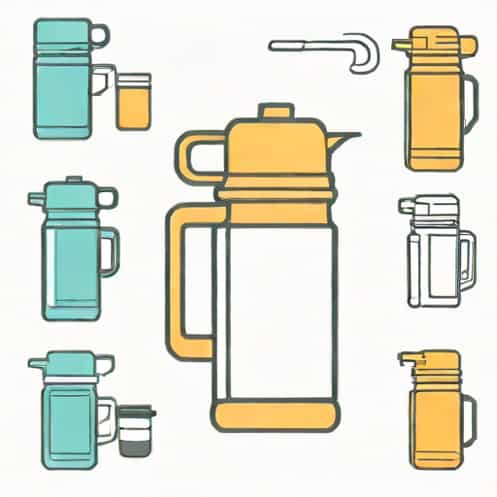
A thermos is an everyday object that many people rely on to keep their drinks hot or cold for extended periods, yet few truly understand how it works. Whether it’s coffee on a chilly morning, soup for lunch, or ice-cold water on a hot day, a thermos performs a remarkable task by maintaining the temperature of its contents. The science behind a thermos involves principles of heat transfer, insulation, and vacuum technology, all working together to minimize energy loss. Understanding how a thermos works not only highlights the clever design behind this simple object but also allows users to maximize its efficiency in daily use.
Basic Principles of Heat Transfer
To understand how a thermos works, it is essential to know the three main methods by which heat moves conduction, convection, and radiation. Each of these plays a role in how liquids lose or gain temperature over time.
Conduction
Conduction is the process by which heat transfers directly through a material. When a hot liquid is placed in a regular container, the heat moves through the walls of the container into the surrounding air. A thermos minimizes conduction by using materials with low thermal conductivity and creating a vacuum between its inner and outer walls, which dramatically slows down heat transfer.
Convection
Convection occurs when heat is transferred through the movement of fluids, such as air or liquid. In an open cup, hot liquid heats the surrounding air, causing it to rise and be replaced by cooler air, which speeds up cooling. Thermoses prevent convection by sealing the contents in a closed, airtight environment, limiting the movement of air or liquid inside the container.
Radiation
Heat can also be lost through radiation, where thermal energy is emitted as infrared waves. To counteract this, thermos manufacturers often coat the inner surfaces with reflective materials, such as silver or aluminum, which reflect heat back into the liquid, reducing energy loss through radiation.
Structure of a Thermos
The design of a thermos is specifically engineered to preserve temperature using multiple layers and materials. Most thermoses share a similar structure
Inner and Outer Walls
A thermos typically has two walls, an inner and an outer, made of stainless steel or glass. These walls form the main container that holds the liquid and provides structural support. The material choice is important stainless steel is durable and resists breakage, while glass is often used in high-end models for its inert properties that do not affect taste.
Vacuum Insulation
The space between the inner and outer walls is usually a vacuum. A vacuum is an environment devoid of air and other ptopics, meaning there is no medium for heat conduction or convection. This vacuum layer is the primary reason a thermos can maintain temperatures for hours, as it drastically slows down the movement of thermal energy from the liquid to the outside environment.
Reflective Coatings
To further prevent heat loss through radiation, the inner surface of the thermos may be coated with a reflective material. This layer bounces heat back into the liquid, keeping it warmer for longer periods. For cold liquids, the same principle works in reverse, reflecting external heat away from the contents and maintaining cool temperatures.
Tight-Sealing Lid
The lid of a thermos is crucial for preventing heat loss. A tight-sealing lid reduces air exchange and prevents convection. Some thermoses use additional insulating materials within the lid itself to enhance temperature retention. The combination of a vacuum and a secure lid ensures minimal heat escapes, keeping drinks hot or cold for several hours.
How a Thermos Keeps Liquids Hot
When a hot beverage is poured into a thermos, the heat from the liquid would normally escape into the surrounding environment through conduction, convection, and radiation. However, in a thermos, these mechanisms are greatly reduced
- ConductionThe vacuum layer between the inner and outer walls blocks heat transfer.
- ConvectionThe sealed lid prevents air circulation inside the container.
- RadiationReflective coatings bounce heat back into the liquid.
As a result, the beverage can remain hot for many hours without significant cooling. The thermos does not generate heat; it simply minimizes heat loss, preserving the temperature achieved at the time of filling.
How a Thermos Keeps Liquids Cold
The same principles apply when storing cold liquids, but in reverse. Cold liquids lose heat to the warmer environment outside the thermos. The vacuum insulation and reflective coatings slow down this heat transfer, while the sealed lid prevents warm air from entering. This design allows cold drinks to stay refreshingly cool for extended periods, making thermoses ideal for summer outings, sports events, or travel.
Importance of Preheating or Pre-cooling
For maximum efficiency, some users preheat or pre-cool their thermos before filling it with a beverage. For hot drinks, rinsing the thermos with hot water warms the inner walls, reducing the temperature gradient and slowing heat loss. For cold drinks, filling the thermos with ice-cold water or refrigerating it temporarily can enhance the ability to maintain low temperatures. These small steps take advantage of the thermos’s insulation capabilities and optimize performance.
Common Misconceptions
Many people think that a thermos magically heats or cools liquids, but in reality, it is entirely passive. It does not add or remove heat; it simply slows the transfer of thermal energy. Another misconception is that all thermoses work equally well. The efficiency depends on the quality of the materials, the effectiveness of the vacuum insulation, the tightness of the lid, and the use of reflective coatings. Premium thermoses often outperform cheaper models due to better design and materials.
Durability and Safety Considerations
Modern thermoses are designed to be durable and safe for everyday use. Stainless steel models resist dents and breakage, while glass models may be more fragile but provide a non-reactive surface that preserves flavor. Most thermoses are also designed to be leak-proof, preventing spills while maintaining insulation. Proper care, such as avoiding extreme impacts and following cleaning instructions, ensures the thermos remains effective over time.
Applications in Everyday Life
Thermoses are versatile tools that enhance daily life. Some common applications include
- Keeping coffee or tea hot during morning commutes
- Maintaining soup or broth at lunch for work or school
- Preserving cold water or juice during outdoor activities
- Transporting homemade baby formula at the right temperature
- Maintaining specialized liquids for scientific or laboratory purposes
These applications highlight how the simple yet ingenious design of a thermos improves convenience and quality of life in countless situations.
A thermos works by using the principles of heat transfer, vacuum insulation, reflective coatings, and tight-sealing lids to maintain the temperature of its contents. By minimizing heat loss through conduction, convection, and radiation, it keeps hot liquids hot and cold liquids cold for extended periods. Understanding the science behind a thermos allows users to optimize its performance and appreciate the clever engineering that makes this everyday object so effective. Whether for travel, work, or leisure, a thermos is a practical example of how physics and thoughtful design come together to solve real-world problems efficiently.