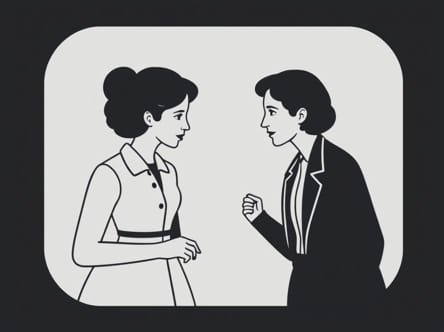
The discovery of the DNA double helix is one of the most significant scientific achievements of the 20th century. It fundamentally changed our understanding of genetics, heredity, and the molecular basis of life. At the heart of this discovery are three key figures: Rosalind Franklin, James Watson, and Francis Crick. While Watson and Crick are often celebrated as the primary discoverers of DNA’s structure, Franklin’s crucial contributions were overlooked for many years. This topic explores the story of Rosalind Franklin versus Watson and Crick, highlighting her indispensable role, the controversies surrounding recognition, and the lasting impact on science and gender equality.
Rosalind Franklin: A Brilliant Scientist
Rosalind Franklin was a British chemist and X-ray crystallographer whose expertise was vital in unveiling the structure of DNA. Born in 1920, Franklin was known for her meticulous approach and skill in X-ray diffraction techniques. Her work at King’s College London produced the critical Photograph 51, an X-ray image revealing the helical structure of DNA.
Franklin’s image provided crucial evidence about the shape and dimensions of the DNA molecule, including its double-helix form. Despite her careful analysis, Franklin’s contributions were not immediately recognized, partly due to the competitive environment and the male-dominated scientific community of the time.
Photograph 51: The Key to the Double Helix
- Produced by Rosalind Franklin in 1952 using X-ray diffraction
- Revealed the clear helical pattern of DNA
- Provided measurements essential for determining DNA’s structure
- Shown to Watson without Franklin’s direct permission
Watson and Crick: The Model Builders
James Watson and Francis Crick, working at the University of Cambridge, aimed to build a physical model of DNA’s structure. Unlike Franklin, their strengths lay in theoretical modeling and synthesizing data from multiple sources. They were quick to recognize the importance of Franklin’s data, particularly Photograph 51, which provided critical clues that guided their model-building process.
In 1953, Watson and Crick published their famous paper proposing the double helix structure of DNA. Their model showed two strands of nucleotides twisted around each other, with complementary base pairing explaining DNA replication and genetic coding. This breakthrough won them the Nobel Prize in Physiology or Medicine in 1962, along with Maurice Wilkins, Franklin’s colleague.
Controversies Surrounding the Nobel Prize
- Rosalind Franklin had passed away in 1958 and was not eligible for the Nobel
- Many believe Franklin deserved recognition alongside Watson, Crick, and Wilkins
- Her data was reportedly shared without her full consent
- The male-dominated scientific culture may have contributed to the oversight
Scientific Contributions Compared
While Watson and Crick proposed the DNA structure, their work was heavily dependent on experimental data generated by Franklin and Wilkins. Franklin’s expertise in X-ray crystallography enabled precise measurements that were essential for accurate modeling. Without her data, Watson and Crick might have struggled or delayed the discovery.
Franklin’s approach was more data-driven and cautious, contrasting with Watson and Crick’s model-building enthusiasm. Both approaches were vital: Franklin laid the groundwork with experimental proof, and Watson and Crick translated it into a conceptual model that explained heredity.
Different Roles in Discovery
- Franklin: Produced high-quality experimental evidence of DNA structure
- Watson and Crick: Developed a physical and theoretical model based on available data
- Wilkins: Worked alongside Franklin, providing complementary data and support
- Collaboration and competition among the group were intense and complex
Gender and Recognition in Science
Rosalind Franklin’s story is also a reflection of the challenges women faced in science during the mid-20th century. Despite her brilliance, Franklin experienced marginalization and lacked the professional support her male peers enjoyed. The limited recognition she received during her lifetime raised awareness about gender bias in scientific fields.
Her legacy has inspired many efforts to highlight women’s contributions in science and promote equality. Today, Franklin is celebrated as a pioneer, and many educational institutions and awards bear her name to honor her impact.
Legacy Beyond DNA
- Franklin made significant contributions to the study of viruses and coal as well
- Her work paved the way for molecular biology and genetics research
- Her life story encourages women to pursue careers in STEM fields
- Recognition of her role continues to grow in scientific literature and popular culture
The Ethical Debate Over Data Sharing
The circumstances under which Watson and Crick accessed Franklin’s data remain ethically controversial. It is reported that Maurice Wilkins showed Photograph 51 to Watson without Franklin’s permission, raising questions about academic integrity and consent. This incident highlights the importance of respecting data ownership and collaboration ethics in scientific research.
Modern scientific practice stresses transparency and consent, aiming to avoid similar issues. Franklin’s experience serves as a case study in balancing competition and cooperation in research environments.
Lessons Learned
- Importance of clear communication and consent in collaborative science
- Recognition of all contributors to a discovery is crucial
- Scientific progress benefits from respectful sharing of data
- Ethical conduct is foundational to trust and innovation in research
The story of Rosalind Franklin versus Watson and Crick is more than a tale of scientific discovery it is a narrative about recognition, ethics, and the evolving role of women in science. Franklin’s vital experimental work provided the foundation upon which Watson and Crick built their groundbreaking model of DNA. While Watson and Crick’s achievements are well-deserved, it is equally important to acknowledge Franklin’s contributions and the challenges she faced.
Today, the combined efforts of these scientists continue to influence genetics, medicine, and biotechnology. Their story reminds us that great discoveries are rarely the work of a single individual, but rather the outcome of collaboration, competition, and the sharing of knowledge. Honoring all contributors fairly enriches the legacy of science and inspires future generations.