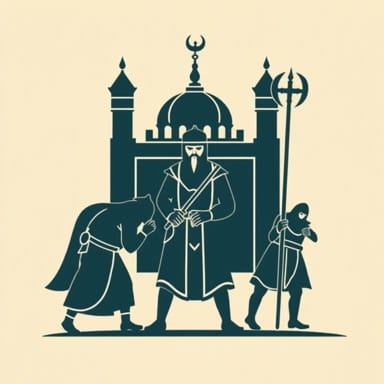
The Janissary system was one of the most distinctive and powerful institutions in the Ottoman Empire, representing both a military elite and a social engineering tool. What made the Janissary system unusual was the fact that it originated from a form of slavery, yet granted its recruits status, power, and privilege unmatched by many free-born citizens. Rather than being confined to menial labor or total subjugation, those conscripted into the Janissary corps often rose to prominence. This paradox makes the system a compelling topic when studying slavery, military innovation, and governance in pre-modern empires.
Origins of the Janissary Corps
Devshirme: The Foundation of the System
The Janissary system was rooted in the practice ofdevshirme, a policy that required Christian boys from the Balkans and other parts of the empire to be taken from their families, converted to Islam, and trained as soldiers or administrators. This state-enforced conscription was a strategic move by the Ottoman rulers to build loyalty directly to the Sultan rather than to any regional or familial power base.
- Most recruits were aged between 8 and 18 years.
- They were chosen for their physical strength, intelligence, and potential.
- The devshirme system was not applied to Muslim subjects of the empire.
This method of recruitment was, by modern standards, a form of slavery. However, unlike traditional slavery, it did not revolve around forced labor in agriculture or domestic service. Instead, it served as a vehicle for upward mobility in Ottoman society.
Training and Indoctrination
From Captivity to Elite Warrior
Once taken into the Janissary system, the young boys underwent a rigorous and highly disciplined training program. They learned Turkish, studied Islam, and received extensive military training. They were also taught loyalty to the Sultan and obedience to the state.
This indoctrination was designed to sever ties with their Christian past and their families. The aim was to mold them into ideal soldiers who would place the interests of the empire above all else. Unlike other forms of slavery, this transformation granted the recruits an elevated status and a sense of purpose.
Privileges and Restrictions
Janissaries lived in military barracks, wore distinctive uniforms, and received regular salaries. They were considered elite and were forbidden to marry or engage in trade during their service rules meant to ensure their undivided loyalty. However, over time, these restrictions loosened, especially by the 17th century.
Despite their origins as slaves, Janissaries were often more privileged than free citizens. Many held significant influence in court and government, with some even rising to the rank of Grand Vizier, the highest political office beneath the Sultan.
Why the Janissary System Was Unusual
Slavery with Power and Prestige
The Janissary system defied conventional definitions of slavery. While the recruits were forcibly taken and had no personal freedom in the traditional sense, they were also integrated into the heart of the state’s military and political apparatus. Their training, roles, and the trust placed in them created a unique paradox: they were slaves who wielded real power.
Social Mobility and Opportunity
Unlike many other forms of slavery, the Janissary system provided its members with a clear path to social advancement. This unusual form of slavery allowed for:
- Access to high-ranking military and administrative roles.
- Involvement in shaping imperial policy and governance.
- The ability to accumulate wealth and property over time.
In some cases, Janissaries became powerful enough to influence who would ascend to the throne, making them kingmakers within the empire. This level of influence is rarely associated with enslaved populations in history.
The Decline and Transformation of the System
Growing Corruption and Resistance to Reform
Over the centuries, the Janissary corps began to lose its original character. The strict recruitment policies were relaxed, and many Janissary positions were sold or inherited. The corps became increasingly resistant to modernization and change, often opposing the Sultan’s attempts at reform.
By the 18th century, the Janissaries had become a conservative force, more interested in maintaining their privileges than defending the empire. This shift made them a barrier to progress rather than a tool for imperial strength.
The Auspicious Incident
In 1826, Sultan Mahmud II made the bold decision to abolish the Janissary corps during what became known as the ‘Auspicious Incident.’ After years of confrontation and resistance, the Sultan deployed loyal troops to suppress the Janissaries, resulting in a violent purge.
The abolition marked the end of the Janissary era and the beginning of a new phase in Ottoman military and administrative reform. Though the system had outlived its usefulness, its historical significance remained.
Legacy of the Janissary System
Historical and Cultural Impact
The Janissary system left a lasting legacy in both Turkish and world history. It demonstrated how an empire could use slavery in a highly structured and strategic way to create loyalty, build a strong military, and centralize power. While it involved the deprivation of personal freedom, it also offered opportunity and advancement, making it unique among historical forms of servitude.
The very name ‘Janissary’ still evokes ideas of elite soldiers, discipline, and paradoxical power. Their story complicates the simplistic view of slavery as always being dehumanizing and powerless, showing that under specific conditions, even those born into subjugation could rise to become leaders and influencers in society.
Lessons for Understanding Empire
Studying the Janissary system also provides insight into how empires sustain themselves through innovation, coercion, and adaptation. The Ottomans used this system to maintain unity in a vast, multi-ethnic empire. It blended elements of coercion and opportunity to secure loyalty in a way few other institutions ever have.
In modern discussions of military service, nationalism, and state-building, the Janissary model serves as a powerful example of how institutional control over individuals can be both empowering and limiting. It stands as a reminder that systems of power are often complex, shaped by contradictions and changing over time.
The Janissary system was an unusual form of slavery in that it did not reduce its members to mere property or laborers. Instead, it transformed them into loyal warriors and administrators with influence and privilege. This duality enslaved by the state yet empowered within it makes the Janissary corps one of the most fascinating institutions in world history. It challenges modern assumptions about freedom, loyalty, and the mechanisms of empire.