In the world of printed materials, terms like ‘leaflet’ and ‘pamphlet’ are often used interchangeably. However, there are subtle differences between them that are important to understand, especially for businesses, educators, and marketing professionals. Both are tools for communication and promotion, but they vary in structure, content, and usage. Understanding the distinction between a leaflet and a pamphlet can help ensure you choose the right format for your message and target audience.
Definition and Structure
What is a Leaflet?
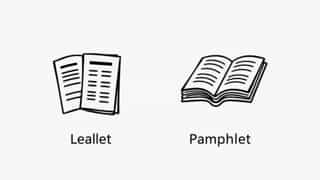
A leaflet is typically a single sheet of paper printed on one or both sides. It is designed to be easily distributed and read quickly. Leaflets are often used to deliver concise information about an event, product, or service. Because of their simplicity and compact size, they are commonly found in public places like bulletin boards, mailboxes, and handouts on the street.
What is a Pamphlet?
A pamphlet is a small booklet or brochure that can consist of one or more pages folded or stapled together. It is more detailed than a leaflet and often used to provide information on a subject in greater depth. Pamphlets are commonly used for educational, political, or promotional purposes and are distributed in offices, clinics, conferences, or mailed directly to specific audiences.
Key Differences Between Leaflets and Pamphlets
1. Length and Content
- Leaflet: Short and to the point, typically one sheet.
- Pamphlet: More extensive, often multiple pages or folds.
Leaflets prioritize brevity and clarity, while pamphlets provide more space to elaborate on ideas, include visuals, or provide background information.
2. Format and Design
- Leaflet: Often flat and unfolded, though tri-fold options are common.
- Pamphlet: Frequently folded or stapled, similar to a mini-booklet.
Leaflets are more simplistic in layout. Pamphlets allow for more complex designs and sections due to their larger number of pages or folds.
3. Purpose and Use
- Leaflet: Best for quick announcements, discounts, event promotions, or alerts.
- Pamphlet: Suitable for explaining detailed topics, such as medical advice, political campaigns, or company overviews.
Because of their content depth, pamphlets are often retained for reference, while leaflets are more likely to be discarded after quick reading.
4. Distribution Method
- Leaflet: Handed out in public, inserted in newspapers, or used in direct mail campaigns.
- Pamphlet: Distributed during events, available in waiting rooms, or sent by post in targeted marketing efforts.
The distribution strategy depends on the document’s purpose and the desired engagement level.
When to Use a Leaflet
Leaflets are ideal for situations where the message must be delivered quickly and concisely. They work well for:
- Announcing a local event
- Offering a promotional discount
- Introducing a new product or service
- Providing directions or contact details
Leaflets are budget-friendly and easy to produce in large quantities. Their low cost makes them effective for mass marketing efforts or campaigns where wide reach is more important than deep engagement.
When to Use a Pamphlet
Pamphlets are more suitable for delivering detailed information or persuasive messages. They are effective tools for:
- Explaining a healthcare topic or procedure
- Promoting a political candidate or cause
- Providing in-depth information about a company or organization
- Sharing educational content or instructions
Pamphlets allow room for storytelling, charts, testimonials, and frequently asked questions. Their format supports a logical flow of information and encourages the reader to spend more time engaging with the content.
Similarities Between Leaflets and Pamphlets
Although they differ in structure and usage, leaflets and pamphlets also share common characteristics:
- Both are printed materials used for communication or advertising.
- They are cost-effective compared to books or magazines.
- Both can include visuals, graphics, and branding elements.
- They are typically distributed free of charge to promote awareness.
Understanding these similarities helps to appreciate their overlapping uses while still choosing the most appropriate format for specific content.
Design Considerations
Whether you’re creating a leaflet or a pamphlet, design plays a crucial role in how well the message is received. Key design tips include:
- Use readable fonts and balanced spacing
- Include a clear headline and subheadings
- Incorporate relevant visuals or icons
- Keep branding consistent throughout
- Make contact information easy to find
Effective layout and design increase engagement and improve the chances that the material will be read rather than discarded.
Digital Adaptation
In today’s digital age, both leaflets and pamphlets have found new life in digital formats. PDFs, email newsletters, and digital brochures serve the same function as their printed counterparts but with added benefits such as hyperlinks, animation, and interactive features. Despite this evolution, the core purpose remains the same: to inform, persuade, or promote.
Choosing the Right Format
To determine whether a leaflet or a pamphlet is best for your needs, consider the following questions:
- How much information do I need to convey?
- Who is my target audience?
- How will this be distributed?
- What is my budget?
- How important is visual appeal?
Answering these questions helps you match your message with the right format, ensuring your communication is effective and well-received.
While the terms leaflet and pamphlet are sometimes used as synonyms, they serve distinct roles in communication and marketing. Leaflets are quick, concise, and ideal for short-term promotion, whereas pamphlets offer depth, structure, and a more lasting impression. Understanding the difference between a leaflet and a pamphlet allows you to make strategic decisions when planning content, design, and distribution. Choosing the right tool ensures your message reaches its intended audience in the most effective and professional way.