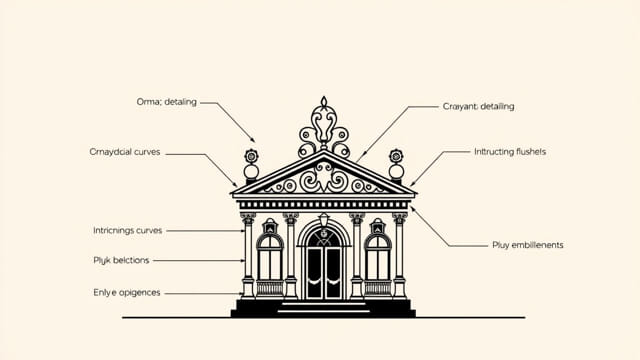
Emerging in early 18th-century France, Rococo architecture marked a dramatic departure from the heavy grandeur of the Baroque period. Known for its playful elegance, intricate ornamentation, and lightness, Rococo brought a sense of whimsy and charm to buildings, interiors, and even furniture design. This architectural style flourished under the reign of Louis XV and became a symbol of aristocratic taste and refinement. Rococo architecture is not just a style it is an expression of a cultural shift toward comfort, intimacy, and the pleasures of life. Understanding the characteristics of Rococo architecture helps us appreciate how it influenced art, design, and even modern aesthetics.
Origin and Cultural Context
Rococo architecture developed in France around the 1730s and quickly spread throughout Europe, especially in Germany, Austria, and Italy. The word Rococo itself is believed to be a combination of the French word rocaille (referring to shell-covered rock work used to decorate artificial grottoes) and the Italian barocco (Baroque). This blend perfectly captures Rococo’s decorative and ornamental essence. The style arose as a reaction against the formal, symmetrical, and often serious nature of Baroque architecture, shifting toward a more carefree and intimate aesthetic.
Influence of the Aristocracy
One of the driving forces behind Rococo design was the French aristocracy. The nobility favored private salons and personal retreats over grand public spaces, and they wanted these interiors to reflect luxury, sophistication, and sensuality. This demand heavily shaped Rococo architecture’s emphasis on ornamentation, pastel color schemes, and natural motifs.
Main Characteristics of Rococo Architecture
1. Lightness and Elegance
Rococo buildings are immediately recognizable by their light and airy quality. Unlike the solid and imposing forms of Baroque architecture, Rococo features delicate curves and an overall sense of softness. Architects often used stucco, gilded plaster, and pale-colored finishes to create a refined and graceful atmosphere. This visual lightness was meant to evoke a sense of ease and leisure, aligning with the lifestyle of the elite.
2. Asymmetrical Designs
One of the most distinctive characteristics of Rococo architecture is its preference for asymmetry. While previous styles, especially Baroque, emphasized balance and symmetry, Rococo embraced more organic, free-flowing forms. This can be seen in wall panels, decorative elements, and room layouts, which often follow whimsical and irregular patterns.
3. Ornamental Details
Ornamentation is central to Rococo architecture. Interiors are richly decorated with intricate details such as floral motifs, seashells, vines, cherubs, scrolls, and foliage. These decorations are not just applied to walls and ceilings but are integrated into furniture, mirrors, fireplaces, and cornices. The intention was to create a cohesive and immersive decorative environment.
- Delicate plasterwork and gilding
- Painted panels and ceiling frescoes
- Curving lines and scrollwork
- Motifs inspired by nature
4. Use of Pastel Colors
Color plays a significant role in Rococo interiors. Instead of the dark and dramatic tones of earlier styles, Rococo architects favored light, pastel hues. Soft blues, greens, pinks, and creams were commonly used to enhance the feeling of serenity and intimacy. These gentle tones made rooms appear larger, brighter, and more welcoming.
5. Emphasis on Interior Spaces
Unlike Gothic or Classical architecture, which often focused on external structures and facades, Rococo architecture is primarily concerned with interiors. The external design of Rococo buildings is typically modest, hiding the luxurious and highly detailed rooms inside. This inward focus reflects the shift in society from public display to private enjoyment.
6. Integration with the Decorative Arts
Rococo architecture often worked hand-in-hand with the decorative arts. Furniture, wall panels, chandeliers, mirrors, and textiles were designed to complement the architecture, creating a unified and harmonious space. Artists and craftsmen collaborated closely with architects to ensure that every element of a room contributed to the overall aesthetic experience.
Notable Examples of Rococo Architecture
Hotel de Soubise, Paris
This Parisian mansion is one of the finest examples of Rococo architecture in France. The Salon de la Princesse, in particular, showcases many of the style’s hallmark traits, including gilded stucco work, soft pastel colors, and an abundance of ornamental detail.
Wieskirche, Germany
Built in the Bavarian Alps, the Wieskirche (or Pilgrimage Church of Wies) represents the height of Rococo church architecture. Its interior features dazzling stucco work, ceiling frescoes, and a theatrical use of light and space, creating a heavenly, dreamlike environment.
Amalienburg Pavilion, Munich
Part of the Nymphenburg Palace complex, the Amalienburg Pavilion was designed as a hunting lodge. It features a mirrored hall, curved lines, silver and blue décor, and ornate carvings perfectly embodying Rococo’s luxurious and intimate charm.
Differences Between Rococo and Baroque
While Rococo evolved from the Baroque, there are several key differences between the two styles:
- Emotion vs. Intimacy: Baroque aims to inspire awe and drama, while Rococo seeks to create comfort and delight.
- Symmetry vs. Asymmetry: Baroque architecture follows a strict symmetrical layout; Rococo is more free-form and decorative.
- Dark vs. Light: Baroque uses deep colors and heavy ornamentation; Rococo favors light pastels and delicate touches.
These contrasts highlight how Rococo represented a shift not only in artistic taste but also in cultural attitudes especially regarding personal space and lifestyle.
Decline and Legacy
By the late 18th century, Rococo architecture began to fall out of favor. Critics argued that it lacked seriousness and moral depth, especially in the face of political and social changes such as the French Revolution. The style was gradually replaced by Neoclassicism, which returned to the ideals of Ancient Rome and Greece favoring order, structure, and simplicity.
Despite its decline, Rococo left a lasting impression on the world of design. Its influence can still be seen in certain interior design elements and revivalist movements. Rococo also paved the way for more personal and expressive approaches to architecture and decoration, influencing Art Nouveau and other modern styles.
Rococo architecture represents a unique chapter in the history of design. With its delicate details, whimsical forms, and emphasis on beauty and pleasure, it reflected the values and aspirations of an elite society seeking escape and delight. Though often overshadowed by the monumental achievements of other styles, Rococo’s contribution to architectural history is both significant and enduring. Its characteristics lightness, ornamentation, pastel palettes, and intimacy remain a source of inspiration for architects, designers, and art lovers around the world.