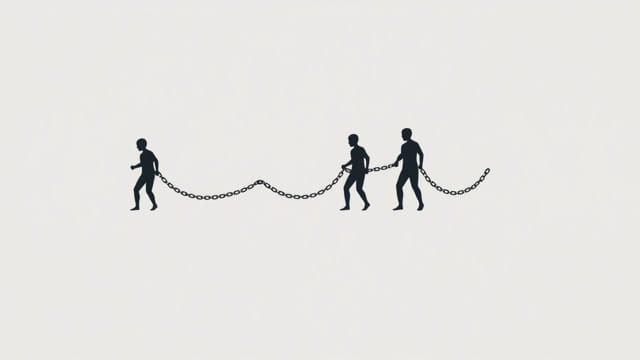
Throughout Latin America’s colonial and post-colonial periods, the system of peonage became a deeply entrenched form of labor exploitation. Rooted in Spanish colonial practices, peonage also known as debt servitude tied laborers, often indigenous peoples or mestizos, to landowners through a cycle of debt. While slavery had been officially abolished in most Latin American countries by the 19th century, peonage continued to function as a coercive system that deprived workers of freedom, perpetuated inequality, and sustained agricultural production for the benefit of elites. Understanding the nature of peonage is essential to grasping the broader socioeconomic structures that shaped Latin America’s history.
Definition and Origins of Peonage
Peonage can be defined as a system where a laborer, or peón, is legally or economically bound to work for a landowner until a debt is paid off. In practice, these debts were often inherited, fabricated, or manipulated in ways that made repayment nearly impossible. The roots of peonage in Latin America can be traced back to colonial Spanish institutions such as the encomienda and repartimiento systems, where indigenous labor was allocated to Spanish settlers under the guise of protection and Christianization.
Colonial Foundations
- The encomienda system allowed Spanish colonists to extract labor from indigenous communities in exchange for nominal welfare services.
- When the encomienda declined, the repartimiento replaced it, formalizing rotating indigenous labor drafts.
- As these systems faded, haciendas (large estates) emerged, where peonage became a dominant form of labor.
Though technically different from slavery, peonage achieved similar outcomes by restricting mobility and enforcing submission to landowners.
The Hacendado and Peón Relationship
The core of the peonage system lay in the power dynamics between the hacendado (estate owner) and the peón (laborer). The hacendado provided land, housing, and basic goods, but at the cost of binding the peón through financial obligations. Peons often received small advances or goods on credit, which were then recorded as debts.
Mechanics of Control
- Debt was accrued through advances on wages, tools, food, or land rental.
- Illiteracy and lack of legal protections made it easy for landowners to manipulate debt records.
- Wages were kept low to prevent laborers from ever repaying their debts.
While some peons voluntarily entered into such arrangements due to lack of alternatives, the systemic nature of exploitation made upward mobility rare and escape difficult.
Geographic Spread and Variations
Peonage was not uniform across Latin America but took on different forms depending on regional economies, cultures, and legal systems. However, certain patterns were consistent throughout the continent.
Examples from Various Countries
- Mexico: Peonage thrived on rural haciendas during the 18th and 19th centuries, especially under Porfirio Díaz’s regime, where liberal land reforms concentrated land in elite hands and dispossessed indigenous communities.
- Peru: In the Andean highlands, peonage resembled earlier systems of mita (forced indigenous labor), blending colonial and precolonial forms of servitude.
- Bolivia and Chile: Indigenous populations were tied to estates through debt bondage and legal coercion, especially in mining regions and plantations.
Despite regional nuances, the unifying thread was the limited agency of the laborer and the overarching authority of the landowner.
Legal Status and Reforms
Peonage often operated in legal grey areas. While most Latin American republics abolished slavery and declared personal liberty for all citizens, enforcement of labor rights was weak. Many legal codes failed to adequately address or define peonage, allowing landowners to manipulate debt contracts and use private enforcers to prevent desertion.
Attempts at Reform
- In Mexico, revolutionary land reforms after 1910 aimed to break up haciendas and redistribute land to peasant communities.
- In Peru and Bolivia, indigenous movements and agrarian reform laws in the 20th century challenged traditional labor systems.
- Despite reforms, remnants of peonage persisted into the mid-20th century in isolated or rural regions.
These reforms were often met with resistance from entrenched landholding classes and were only partially successful in eradicating peonage.
Social and Economic Impacts
The system of peonage had far-reaching consequences for Latin American societies. It contributed to the persistence of inequality, hindered economic diversification, and delayed the development of labor rights.
Consequences for Laborers
- Perpetual poverty due to unpayable debt
- Lack of education, healthcare, and social mobility
- Disintegration of indigenous community structures and traditions
For landowners, peonage ensured a steady and cheap labor supply, allowing them to profit from cash crops and exports while avoiding the cost of fair labor compensation.
Effects on National Economies
- Rural economies remained dependent on monoculture and export-oriented agriculture
- Urban industrialization was slow due to lack of wage-earning rural populations
- Social unrest and revolutionary movements emerged in response to rural injustices
In many countries, the peonage system delayed modernization and fueled resentment that would later erupt in revolts and revolutions.
Decline and Legacy
The decline of peonage was gradual, driven by a combination of legal reform, social movements, and economic changes. As countries modernized, new forms of labor relations began to replace traditional servitude. However, the legacy of peonage remains evident in persistent land inequality, rural poverty, and social hierarchies.
Key Factors Leading to Decline
- Agrarian reforms that redistributed land to smallholders
- Industrial growth offering alternative employment in urban areas
- Pressure from international human rights organizations
Although the formal institution of peonage has been dismantled, historians argue that its echoes can still be found in exploitative rural labor practices, especially among marginalized populations.
The system of peonage in Latin America was a complex and deeply ingrained institution that persisted long after the abolition of slavery. It tied generations of rural laborers to powerful landowners through unending cycles of debt and dependency. By understanding the historical roots and structure of peonage, one can better appreciate the social and economic challenges that Latin American countries have faced in their struggle for equality and development. The peonage system not only shaped the rural landscape but also influenced political ideologies, land reform policies, and ongoing debates about social justice across the continent.