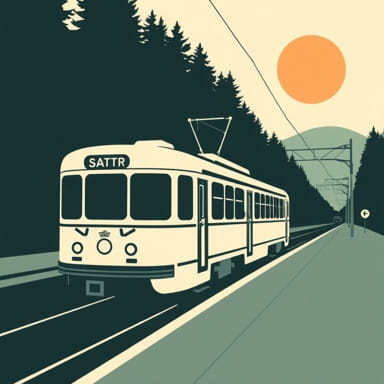
The Seattle-Everett Interurban Railway was a vital component of early 20th-century transportation in the Pacific Northwest, linking two of Washington State’s growing urban centers. Operating during a time when automobiles were still a luxury and roads were often undeveloped or unreliable, this interurban electric railway system offered an efficient and modern mode of travel for commuters, farmers, and city dwellers alike. Its presence helped shape patterns of urban development and was instrumental in integrating the economic and social life of the Puget Sound region. The legacy of the Seattle-Everett Interurban continues to influence infrastructure planning and historical appreciation in the area today.
Origins and Purpose of the Interurban Railway
The Seattle-Everett Interurban Railway began operation in 1910 as part of a broader trend of electric interurban systems that were being built across the United States during the early 1900s. These systems served as middle-ground transportation between streetcars within cities and long-distance steam railways. Designed to provide fast, frequent service, the Seattle-Everett Interurban was built to facilitate travel over the 29-mile distance between the cities of Seattle and Everett in Washington State.
The main goal was to support the movement of people and goods in a region undergoing rapid industrialization and suburban growth. As logging, mining, and fishing industries boomed in the Puget Sound area, there was a pressing need for a reliable connection between economic centers and the surrounding communities.
Technology and Infrastructure
The Seattle-Everett Interurban was an electric railway powered by overhead wires. Trains ran on standard-gauge tracks and were designed for speeds that far surpassed those of contemporary streetcars. The line used lightweight cars and steel bridges to provide efficient, frequent service. Key to its operation was the use of substations along the route that converted electricity into usable power for the trains.
The route included stops at various points between the two cities, such as Fremont, Richmond Highlands, and Alderwood Manor, offering access to emerging suburbs and industrial zones. Much of the infrastructure was built along existing roads or right-of-ways acquired by the railway company, making construction and maintenance more manageable.
Economic and Social Impact
The interurban railway played a crucial role in the development of northern King County and southern Snohomish County. It made commuting possible for people living in outlying areas who worked in the larger cities, helping to establish what we now think of as suburbs. Small farming communities also benefited from the ability to transport produce quickly to city markets.
In addition to its economic contributions, the railway fostered social cohesion and cultural exchange. It allowed families to visit relatives across city lines, encouraged regional tourism, and supported the growth of civic institutions. For many residents, it offered newfound mobility and access to services, education, and employment that had previously been out of reach.
Stations and Neighborhood Development
The locations of interurban stations often became the seeds of new neighborhoods and commercial centers. Property developers frequently advertised homes and land by promoting easy access to the interurban line, and businesses sprang up near stations to cater to travelers. In places like Alderwood Manor, entire planned communities emerged as a direct result of the railway’s presence.
- Fremont: A hub for industrial development and a popular boarding point for workers heading to Everett.
- Richmond Highlands: Became a desirable residential area due to its quick link to Seattle.
- Alderwood Manor: Developed as a demonstration farm community with promotional tours by train.
Challenges and Decline
Despite its many benefits, the Seattle-Everett Interurban Railway faced growing competition from automobiles and the expansion of paved road networks. By the 1920s, car ownership was becoming increasingly common, and buses offered flexible, less infrastructure-intensive transportation options. These changes began to erode the interurban’s customer base.
Another challenge was financial sustainability. The system was expensive to maintain, especially with the increasing costs of electricity, labor, and equipment upgrades. As ridership declined, revenues fell short of expectations, making continued operation difficult. Ultimately, the railway ceased passenger service in 1939, although some parts of the track were used for freight for a few more years.
Legacy and Preservation
Although the interurban ceased operation decades ago, its legacy remains visible today. Portions of the original right-of-way have been transformed into walking and biking trails, such as the Interurban Trail, which follows much of the original route and is popular among cyclists and pedestrians.
Historical markers and preservation efforts continue to educate the public about the importance of this early electric railway. Local historical societies and museums sometimes feature exhibits, photos, and artifacts from the interurban era, helping to maintain community awareness of the region’s transportation history.
Impact on Modern Transportation Planning
The concept of efficient regional transit connecting urban and suburban areas continues to be relevant today. Modern light rail systems and commuter rail lines echo many of the goals of the original Seattle-Everett Interurban Railway. As cities struggle with traffic congestion and climate change, the value of clean, efficient public transportation systems is once again at the forefront of planning discussions.
The interurban also demonstrated the potential for public transit to influence real estate development and regional growth. Planners today study these early systems to better understand how transit-oriented development can improve city life, reduce car dependency, and create more equitable access to services and opportunities.
The Seattle-Everett Interurban Railway was more than just a transportation system it was a force that shaped the economic and social fabric of the Puget Sound region in the early 20th century. By linking communities, enabling development, and inspiring future transit systems, the interurban has left an enduring legacy. Even though it no longer operates, its influence is still present in the layout of neighborhoods, the location of trails, and the continuing conversation about how best to connect our cities and people. Its story serves as a valuable reminder of the power of innovation in public transportation and its role in shaping the future.