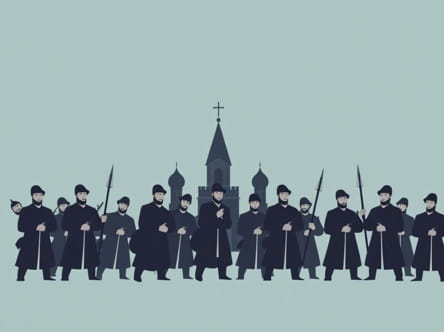
Russian serfdom was a powerful and deeply entrenched institution that shaped the social, economic, and political structure of Russia for centuries. It created a rigid system where the majority of peasants were tied to the land and controlled by landowners, with very little opportunity to improve their lives. Understanding who used Russian serfdom involves examining the roles of the nobility, the state, and even the Church in maintaining and exploiting this feudal system. Serfdom in Russia did not emerge in isolation it was cultivated through centuries of hierarchical order and legal reinforcement that favored the elite classes over the common people.
Origins of Russian Serfdom
Serfdom in Russia began to take root in the late 15th and early 16th centuries during the rule of Ivan III and was later expanded under Ivan IV (Ivan the Terrible). The system was a response to the growing needs of landowners for a stable and immobile labor force. Over time, serfdom became codified in law, particularly with the Ulozhenie of 1649, a legal code under Tsar Alexei Mikhailovich, which fully tied peasants to the land and gave their landlords near-absolute control over them.
The Role of the Nobility
The primary users and beneficiaries of Russian serfdom were the noble landowners, also known as the boyars and later the dvoriane. These were the aristocratic class granted lands by the tsar in exchange for military or administrative service. As their landholdings increased, they required more labor to maintain productivity, and serfdom provided a convenient and sustainable supply of agricultural workers who had no legal right to leave the estates.
The nobility viewed serfs as economic assets, responsible for cultivating the land, producing crops, paying taxes, and often performing domestic duties. The power dynamic was one of complete control: nobles could buy, sell, and punish serfs with little to no interference from the state. In return, these landowners supported the autocracy and contributed to military campaigns, helping to reinforce the centralized power of the tsar.
Monarchy and State Support
Russian tsars also relied heavily on serfdom to maintain authority and ensure the loyalty of the noble class. The state was a major user of serf labor, especially in large-scale infrastructure projects like the construction of St. Petersburg under Peter the Great. In many cases, peasants were conscripted into forced labor or military service under extremely harsh conditions.
Additionally, the state collected taxes from serfs through their landlords, making the serf population a crucial part of the national economy. The government thus had no incentive to reform or abolish serfdom, as it provided financial stability and social order. Russian rulers like Catherine the Great even expanded the rights of landowners over their serfs while limiting the legal options available to peasants seeking justice or relief.
The Church’s Involvement in Serfdom
The Russian Orthodox Church also played a role in the continuation of serfdom. The Church was one of the largest landowners in Russia and, like the nobility, held many serfs who worked its lands and performed various duties. Serfs in church lands faced similar conditions as those under secular landlords, including limited freedom and a lifetime of hereditary bondage.
Religious leaders often reinforced the idea that serfdom was a divinely sanctioned social order. By promoting obedience, humility, and piety among the peasant class, the Church helped legitimize the system and discouraged rebellion or social mobility. The spiritual framework provided by the Orthodox Church thus helped preserve the status quo and dissuade the masses from challenging their subjugation.
Types of Labor Performed by Serfs
Serfs in Russia were involved in a variety of labor tasks, depending on the needs of their lords and the region in which they lived. These included:
- Agricultural work Plowing fields, planting, harvesting, and maintaining estates.
- Craftsmanship Working as blacksmiths, carpenters, or cobblers for their local communities or landlords.
- Domestic service Cooking, cleaning, and serving in the households of the elite.
- Industrial labor In some regions, serfs were employed in factories, mines, or distilleries owned by nobles or the state.
This diversity of labor ensured that the Russian economy, particularly in rural areas, remained heavily dependent on serfdom for centuries.
Economic Impact of Serfdom
Serfdom hindered Russia’s economic development in many ways. It discouraged innovation, prevented the free movement of labor, and stifled the growth of a middle class. Landowners had little incentive to modernize agricultural practices because they had access to free or extremely cheap labor. At the same time, peasants were not motivated to increase productivity since they did not own the land and saw no benefits from their surplus production.
Despite these inefficiencies, serfdom persisted for a long time because it served the interests of the powerful classes. It wasn’t until Russia began to compare itself with the more industrialized and capitalist economies of Europe that the shortcomings of serfdom became more evident to reform-minded intellectuals and political leaders.
The End of Russian Serfdom
By the mid-19th century, the moral and practical failures of serfdom were undeniable. The system was widely criticized by both Russian thinkers and foreign observers. The Crimean War (18531856), which exposed the backwardness of Russia’s infrastructure and military, highlighted the need for major reforms.
Under Tsar Alexander II, a major shift occurred. In 1861, the Emancipation Reform abolished serfdom and freed over 23 million peasants. However, the reform was limited in scope. Former serfs were required to make redemption payments for land that was often insufficient or infertile, and many continued to live in poverty. Nevertheless, the end of serfdom marked a turning point in Russian history, laying the groundwork for future social and political changes, including the eventual rise of revolutionary movements in the early 20th century.
Russian serfdom was primarily used by the noble class, supported by the monarchy and state apparatus, and reinforced by the Church. Together, these institutions created a rigid social hierarchy that allowed a minority to control and benefit from the labor of the majority. Serfdom defined much of Russian life for centuries, shaping its economy, culture, and political systems. Its eventual abolition, while flawed, signified the slow unraveling of feudalism and opened the door to a modern Russia one increasingly aware of the cost of oppression and the need for reform.