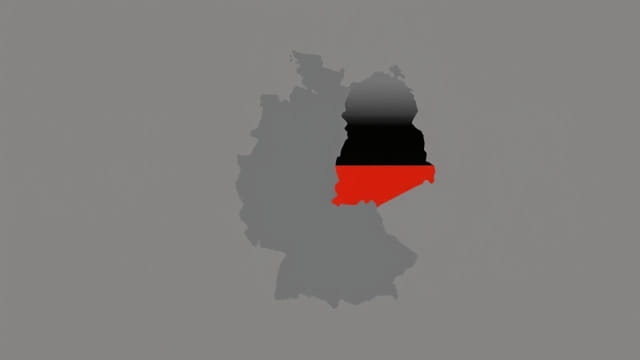
The postwar occupation and division of Germany were among the most consequential outcomes of World War II. Following Nazi Germany’s unconditional surrender in May 1945, the victorious Allied powers moved quickly to implement their plans for managing and reconstructing the defeated nation. The division of Germany, initially intended as a temporary arrangement, evolved into a long-lasting geopolitical reality that helped define the Cold War era. Understanding the key dates of the occupation and division of Germany is essential to grasp how global power shifted and how East and West Germany came to symbolize the ideological divide between democracy and communism.
Initial Occupation of Germany
May 8, 1945 Germany Surrenders
Germany’s unconditional surrender on May 8, 1945, marked the end of World War II in Europe. This date, known as Victory in Europe (VE) Day, is widely recognized as the beginning of the Allied occupation. With the Nazi regime defeated, Allied forces assumed control over German territory, and plans for occupation and governance were activated.
June 5, 1945 Declaration Regarding Germany
On June 5, 1945, the Allied Control Council issued a formal declaration of their authority over Germany. This declaration confirmed that the Allies comprising the United States, the United Kingdom, the Soviet Union, and later France would jointly occupy Germany and exercise supreme authority over its government. Germany was to be divided into four occupation zones, each controlled by one of the Allied powers.
JulyAugust 1945 Potsdam Conference
The Potsdam Conference, held from July 17 to August 2, 1945, solidified the arrangements for the occupation. The leaders of the Allied powers met to discuss postwar plans, including disarmament, denazification, and the rebuilding of Germany’s economy. While cooperation remained intact at this stage, emerging tensions especially between the Western Allies and the Soviet Union foreshadowed the coming division.
The Four Occupation Zones
Division of Territory
Germany was divided into four occupation zones based on prior agreements made during the Yalta and Potsdam Conferences. These were:
- American Zone: Southern Germany, including Bavaria and parts of Hesse.
- British Zone: Northwestern Germany, including Hamburg and the Ruhr industrial region.
- French Zone: Western Germany, including Saarland and parts of Baden and Württemberg.
- Soviet Zone: Eastern Germany, including Berlin, Saxony, and Thuringia.
Each power was responsible for administering its zone and implementing policies agreed upon by the Allied Control Council. However, ideological differences quickly emerged, particularly concerning economic recovery and political restructuring.
Berlin’s Special Status
Although located deep within the Soviet zone, Berlin was also divided into four sectors, each controlled by one of the Allies. This unique arrangement later became a focal point of Cold War tensions, particularly during the Berlin Blockade and the eventual construction of the Berlin Wall.
Emerging Division and Cold War Context
1946 Breakdown of Allied Unity
By 1946, the wartime alliance between the United States, Britain, and the Soviet Union began to unravel. The Western powers pushed for economic recovery and democratic reforms, while the Soviet Union pursued centralized control and socialist policies. The opposing visions for Germany’s future created deep mistrust and conflict among the occupying forces.
January 1, 1947 Bizonia Formed
On January 1, 1947, the American and British zones were merged into a single administrative unit known as Bizonia. This move was made to promote economic recovery and cooperation. It also marked the first concrete step toward a divided Germany, as the Soviet Union opposed the merger and began isolating its zone from Western influence.
June 1948 Currency Reform and Blockade
In June 1948, the Western Allies introduced a new currency, the Deutsche Mark, in the Western zones. The Soviet Union responded by initiating the Berlin Blockade, cutting off all road, rail, and canal access to West Berlin. This crisis lasted from June 24, 1948, to May 12, 1949, and was countered by the Berlin Airlift a massive effort by the U.S. and its allies to supply West Berlin by air.
Formal Division of Germany
May 23, 1949 Federal Republic of Germany
On May 23, 1949, the Federal Republic of Germany (FRG), commonly known as West Germany, was officially established. It included the American, British, and French zones and adopted a democratic government based in Bonn. The formation of West Germany was a direct result of the failure to reach a unified solution for the entire country.
October 7, 1949 German Democratic Republic
In response, the Soviet Union established the German Democratic Republic (GDR), or East Germany, on October 7, 1949. Based in East Berlin, the GDR adopted a socialist government aligned with Soviet policies. From this point forward, Germany existed as two separate states with opposing political and economic systems.
Key Milestones in the Divided Era
1955 Sovereignty and NATO/Warsaw Pact
In 1955, West Germany gained full sovereignty and joined the North Atlantic Treaty Organization (NATO). East Germany responded by joining the Warsaw Pact, solidifying the division of Europe into Western and Eastern blocs. These alliances formalized the global ideological divide known as the Cold War.
August 13, 1961 Berlin Wall Constructed
One of the most symbolic moments in Germany’s division came on August 13, 1961, when the East German government, with Soviet support, constructed the Berlin Wall. Designed to stop the mass emigration of East Germans to the West, the wall became a stark physical representation of the Iron Curtain separating East and West.
The Path to Reunification
Late 1980s Decline of Soviet Influence
By the late 1980s, the Soviet Union faced internal economic and political pressures, and reforms under Mikhail Gorbachev (glasnost and perestroika) began loosening its grip on Eastern Europe. In East Germany, protests and calls for democratic reforms gained momentum.
November 9, 1989 Fall of the Berlin Wall
On November 9, 1989, the Berlin Wall fell, marking the beginning of the end for the GDR. This momentous event was followed by rapid political changes and negotiations for reunification.
October 3, 1990 German Reunification
Germany was officially reunified on October 3, 1990, when the German Democratic Republic ceased to exist and joined the Federal Republic of Germany. This date is now celebrated as German Unity Day, symbolizing the end of division and the triumph of democracy.
The dates of the postwar occupation and division of Germany from May 1945 to October 1990 mark a complex and pivotal period in modern history. What began as a joint effort to stabilize a defeated nation evolved into one of the defining stories of the Cold War. The occupation zones laid the groundwork for the eventual formation of two separate German states, each aligned with opposing superpowers. The construction and fall of the Berlin Wall further embodied this ideological conflict. Understanding these dates offers critical insight into the political, economic, and social dynamics that shaped Europe for nearly half a century and ultimately led to a reunified and democratic Germany.