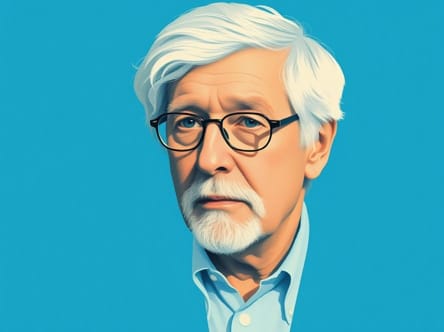
Few artists have had a more profound impact on contemporary art than David Hockney. Known for his vibrant colors, emotional intimacy, and innovative use of technology, Hockney has become a symbol of creative reinvention. Born in England and later relocating to California, his career has spanned over six decades, covering painting, drawing, photography, and digital art. His personal style and unique perspective have led to some of the most recognizable works in modern art history. One of the most notable themes within his vast portfolio is portraiture a subject through which Hockney explores identity, time, and emotion with both precision and imagination.
The Artistic Journey of David Hockney
Early Life and Education
David Hockney was born in Bradford, West Yorkshire, England, in 1937. His early interest in drawing was encouraged by his family and teachers, and he went on to study at the Bradford School of Art before enrolling at the Royal College of Art in London. While still a student, Hockney gained recognition for his originality, producing works that mixed expressionist styles with personal themes, often dealing with love, sexuality, and everyday life.
Move to California
In the 1960s, Hockney made several trips to the United States and eventually settled in Los Angeles. The bright light, swimming pools, and open culture of California were a stark contrast to his life in Britain and became a major influence in his work. This period gave birth to many of his most iconic paintings, such asA Bigger Splashand his many portraits of friends and lovers, all set against sunny Californian backdrops. These pieces blended minimal composition with emotional intensity, creating an unmistakable Hockney aesthetic.
The Role of Portraiture in Hockney’s Work
Capturing the Essence of the Individual
Portraits have always held a central place in David Hockney’s art. Unlike traditional portraiture that often seeks realism or flattery, Hockney aims to capture the inner life of his subjects. His portraits are not just about likeness they explore the emotional and psychological states of the people he paints. From famous friends like Celia Birtwell and Christopher Isherwood to his own mother, each portrait conveys a deep sense of personality and relationship.
Notable Series: Portrait of an Artist (Pool with Two Figures)
Perhaps one of Hockney’s most celebrated portrait works isPortrait of an Artist (Pool with Two Figures). Painted in 1972, it features a man in a pink jacket gazing at another swimmer under water. This painting blends portraiture with landscape and symbolism. It is both intimate and enigmatic, inviting viewers to reflect on the dynamics between the figures. The painting became the most expensive artwork by a living artist ever sold at auction in 2018, underscoring Hockney’s influence in the art market and among collectors.
Double Portraits and Relationship Dynamics
Hockney’s double portraits are especially noteworthy. In these compositions, two people are typically depicted in domestic settings sometimes interacting, sometimes emotionally distant. The tension between the figures offers insight into the nature of relationships, be they romantic, platonic, or familial. Works likeMr and Mrs Clark and PercyandHenry Geldzahler and Christopher Scottpresent more than just faces; they reveal subtle narratives and interpersonal dynamics.
Techniques and Mediums
From Paint to Photography
Over the years, David Hockney has experimented with a variety of media. While he began with oil painting, he soon expanded into photography, collage, and even fax machine art. In the 1980s, he produced a series of photographic collages he called joiners, composed of Polaroid snapshots arranged to create a panoramic image. These works redefined how portraits could be created and viewed, breaking away from traditional single-point perspective.
Digital Portraiture and iPad Art
Always curious about new tools, Hockney embraced digital technology long before it was common among artists. In the 2010s, he began creating portraits and landscapes using an iPad. These digital drawings retained his signature color palette and line work while allowing for spontaneity and speed. His iPad portraits often featured friends and visitors who sat for him during his time in Normandy, France, especially during the COVID-19 pandemic, when travel and contact were limited.
Portraits as Emotional Time Capsules
Revisiting Familiar Faces
Throughout his career, Hockney has returned to the same subjects repeatedly. His series of portraits of Celia Birtwell, for example, span decades and reveal not only her evolving appearance but also the changing nature of their friendship. These long-term series act as emotional time capsules, documenting human connection over time with a painterly sensitivity that few artists can achieve.
Portraits of Family and Friends
Hockney has often said he prefers painting people he knows. This preference adds an intimacy to his portraiture that sets it apart. When viewers look at a Hockney portrait, they aren’t just seeing a face they’re witnessing a conversation, a shared moment, or a quiet understanding between artist and subject. This emotional depth contributes to the ongoing relevance of his work in the world of contemporary art.
The Cultural Significance of David Hockney’s Portraiture
Influence on Modern Artists
Hockney’s influence can be felt across generations. His fearless exploration of color, technology, and composition has inspired artists worldwide. Portraiture, in particular, has benefited from his innovative spirit, which encourages artists to move beyond realism and into storytelling through visual form.
Exhibitions and Recognition
Major museums across the globe have exhibited Hockney’s portraits, including the Tate Britain, the Metropolitan Museum of Art, and the Getty Center. His retrospectives attract large crowds, underscoring his broad appeal and enduring relevance. His works often form the centerpiece of portrait-focused exhibitions, highlighting the evolution of the genre in the modern age.
David Hockney’s portraiture is more than just a collection of painted or photographed faces. It is a vibrant narrative of life, relationships, and identity rendered through masterful technique and a deeply personal lens. Whether working in oils, photos, or digital formats, Hockney captures not only how people look but how they feel, how they connect, and how they endure through time. His ability to see the human condition through a painter’s eye has established him as one of the most important portrait artists of the 20th and 21st centuries. As he continues to innovate and create, David Hockney remains a shining example of how art can bring personality and connection to life in unexpected and beautiful ways.