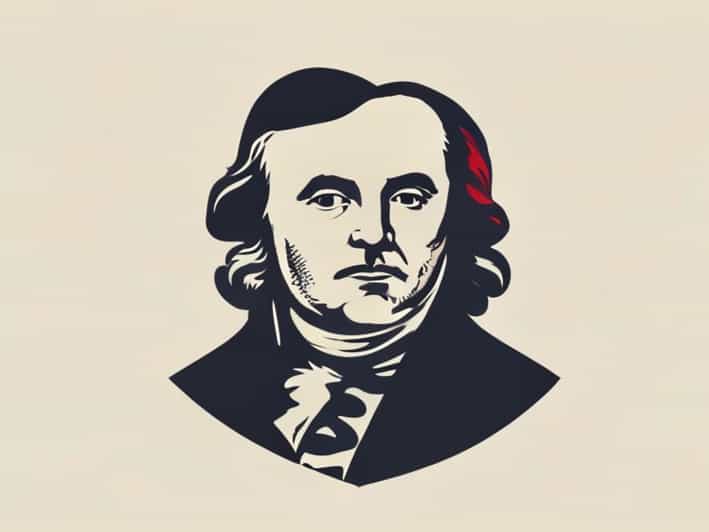
Montesquieu, a prominent French philosopher and political thinker of the 18th century, played a critical role in shaping the intellectual foundations of the French Revolution. Born Charles-Louis de Secondat in 1689, Montesquieu’s ideas on the separation of powers, checks and balances, and the importance of the rule of law significantly influenced revolutionary leaders and the development of modern democratic institutions. While Montesquieu himself did not witness the revolution, which began in 1789, his writings provided a philosophical framework that helped justify the dismantling of absolute monarchy and the establishment of representative government in France.
Montesquieu’s Early Life and Influences
Montesquieu was born into a wealthy family in Bordeaux, France. He inherited the title of Baron de La Brède and a seat in the Bordeaux Parlement, which allowed him to observe the workings of French political and judicial institutions firsthand. His exposure to law, governance, and the privileges of the nobility deeply informed his understanding of political systems and social hierarchy. Montesquieu was also influenced by the Enlightenment movement, which emphasized reason, scientific inquiry, and skepticism toward traditional authority. The combination of personal experience and intellectual engagement laid the groundwork for his revolutionary ideas.
Key Philosophical Contributions
Montesquieu’s most influential work,The Spirit of the Laws(1748), analyzed political structures and argued for the separation of governmental powers into legislative, executive, and judicial branches. He believed that concentrating power in a single authority, as was the case with the French monarchy, inevitably led to tyranny. Montesquieu advocated for a system of checks and balances to prevent any branch from becoming too powerful. His insights on liberty, law, and institutional design resonated strongly with revolutionaries who sought to create a society free from absolute rule.
Montesquieu’s Ideas and the French Revolution
During the French Revolution, Montesquieu’s theories provided both inspiration and justification for radical political change. Revolutionaries frequently cited his ideas when advocating for constitutional reforms and the establishment of representative government. Montesquieu’s emphasis on the separation of powers influenced the drafting of revolutionary documents, such as the Declaration of the Rights of Man and of the Citizen (1789), which emphasized liberty, equality, and the rule of law.
Influence on Revolutionary Governance
Montesquieu’s insistence on checks and balances inspired the creation of new governmental structures during the revolution. For example
- Legislative AssembliesThe National Assembly and subsequent legislative bodies were organized to prevent the concentration of power in a single individual or group.
- Independent JudiciaryRevolutionary reforms sought to establish courts that operated independently of political pressures, reflecting Montesquieu’s vision of judicial autonomy.
- Executive LimitationsAlthough the revolutionary period experienced fluctuations in executive power, Montesquieu’s ideas provided a guiding principle for limiting the authority of any ruler.
Montesquieu and the Concept of Liberty
Montesquieu’s philosophical focus on liberty was central to the revolutionary discourse. He argued that true freedom is only possible under a system where power is divided and laws are enforced impartially. This principle helped revolutionaries articulate the need to overthrow the monarchy and establish a political order that protected individual rights. His writings also highlighted the dangers of arbitrary power and the importance of a government accountable to its citizens, ideas that were fundamental in shaping revolutionary ideology.
Challenges and Interpretations
While Montesquieu’s ideas were highly influential, their application during the French Revolution was not always straightforward. The revolution was marked by periods of radicalism, such as the Reign of Terror, where centralized authority and arbitrary decisions conflicted with Montesquieu’s vision of balanced governance. Nevertheless, even in turbulent times, his philosophical framework offered a lens through which revolutionaries could critique abuses of power and advocate for reforms grounded in reason and justice.
Montesquieu’s Legacy in Revolutionary France
Montesquieu’s intellectual contributions endured beyond the revolution itself. The principles of separation of powers, judicial independence, and the rule of law became cornerstones of modern democratic systems in France and around the world. His influence is evident in the French Constitution of 1791, which attempted to structure government in accordance with his ideas, and in later constitutional developments that sought to balance authority and protect civil liberties.
Montesquieu’s ideas on governance, liberty, and the separation of powers profoundly influenced the French Revolution and the creation of modern democratic institutions. His writings provided a philosophical foundation that helped justify the dismantling of absolute monarchy and the promotion of a government accountable to the people. While the revolution faced challenges and deviations from Montesquieu’s vision, his principles of law, checks and balances, and protection of individual liberty continue to shape political thought and remain relevant in contemporary discussions on governance and democracy.