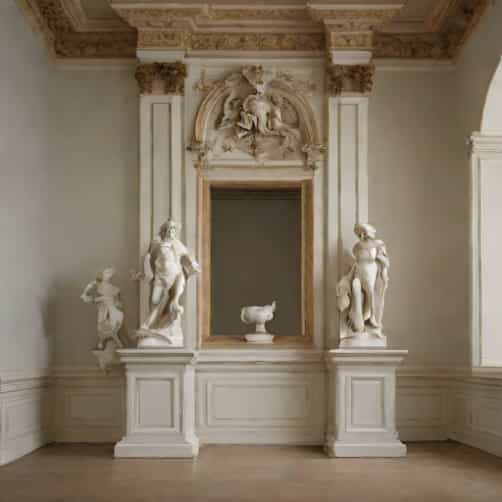
The Borghese Gallery in Rome is a treasure trove of art, housing some of the most exquisite sculptures by Gian Lorenzo Bernini, the master of Baroque sculpture. Visitors to the gallery are often struck by the sheer dynamism and emotional intensity of Bernini’s works, which seem to capture movement and expression in marble as if frozen in time. From divine mythological figures to portraits of influential patrons, Bernini’s sculptures at the Borghese Gallery exemplify his ability to merge technical mastery with profound psychological insight. Experiencing these works in person allows one to appreciate the intricate details, the play of light and shadow, and the lifelike quality that has made Bernini a celebrated name in art history. The gallery itself, with its carefully curated rooms and rich history, provides the perfect context for understanding the significance of these iconic works.
Gian Lorenzo Bernini The Master Sculptor
Gian Lorenzo Bernini, born in 1598 in Naples, Italy, was a prodigy who would come to define the Baroque era in sculpture. His works are characterized by dramatic intensity, intricate details, and a sense of movement that was revolutionary for his time. Bernini’s approach was not only technical but deeply humanistic; he sought to evoke emotion and engage viewers in a narrative experience. His contributions extended beyond sculpture to architecture and painting, but it is in marble that his genius shines most brilliantly. The Borghese Gallery offers a concentrated view of his achievements, showcasing his early works alongside mature masterpieces that illustrate his evolving style and skill.
The Historical Context of Bernini’s Work
Bernini lived during a time when the Catholic Church used art to communicate power, devotion, and religious narratives. The Counter-Reformation influenced much of his work, encouraging artists to create emotionally engaging, dramatic art that could inspire faith and devotion. Bernini’s sculptures often depict mythological and religious subjects, combining theatricality with realism. Patrons like Cardinal Scipione Borghese, a major art collector and Bernini’s early supporter, played a crucial role in commissioning works that would define Bernini’s career. Many of these commissioned pieces now reside at the Borghese Gallery, making it a central location to study both his artistic legacy and the social context of his era.
Key Bernini Sculptures at the Borghese Gallery
The Borghese Gallery is home to several of Bernini’s most renowned works, each demonstrating his mastery over marble and his skill in capturing human emotion. Among the most famous are Apollo and Daphne, David, and The Rape of Proserpina. These sculptures not only display technical virtuosity but also illustrate Bernini’s unique ability to convey stories through physical form. The gallery presents these works in a way that allows visitors to view them from multiple angles, enhancing the perception of movement and the dynamic interplay of figures.
Apollo and Daphne
Apollo and Daphne, created between 1622 and 1625, is one of Bernini’s most celebrated masterpieces. It depicts the moment from Ovid’s Metamorphoses when Daphne transforms into a laurel tree to escape Apollo. The sculpture captures an intense sense of motion, with Apollo lunging forward and Daphne’s fingers and toes beginning to sprout leaves and bark. Bernini’s attention to detail the flowing hair, the tension in muscles, and the delicate texture of the transforming limbs demonstrates his extraordinary skill. This piece exemplifies his ability to blend mythology with lifelike realism, making viewers feel the urgency and emotion of the scene.
David
Bernini’s David, sculpted between 1623 and 1624, captures the biblical hero in the midst of battle, winding up to launch a stone at Goliath. Unlike earlier depictions of David, which often show him in a contemplative pose, Bernini’s version is full of kinetic energy and psychological intensity. The twisting body, furrowed brow, and tense expression convey the concentration and determination of a hero in action. This sculpture highlights Bernini’s ability to create a narrative in a single frozen moment, allowing viewers to feel part of the story rather than observing it from a distance.
The Rape of Proserpina
The Rape of Proserpina, completed between 1621 and 1622, demonstrates Bernini’s unparalleled capacity to depict human emotion and physicality. The sculpture illustrates the abduction of Proserpina by Pluto, with a dramatic interplay of struggle and resistance. The way Bernini carved the fingers pressing into Proserpina’s flesh is particularly remarkable, showcasing his skill in creating lifelike textures and tactile sensations in marble. The tension, movement, and emotion make this sculpture a pinnacle of Baroque artistry and a highlight of the Borghese Gallery’s collection.
Visiting the Borghese Gallery
Visiting the Borghese Gallery offers an immersive experience into the world of Baroque art and Bernini’s genius. The gallery is located in the Villa Borghese, a historic estate with beautifully landscaped gardens and architecture that complements the artworks inside. Each room is carefully curated to create a journey through art history, with Bernini’s sculptures prominently featured to allow for detailed observation from multiple viewpoints. Lighting, spacing, and presentation are designed to enhance the dramatic effect of each sculpture, making the gallery an ideal destination for art enthusiasts and casual visitors alike.
Tips for Viewing Bernini’s Sculptures
To fully appreciate Bernini’s works at the Borghese Gallery, consider the following tips
- Take your time to walk around the sculptures, observing them from different angles.
- Pay attention to the intricate details, such as facial expressions, textures, and movement.
- Read the accompanying descriptions to understand the historical and mythological context.
- Visit early in the day or during less crowded hours to enjoy a more intimate experience.
- Consider a guided tour or audio guide for deeper insight into Bernini’s techniques and life.
Legacy of Bernini’s Sculptures
Bernini’s sculptures at the Borghese Gallery continue to influence artists and captivate audiences centuries after their creation. His ability to blend narrative, emotion, and technical mastery set a new standard for sculpture during the Baroque era and beyond. Contemporary sculptors study his work for inspiration, particularly his skill in conveying psychological depth and dynamic movement in marble. The Borghese Gallery serves as both a repository of these masterpieces and a center for appreciating the enduring impact of Bernini’s artistry on the world of visual art.
The Borghese Gallery offers an unparalleled opportunity to experience the genius of Gian Lorenzo Bernini through some of his most iconic sculptures. Works such as Apollo and Daphne, David, and The Rape of Proserpina showcase the technical brilliance, emotional depth, and dramatic flair that define Bernini’s contribution to Baroque art. Visiting the gallery allows one to understand not only the beauty of these individual pieces but also the broader cultural and historical context in which they were created. For anyone interested in art, history, or the expressive potential of sculpture, Bernini’s works at the Borghese Gallery remain a timeless and awe-inspiring experience.