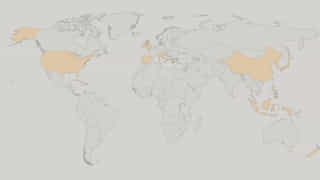
By 1960, African diasporas were present in numerous countries around the world, shaped by centuries of migration, forced displacement through the transatlantic slave trade, and colonial labor systems. These communities, while diverse in culture and experience, maintained ancestral links to the African continent and played vital roles in shaping the societies they inhabited. From the Americas to Europe and beyond, African-descended populations contributed to the cultural, political, and economic life of their host countries. Understanding where African diasporas lived by 1960 is essential to exploring global patterns of migration, colonial history, and cultural identity.
North America
United States
The United States had one of the largest and most prominent African diaspora populations by 1960. The legacy of slavery, followed by emancipation and segregation, defined much of the African American experience. By 1960, the civil rights movement was underway, and African Americans were pushing for equal rights, desegregation, and social justice.
- Major population centers included the Southern states, such as Georgia, Alabama, and Mississippi.
- During the Great Migration, millions of African Americans moved to northern cities like Chicago, Detroit, and New York.
- Culture, politics, and music especially jazz, blues, and gospel were deeply influenced by African heritage.
Canada
Canada was home to a smaller but significant African diaspora community. Descendants of enslaved Africans who escaped via the Underground Railroad, as well as Caribbean immigrants, contributed to Canada’s cultural fabric.
- Nova Scotia had historic Black communities dating back to the 18th century.
- Caribbean migration increased in the early 20th century, especially in cities like Toronto and Montreal.
Latin America and the Caribbean
Brazil
Brazil had the largest population of African descendants outside of Africa by 1960. The country was a major destination for enslaved Africans during the transatlantic slave trade, particularly in states like Bahia, Pernambuco, and Rio de Janeiro.
- African culture remained strong in religion (Candomblé), music (samba), and cuisine.
- Despite abolition in 1888, racial inequality persisted well into the 20th century.
Cuba
Enslaved Africans were brought to Cuba primarily for labor on sugar plantations. By 1960, Afro-Cubans were deeply integrated into national life, especially in music, religion (SanterÃa), and revolutionary politics.
- The Cuban Revolution in 1959 aimed to address social inequalities, including race.
- Afro-Cuban traditions influenced Cuban identity and the arts globally.
Haiti
Haiti was the first Black republic, established in 1804 after a successful slave revolt. By 1960, the majority of its population was of African descent. Haitian culture and history were a symbol of African resistance and independence.
- Haitians maintained strong ties to African spirituality through Vodou.
- The country faced political instability but preserved its African cultural legacy.
Jamaica and Other Caribbean Nations
Jamaica, Trinidad and Tobago, Barbados, and other Caribbean nations had large populations of African origin. These communities arose from British, French, Spanish, and Dutch colonial plantations worked by enslaved Africans.
- By 1960, many Caribbean countries were moving toward independence.
- Afro-Caribbean people played a major role in shaping national identity, music (like reggae and calypso), and political life.
Europe
United Kingdom
The UK saw a growing African and Afro-Caribbean presence after World War II. The ‘Windrush Generation’ refers to Caribbean immigrants arriving in Britain starting in 1948. By 1960, many lived in London, Birmingham, and Liverpool.
- Many Africans in Britain were students, professionals, or former colonial soldiers.
- Though small in number, African diasporas faced racial discrimination and worked to build community institutions.
France
France had African diaspora communities originating from West and North Africa. Paris and Marseille became cultural centers for African and Afro-Caribbean people by 1960.
- Immigrants from Senegal, Algeria, Martinique, and Guadeloupe formed distinct communities.
- Many served in the French military or worked in urban industries.
- Black intellectuals such as Aimé Césaire and Frantz Fanon influenced French and global thought on race and colonialism.
Portugal and Spain
Though smaller, African communities existed in Iberian countries due to colonial connections. Portugal had ties with Angola and Mozambique, while Spain had ties to Equatorial Guinea and Western Sahara.
- Most African residents were students, domestic workers, or laborers in port cities.
Africa Itself: Internal Displacement and Diaspora Within
Returnees and Resettlement
Not all African diasporas remained abroad. Some returned to the continent, particularly during decolonization. Liberia and Sierra Leone were home to freed African Americans and Afro-Caribbeans resettled in the 19th century.
- By 1960, Liberia was a republic with a distinct ‘Americo-Liberian’ elite class.
- Sierra Leone’s capital, Freetown, was founded by formerly enslaved Africans from Nova Scotia and the Caribbean.
Cross-Continental Movement
Intra-African migration also shaped diaspora communities. Labor and trade drew West Africans to Ghana, Nigeria, and Côte d’Ivoire, while Southern African mines attracted workers from across the continent.
Asia and the Middle East
India and the African Presence
India’s African diaspora included the Siddis, descendants of Africans brought as slaves, soldiers, or traders. By 1960, they were integrated into Indian society, especially in Gujarat, Karnataka, and Hyderabad.
Middle East
In countries like Iraq, Iran, and Oman, African diasporas had historical roots from the Arab slave trade. Known as Afro-Arabs or Zanj, these communities maintained elements of African heritage amid cultural assimilation.
- Oman had notable Afro-descended populations from East Africa.
- In parts of Iran and Iraq, African-descended people contributed to music and labor markets.
Oceania
Australia
Australia had a small African diaspora population by 1960, primarily consisting of students, sailors, or professionals. Some also came from the Caribbean as part of Commonwealth migration.
Pacific Islands
In Fiji and other islands, African descendants were rare but present, often arriving through colonial employment or missionary networks.
Common Themes Among African Diaspora Communities
Cultural Preservation and Adaptation
Despite geographic separation, African diasporas retained key elements of their heritage, including language, religion, music, and cuisine. In many places, these cultures fused with local traditions to form new hybrid identities.
Resistance and Resilience
Many African-descended communities faced systemic racism, legal discrimination, and marginalization. However, by 1960, they were actively organizing, advocating for civil rights, independence, and social equity.
Global Influence
African diasporas shaped global culture in literature, politics, sports, and music. Figures such as W.E.B. Du Bois, Marcus Garvey, Aimé Césaire, and Paul Robeson were international symbols of Black pride and unity.
By 1960, African diasporas were firmly established across every inhabited continent. Their histories, shaped by forced migration, colonial labor, and voluntary resettlement, reflect the broader currents of global history. From the Americas to Europe, and from Asia to Oceania, African-descended communities preserved their roots while contributing to the cultures and economies of their new homes. Understanding the global spread of African diasporas by this period highlights not only their struggles but also their profound influence on the modern world.
#kebawah#