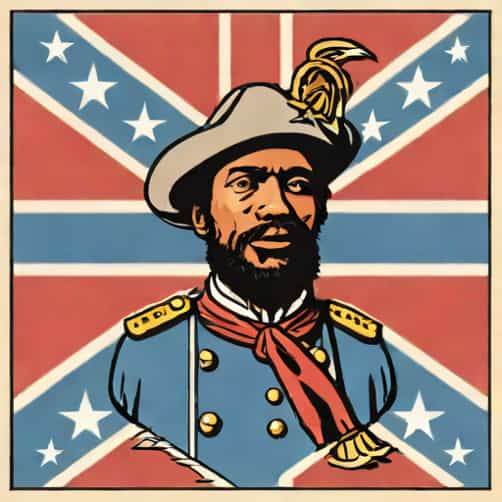
The history of the American Civil War remains one of the most examined and debated subjects in United States history. Among the key questions that continue to arise is whether the Confederacy supported slavery. To understand this issue, it is important to look closely at the Confederacy’s political foundation, economic structure, and social ideologies. The evidence is extensive and clear that slavery was not just an incidental part of the Confederate cause-it was at the very core of its existence.
The Foundation of the Confederacy
The Confederate States of America was established in 1861 after several southern states seceded from the Union. These states-beginning with South Carolina-claimed that their rights were being violated by the federal government. However, when examining their official documents and public statements, it becomes evident that the rights they referred to were primarily the right to own slaves. Slavery was not a side issue; it was a defining characteristic of the Confederacy’s political and social identity.
The Constitution of the Confederate States itself explicitly protected slavery. It prohibited any law that would deny or impair the right of property in negro slaves. This clear language shows that the Confederate leaders intended to preserve and protect the institution of slavery as the foundation of their new nation. They did not frame slavery as a temporary or regrettable practice but as an essential and moral component of their economy and social order.
Economic Dependence on Slavery
Before the Civil War, the southern economy was deeply reliant on enslaved labor. Cotton, tobacco, and sugar plantations produced enormous wealth, and enslaved people were the backbone of this production. The Confederate states saw slavery as vital to their prosperity and independence. They believed that without slavery, their economy would collapse. In contrast, the northern states had moved toward industrialization and wage labor, creating a deep economic divide between the two regions.
When the Confederacy formed, it did so with the explicit intention of protecting this economic system. Southern leaders often argued that slavery was not only economically necessary but also beneficial to society. They claimed that enslaved Africans were better off under slavery than they would be as free laborers, a justification used to defend an inherently brutal and dehumanizing institution.
Statements from Confederate Leaders
One of the most revealing sources of evidence about the Confederacy’s support for slavery comes from its own leaders. Alexander H. Stephens, the Vice President of the Confederate States, delivered what became known as the Cornerstone Speech in 1861. In this address, he stated that the Confederacy was founded upon the great truth that the negro is not equal to the white man; that slavery-subordination to the superior race-is his natural and normal condition.
This speech leaves little room for doubt. The Confederacy’s leadership publicly and proudly acknowledged that their government was built to preserve racial hierarchy and enslavement. Even though some modern interpretations attempt to claim that the Civil War was about states’ rights, historical records consistently show that those rights were directly tied to the right to own slaves.
Social and Cultural Justifications for Slavery
Beyond politics and economics, slavery was deeply embedded in the social and cultural life of the Confederate South. Many white southerners viewed slavery as part of the natural order, often invoking religious and pseudoscientific arguments to justify it. Southern churches frequently defended slavery, citing biblical passages that they believed sanctioned the practice. Meanwhile, southern intellectuals published essays arguing that slavery was both humane and necessary for maintaining civilization.
This cultural acceptance of slavery made it more than just an economic institution-it was also a social ideology. In the Confederate worldview, racial inequality was not only accepted but celebrated as divinely ordained. This belief system fueled the Confederacy’s resistance to abolition and its determination to defend slavery through war.
The Myth of States’ Rights
One of the most persistent misconceptions about the Confederacy is that it fought primarily for states’ rights. While states’ rights were indeed mentioned in secession debates, the specific right in question was the right to maintain and expand slavery. Nearly every Confederate state included slavery as a justification for secession in its official declaration. For example, Mississippi’s declaration stated plainly that our position is thoroughly identified with the institution of slavery-the greatest material interest of the world.
Other states such as Texas and Georgia made similar statements, directly linking their decision to secede to the protection of slavery. Therefore, when the Confederacy defended states’ rights, it was actually defending the right of states to keep human beings in bondage.
Slavery as a Cause of the Civil War
The Civil War began when Confederate forces attacked Fort Sumter in April 1861. The underlying reason for secession and conflict was the growing tension over slavery’s expansion into new territories. The election of Abraham Lincoln, who opposed the spread of slavery, was seen by southern leaders as a direct threat to their way of life. In response, they chose secession over compromise.
Lincoln himself understood this clearly. Although he initially framed the war as an effort to preserve the Union, he later issued the Emancipation Proclamation in 1863, turning the conflict into a moral crusade against slavery. The Confederacy, on the other hand, continued to defend slavery until its defeat in 1865.
The End of the Confederacy and Slavery
When the Confederacy surrendered in 1865, slavery was effectively abolished with the passage of the Thirteenth Amendment. However, the end of the Confederacy did not immediately end racial inequality. Many of the attitudes that justified slavery persisted through Reconstruction and beyond, shaping racial relations in the United States for generations. The Confederate legacy became intertwined with efforts to maintain white supremacy, particularly in the form of Jim Crow laws and segregation.
Modern Interpretations and Misconceptions
In modern times, some people continue to debate whether the Confederacy truly supported slavery or if the war was mainly about independence and constitutional rights. However, historical evidence leaves no ambiguity. The Confederacy was founded on the principle of preserving slavery. Its leaders said so explicitly, its constitution confirmed it, and its soldiers fought to defend it.
Efforts to romanticize or sanitize the Confederate cause often ignore the suffering and exploitation of millions of enslaved people. Recognizing the Confederacy’s support for slavery is not merely an academic exercise; it is essential for understanding how deeply racism and inequality are rooted in American history.
To answer the question-did the Confederacy support slavery?-the historical record is clear yes, it did. Slavery was not a secondary issue or a regional tradition; it was the central pillar of the Confederate nation. The political documents, economic interests, and public statements of the time all point to the same conclusion. The Confederacy existed to protect the institution of slavery and the racial hierarchy that came with it.
Understanding this truth helps to dispel myths and ensures that history is not rewritten to serve nostalgic or misleading narratives. The Confederacy’s support for slavery stands as a reminder of the nation’s struggle to reconcile its ideals of freedom with its past injustices-and of the ongoing effort to confront and learn from that history.