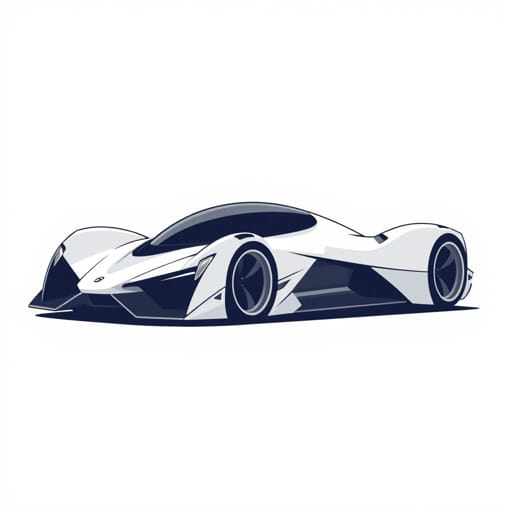
When you think of futuristic racing, few franchises capture the thrill quite like F-Zero. Known for its breakneck speeds, advanced technology, and gravity-defying circuits, the F-Zero series features racing machines that are not just fast, but designed to defy conventional rules of automotive design. One question that often arises among fans and enthusiasts is just how aerodynamic are the cars from F-Zero? With sleek profiles, high speeds, and hover-based movement, these vehicles offer a unique opportunity to examine aerodynamics in a speculative, science fiction setting. While rooted in fantasy, their designs still reflect certain principles of real-world physics and engineering.
Understanding Aerodynamics in the Context of F-Zero
Before diving into the specific design features of F-Zero vehicles, it’s important to understand what aerodynamics means. Aerodynamics is the study of how air flows around objects. For high-speed vehicles like race cars, it’s all about reducing drag, maximizing downforce, and maintaining stability. In the F-Zero universe, the vehicles don’t have traditional wheels they hover above the track using magnetic repulsion. This adds a layer of complexity to how air interacts with them, but core aerodynamic principles still apply.
The Importance of Streamlined Shapes
Most F-Zero cars feature pointed noses, low profiles, and tapered bodies. These design choices suggest that the developers took inspiration from jet aircraft and Formula One cars, where air needs to pass smoothly over the surface. The more streamlined the shape, the lower the air resistance or drag. In practical terms, this means that even at speeds exceeding 1000 km/h, these machines remain stable and efficient in flight-like conditions.
Hover Technology and Its Aerodynamic Implications
Unlike traditional vehicles, F-Zero machines don’t need to worry about ground friction from tires. However, they still interact with the air around them and the track surface below. The hovering effect likely creates a cushion of air between the vehicle and the ground, a phenomenon known in real-world physics as ground effect. This can stabilize the car and increase lift, which must be counterbalanced with downforce to prevent the vehicle from floating uncontrollably.
Aerodynamic Features of Specific F-Zero Cars
Each F-Zero machine has its own stats, including weight, grip, and boost, but their shapes and design features also hint at aerodynamic advantages. Here are a few standout examples and their aerodynamic considerations.
Blue Falcon (Captain Falcon)
The Blue Falcon is perhaps the most iconic car in the series. It features a sleek, pointed front, low cockpit, and wide rear fins. This shape closely resembles a jet fighter, indicating that it is optimized for high-speed travel with minimal air resistance.
- Drag Reduction: Tapered front design allows smooth airflow around the vehicle.
- Stability: The rear fins help maintain balance during sharp turns and jumps.
- Downforce: Low-profile chassis likely contributes to keeping the car stable at high speeds.
Fire Stingray (Samurai Goroh)
The Fire Stingray is heavier and more muscular in design. It sacrifices some agility for raw power and straight-line speed. Its broader build and flatter top surface suggest that it generates more lift but is stabilized with strong downward force through weight and engine distribution.
- Weight-Based Stability: Heavier mass counteracts lift at high speeds.
- Wide Chassis: May cause more drag but improves directional stability.
- Engine Output: High thrust allows it to overcome aerodynamic disadvantages.
White Cat (Jody Summer)
The White Cat is light, sleek, and highly maneuverable. Its aerodynamic efficiency is evident in its compact shape and narrow frame, making it ideal for quick turns and boosts.
- Minimal Surface Area: Reduces air resistance significantly.
- Aerodynamic Wings: Likely used to generate precision downforce during maneuvering.
- Lightweight Design: Increases acceleration and agility.
Comparisons with Real-World Aerodynamics
Even though F-Zero cars are fictional, comparisons can be made to real-world vehicles such as Formula 1 cars, jet fighters, and maglev trains. These real machines rely on intense aerodynamic testing, including wind tunnel trials and computational fluid dynamics modeling, to minimize drag and maximize efficiency. In the same way, the in-game vehicles reflect an understanding if not a strict application of these principles.
Formula One Inspiration
Many F-Zero cars bear visual similarities to Formula One cars, especially in terms of open cockpits, exposed engines, and low ground clearance. While real F1 cars rely on tire grip, F-Zero’s use of magnetic hover pads means they may incorporate similar aerodynamic tricks such as:
- Air dams and diffusers to channel airflow under the body
- Rear spoilers or fins for directional control
- Weight distribution to enhance stability during boosts and turns
Jet Fighter Influences
The pointed fronts, swept-back designs, and wing-like structures on many F-Zero machines suggest jet fighter influences. At the kind of speeds shown in F-Zero races, maintaining lift and directional control becomes a critical concern, just like in aviation. Winglets and stabilizers, while exaggerated in appearance, contribute to the visual suggestion of flight-capable control surfaces.
Performance at Hypothetical Speeds
F-Zero machines often travel faster than 1000 km/h, which places them well into the category of supersonic or transonic speeds. At these velocities, aerodynamic concerns extend beyond basic drag. Shock waves, air compression, and heat become relevant. While the games do not simulate these effects, the vehicle shapes appear consistent with designs intended to withstand such conditions.
Thermal Considerations
At extreme speeds, air friction creates heat. If we assume F-Zero machines are operating in realistic atmospheric conditions, their materials would need to resist high temperatures. Smooth, reflective surfaces might indicate heat-dispersing materials, though this is speculative based on visual design.
Lift vs. Downforce
The lack of wheels and reliance on hovering systems introduces the need to balance lift with downforce carefully. If a vehicle generates too much lift, it could lose traction and stability. Most F-Zero machines seem to have integrated stabilizers and aerodynamic surfaces that create controlled amounts of downforce to counteract this risk, especially when navigating loops and corkscrews on the track.
Design Trade-offs and Game Balance
Not all aerodynamic decisions in F-Zero are based on realism. Some are there for game mechanics and visual appeal. For instance, bulkier vehicles may offer higher durability at the expense of speed, while smaller ones prioritize acceleration. These are deliberate trade-offs meant to encourage variety and strategic choices in gameplay.
Gameplay Over Physics
Ultimately, the physics in F-Zero are stylized to support fast-paced racing rather than simulate real-world aerodynamics in detail. The visual language of speed sharp edges, narrow cockpits, and flashy tail fins works to convey the idea of extreme performance, even if not every detail would hold up under scientific scrutiny.
The cars from F-Zero are, by design, highly aerodynamic at least within the stylized world they inhabit. With pointed shapes, low drag profiles, and built-in stabilizers, they reflect many real-world aerodynamic principles adapted for a futuristic racing environment. While not every detail is scientifically accurate, the overall design language makes sense for vehicles meant to travel at supersonic speeds in environments filled with gravity-defying loops and breakneck turns. Whether you’re a fan of science fiction racing or a curious observer of speculative engineering, the aerodynamic designs of F-Zero cars are a fascinating blend of imagination and physics-inspired creativity.
#kebawah#