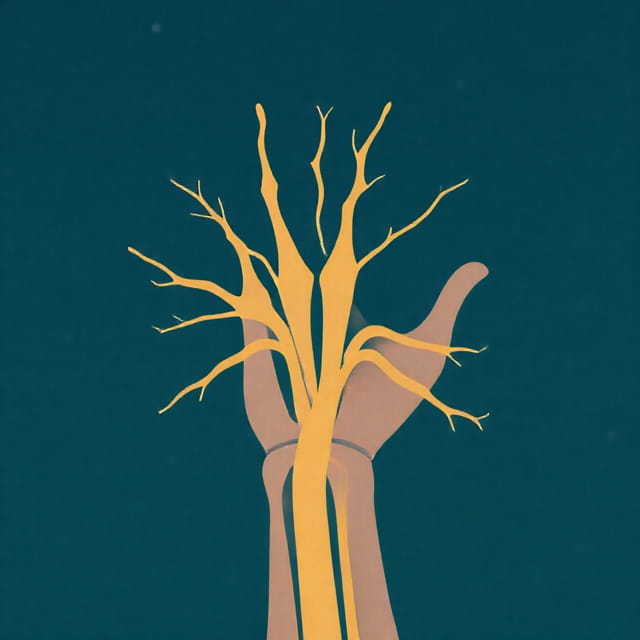
The radial nerve is one of the major peripheral nerves of the upper limb, playing a crucial role in both motor and sensory function. Understanding the innervation of the radial nerve is essential for medical professionals, especially in anatomy, neurology, and orthopedic practice. This nerve originates from the brachial plexus and supplies a wide array of muscles and skin areas, enabling extension of the elbow, wrist, and fingers, as well as providing sensory perception to parts of the arm and hand. Damage to the radial nerve can result in significant functional deficits, making its study vital for surgical planning, injury assessment, and rehabilitation strategies.
Anatomy of the Radial Nerve
The radial nerve is derived from the posterior cord of the brachial plexus, with contributions from the C5 to T1 spinal nerve roots. It travels through the axilla and posterior compartment of the arm before dividing into superficial and deep branches near the lateral epicondyle of the humerus. Its pathway allows it to innervate multiple muscles and skin regions, making it both a motor and sensory nerve. Anatomical knowledge of its course is crucial for avoiding nerve injury during procedures such as humeral fracture management, injections, or surgeries involving the posterior arm.
Motor Innervation
The radial nerve provides motor innervation to several key muscles in the arm and forearm, primarily responsible for extension at the elbow, wrist, and fingers. These muscles are located in the posterior compartments of the arm and forearm, including
- Triceps brachiiResponsible for extension at the elbow joint.
- AnconeusAssists in elbow extension and stabilizes the elbow joint.
- BrachioradialisFacilitates flexion at the elbow, particularly when the forearm is in mid-pronation.
- Extensor carpi radialis longus and brevisExtend and abduct the wrist.
- SupinatorRotates the forearm to produce supination.
- Extensor digitorum, extensor digiti minimi, and extensor carpi ulnarisExtend the fingers and wrist.
- Abductor pollicis longus, extensor pollicis brevis and longus, extensor indicisControl thumb and index finger movements.
This extensive motor innervation highlights the importance of the radial nerve in daily activities requiring hand and arm function, such as gripping, lifting, and fine motor tasks.
Sensory Innervation
The radial nerve also provides sensory innervation to specific areas of the upper limb. The sensory function is carried primarily by its superficial branch, which travels along the lateral forearm and hand. Key areas of sensory innervation include
- Posterior arm and forearm
- Lateral dorsum of the hand, including the dorsal surface of the thumb, index, middle, and lateral half of the ring finger
- Skin overlying the lower posterior arm and lateral posterior forearm
Damage to the radial nerve can lead to sensory deficits such as numbness, tingling, or loss of sensation in these regions, impacting a person’s ability to perceive touch and pain on the back of the hand and arm.
Branches of the Radial Nerve
The radial nerve gives off several important branches that contribute to its motor and sensory functions
- Posterior cutaneous nerve of the armProvides sensation to the posterior surface of the arm.
- Posterior cutaneous nerve of the forearmSupplies the skin on the posterior forearm.
- Superficial branchSensory branch that continues to the dorsum of the hand and fingers.
- Deep branch (posterior interosseous nerve)Primarily motor branch supplying extensor muscles in the forearm.
Understanding these branches is critical for diagnosing the location of radial nerve injuries and planning surgical interventions to restore function.
Clinical Relevance of Radial Nerve Innervation
Knowledge of radial nerve innervation is crucial in clinical practice for several reasons. Injuries to the radial nerve can occur at different levels, leading to characteristic deficits. Common causes of injury include humeral shaft fractures, compression at the axilla (crutch palsy), or repetitive strain injuries. Symptoms of radial nerve damage can vary depending on the site of injury and may include
- Weakness or paralysis of wrist and finger extensors (wrist drop)
- Numbness or tingling along the posterior arm, forearm, and hand
- Difficulty with thumb extension and grip strength
Accurate knowledge of innervation helps clinicians determine the level of nerve injury and plan interventions such as splinting, physical therapy, or surgical repair.
Radial Nerve Injuries and Syndromes
Several syndromes are associated with radial nerve injury, each reflecting the nerve’s motor and sensory distribution
- Wrist dropTypically results from injury at the humeral shaft, affecting the extensor muscles.
- Saturday night palsyCompression of the radial nerve in the axilla due to prolonged pressure, causing temporary motor and sensory deficits.
- Posterior interosseous nerve syndromeAffects the deep branch, leading to finger and thumb extension weakness without significant sensory loss.
Recognition of these conditions requires a detailed understanding of the radial nerve’s motor and sensory innervation.
Diagnostic and Therapeutic Considerations
Evaluation of radial nerve function involves clinical examination, including motor testing of extension movements at the elbow, wrist, and fingers, as well as sensory testing of the posterior arm and hand. Electromyography (EMG) and nerve conduction studies can provide additional information on the location and severity of nerve injury. Therapeutic approaches may include splinting to prevent deformity, physical therapy to maintain strength and range of motion, and surgical interventions when necessary.
Importance in Surgical Planning
Surgeons must carefully consider radial nerve innervation when performing procedures around the humerus, elbow, or forearm. Preservation of nerve function during orthopedic surgery, trauma repair, and reconstructive procedures is essential to prevent long-term disability. Understanding the precise distribution of motor and sensory branches allows surgeons to minimize intraoperative nerve damage and optimize functional outcomes for patients.
The innervation of the radial nerve encompasses both motor and sensory functions, making it a critical component of upper limb anatomy. It originates from the posterior cord of the brachial plexus, travels through the arm and forearm, and branches extensively to supply extensor muscles and the skin of the posterior upper limb. Understanding its course, branches, and areas of innervation is vital for diagnosing nerve injuries, planning surgical interventions, and implementing effective rehabilitation strategies. Damage to the radial nerve can result in characteristic deficits such as wrist drop, sensory loss, and difficulty with fine motor tasks, highlighting the importance of thorough anatomical and clinical knowledge. Mastery of radial nerve innervation ensures accurate assessment, precise treatment planning, and improved functional outcomes for patients with upper limb injuries.
Overall, the radial nerve is indispensable for upper limb movement and sensation. Clinicians, surgeons, and students must have a comprehensive understanding of its innervation to provide safe and effective care, prevent complications, and restore function when injury occurs. Its role in motor control, sensory perception, and clinical syndromes underscores its significance in both anatomy and medical practice.