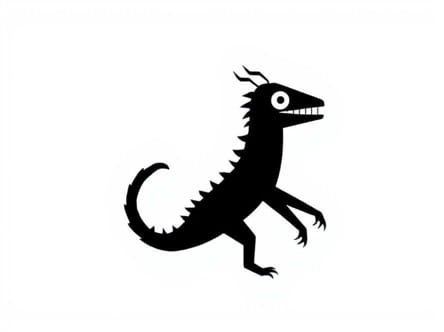
When reading Lewis Carroll’s Jabberwocky for the first time, many readers find themselves puzzled by its strange vocabulary and nonsensical structure. The poem is famously filled with made-up words that still somehow evoke emotion, rhythm, and imagination. Though the words are unfamiliar, they often feel oddly recognizable due to their placement, sound, or context. This poetic technique invites readers to explore the flexibility of language and the creativity behind Carroll’s choices. Understanding these unfamiliar words with suggested meanings opens a door to appreciating Jabberwocky on a deeper level.
Understanding Jabberwocky as a Nonsense Poem
Jabberwocky was written by Lewis Carroll and first appeared in his novelThrough the Looking-Glassin 1871. It is widely considered one of the greatest nonsense poems in the English language. What sets this poem apart is that many of its words are not found in any dictionary. Yet, readers can often infer their meanings from syntax, morphology, and context.
Lewis Carroll was a master of linguistic play. His invented words, though nonsensical at face value, often blend real linguistic roots and familiar sounds. Some of the terms used in the poem have even entered popular usage. Let’s take a closer look at some of the most intriguing words from Jabberwocky and their possible meanings.
Unfamiliar Words in Jabberwocky with Suggested Meanings
1. Brillig
- WordBrillig
- Line‘Twas brillig, and the slithy toves…”
- MeaningAccording to Carroll’s own notes, brillig means around four o’clock in the afternoon the time when one begins broiling things for dinner.
2. Slithy
- WordSlithy
- Line“…and the slithy toves…”
- MeaningA portmanteau word combining slimy and lithe, meaning smooth, slippery, and agile.
3. Toves
- WordToves
- Line“…did gyre and gimble in the wabe.”
- MeaningDescribed by Carroll as creatures resembling a blend of badger, lizard, and corkscrew.
4. Gyre
- WordGyre
- Line“…did gyre and gimble in the wabe.”
- MeaningTo go round and round like a gyroscope. Often interpreted as spinning or spiraling motion.
5. Gimble
- WordGimble
- Line“…did gyre and gimble in the wabe.”
- MeaningTo make holes as if with a gimlet (a small boring tool). Some interpret it as twisting or burrowing.
6. Wabe
- WordWabe
- Line“…in the wabe.”
- MeaningThe grass plot around a sundial, interpreted metaphorically as the surrounding area of a central point.
7. Mimsy
- WordMimsy
- Line“All mimsy were the borogoves…”
- MeaningA portmanteau of miserable and flimsy. It implies a sense of being feeble or pathetic.
8. Borogoves
- WordBorogoves
- Line“All mimsy were the borogoves…”
- MeaningCarroll described them as thin, shabby-looking birds that resemble mop-like creatures.
9. Mome
- WordMome
- Line“And the mome raths outgrabe.”
- MeaningLikely meaning grave, serious, or solemn. Some suggest it means lost in thought.
10. Raths
- WordRaths
- Line“And the mome raths outgrabe.”
- MeaningDescribed by Carroll as green pig-like creatures with long legs, somewhat like turtles without shells.
11. Outgrabe
- WordOutgrabe
- Line“And the mome raths outgrabe.”
- MeaningA verb coined by Carroll meaning to emit a strange noise, somewhere between bellowing and whistling, with a sneeze in the middle.
12. Jabberwock
- WordJabberwock
- Line“Beware the Jabberwock, my son!”
- MeaningThe fearsome creature at the heart of the poem. Not much is explained about its exact form, but it represents danger and chaos.
13. Jubjub Bird
- WordJubjub Bird
- Line“Beware the Jubjub bird…”
- MeaningA fictional creature also mentioned in other Carroll works, known for being elusive and possibly aggressive.
14. Bandersnatch
- WordBandersnatch
- Line“…and shun the frumious Bandersnatch!”
- MeaningAnother invented monster. Frumious is a portmanteau of fuming and furious, indicating the creature is dangerously aggressive.
15. Frabjous
- WordFrabjous
- Line“O frabjous day! Callooh! Callay!”
- MeaningA joyful, wonderful, and fabulous day. A made-up word conveying celebration and triumph.
16. Callooh and Callay
- WordsCallooh! Callay!
- Line“Callooh! Callay!” he chortled in his joy.
- MeaningExclamations of joy or excitement, often seen as onomatopoeic cheers of victory or elation.
The Importance of Context in Deciphering Meaning
Lewis Carroll’s use of portmanteau and invented words challenges readers but also invites creativity. While Jabberwocky may seem impenetrable at first, its grammar follows familiar patterns. Verbs behave like verbs, nouns act like nouns, and adjectives describe in expected places. This structure allows readers to make educated guesses about each unfamiliar word’s role and meaning.
Moreover, many of the invented words sound similar to known English terms. Frabjous sounds like fabulous, slithy like slimy, and mimsy like flimsy. These resemblances help build associations and spark understanding.
Why Jabberwocky Still Resonates
Jabberwocky remains a favorite among poetry enthusiasts, educators, and linguists alike because it shows the power of imagination in language. The poem demonstrates how even nonsense words can tell a story, create mood, and evoke strong emotions. Its unfamiliar words are not barriers, but rather stepping stones to playful interpretation and creative thought.
By exploring the unfamiliar words in Jabberwocky and embracing their strange beauty, readers gain insight into the elasticity of language. It reminds us that language is not only about rules, but also about expression, experimentation, and joy. The words may be unfamiliar, but the emotions and ideas they carry are universally human.