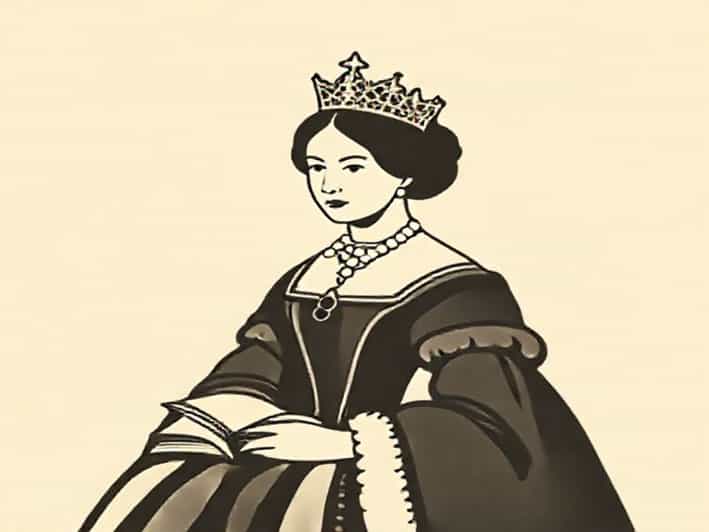
Queen Victoria is remembered as one of the most influential monarchs in British history, reigning over an empire that spanned the globe. However, what is less commonly known is that she was also an accomplished writer. Among her literary works, the book she wrote Leaves from the Journal of Our Life in the Highlands offers a deeply personal glimpse into her private world, far from the formality of royal life. Through this book, readers see Queen Victoria not only as a ruler but also as a woman who cherished nature, family, and the Scottish Highlands.
Background of Queen Victoria’s Writing
Queen Victoria had a lifelong habit of keeping detailed journals. From her teenage years until her death in 1901, she wrote almost daily, documenting everything from state affairs to her most intimate emotions. These journals, estimated to fill over 140 volumes, became a rich record of her reign and personality. Her decision to publish parts of her private writings was unusual for a monarch, but it reflected her desire to connect with the public and share her love for Scotland.
Her book, Leaves from the Journal of Our Life in the Highlands, was first published in 1868. It contains selected entries from her diaries, focusing on the period between 1848 and 1861, when she and her husband, Prince Albert, spent time in the Scottish Highlands. The publication was a major success and revealed a softer, more human side of the queen who had often been perceived as distant or severe.
About Leaves from the Journal of Our Life in the Highlands
The book captures Queen Victoria’s experiences at Balmoral Castle and its surroundings in Scotland. Written in a warm and conversational tone, it details her encounters with local people, her admiration for the rugged landscape, and her family’s leisure activities such as walking, sketching, and horseback riding. It is a celebration of nature and domestic simplicity, written by someone who found joy and peace far from the political center of London.
At its core, Leaves from the Journal of Our Life in the Highlands is a work of observation and affection. Queen Victoria’s descriptions are vivid and personal, showing her as a keen observer of her environment. The book reflects her genuine connection to Scotland and its people a sentiment that helped strengthen the bond between the monarchy and the Scottish public.
The Structure and Style of the Book
The book is composed of journal entries that retain the authenticity of personal writing. Rather than a polished literary work, it reads like a diary shared with the public. Queen Victoria writes candidly about her emotions, particularly her happiness during her stays at Balmoral and her deep appreciation for her husband’s companionship.
Her writing style is simple yet expressive. She avoids grand political commentary, focusing instead on daily life and the beauty of the natural world. The tone is intimate, at times even sentimental, revealing her sense of wonder and gratitude. The informality of her prose allowed readers of the time to see the queen as relatable and genuine.
Examples of Everyday Details
Queen Victoria describes simple moments such as watching shepherds at work, attending church services in small village chapels, and interacting with the local Highlanders. These scenes are presented with affection and respect, emphasizing her admiration for the hardworking people of Scotland. Her portrayal of the landscape its mountains, mist, and ever-changing weather captures the majesty and serenity of the Highlands.
Publication and Public Reaction
When Leaves from the Journal of Our Life in the Highlands was published, it became an instant bestseller. Readers across Britain and the empire were fascinated by the idea of reading a book written by their queen. The proceeds from the book were donated to charitable causes, which further enhanced Victoria’s public image.
The book was also notable for humanizing the monarchy. For many Victorians, it was the first time they felt a personal connection with their sovereign. The warmth and humility expressed in the book stood in contrast to the queen’s formal public persona, especially during the later years of her reign when she was criticized for withdrawing from public life after Prince Albert’s death in 1861.
Critics and readers alike praised the book for its sincerity. It was admired not only as a royal curiosity but as a genuine piece of travel and nature writing. The success of the first volume led to a second, More Leaves from the Journal of a Life in the Highlands, published in 1884, which continued the story and included reflections on her later visits to Scotland after Albert’s death.
The Role of Prince Albert in Her Writing
Prince Albert played an important role in shaping Queen Victoria’s literary pursuits. He encouraged her to keep journals and valued her intellectual curiosity. The book reflects their close partnership, often portraying their shared love for nature, art, and the outdoors. Albert’s influence is felt throughout Leaves from the Journal of Our Life in the Highlands, as he appears frequently in her entries, both as a companion and as a source of inspiration.
After his death, writing became a source of comfort for the grieving queen. Her later journal entries often reveal her sense of loss and solitude, and in her second book, she writes about returning to the Highlands as a widow, finding solace in the familiar landscapes she once shared with her beloved husband.
The Importance of the Highlands in Queen Victoria’s Life
The Scottish Highlands held special significance for Queen Victoria. Her love for the region went beyond its natural beauty it represented freedom, simplicity, and emotional renewal. Balmoral Castle, purchased by her and Albert in 1852, became their private retreat where they could escape the constraints of court life.
In her writing, she often contrasted the relaxed atmosphere of Balmoral with the rigid formality of Buckingham Palace. She described the Highlands as a place where she could feel more like a real human being. This sentiment resonated deeply with readers, as it showed the queen’s longing for authenticity and peace, much like any ordinary person.
Legacy of Queen Victoria’s Book
Queen Victoria’s Leaves from the Journal of Our Life in the Highlands remains an important historical and literary document. It provides insight not only into her personality but also into Victorian culture, travel, and society. Her observations of rural Scotland offer valuable details about local customs and ways of life during the 19th century.
The book also played a part in popularizing the Scottish Highlands as a tourist destination. After its publication, interest in the region surged, and the romantic image of the Highlands misty mountains, lochs, and tartans became an enduring part of British identity. Many readers sought to follow in the queen’s footsteps, visiting Balmoral and other locations she described.
Influence on Royal Image
By writing and publishing her journal, Queen Victoria redefined what it meant to be a monarch. She used her personal voice to build a bridge between royalty and ordinary citizens. Her openness and emotional honesty softened the image of the crown and helped sustain public affection for the monarchy during a time of social change.
Even today, her writing continues to attract interest from historians and literary scholars. The book stands as an early example of royal self-expression and as a reflection of the Victorian era’s fascination with nature, travel, and domestic life.
The book Queen Victoria wrote, Leaves from the Journal of Our Life in the Highlands, is more than just a royal diary it is a timeless record of a queen’s humanity. Through her words, readers gain a sense of who Victoria truly was a woman deeply in love with her husband, her family, and the Scottish landscape that gave her peace. Her writing brought warmth and personality to the throne, leaving behind not only a historical document but also a heartfelt literary work that continues to inspire curiosity and admiration more than a century later.