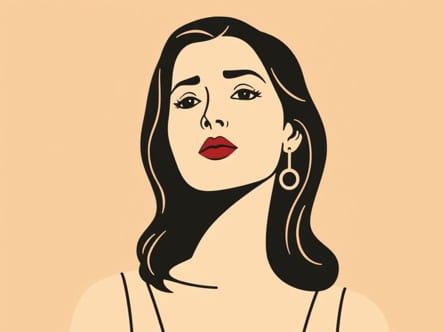
Suzanne Valadon was a remarkable French painter whose life and career defied the expectations of her time. Born into poverty and rising through the artistic circles of Montmartre, she began as a model before becoming a respected artist in her own right. Her bold style, focus on female nudes, and rejection of convention set her apart in a male-dominated art world. Far from being a passive muse, Valadon took control of her artistic narrative, producing works that still captivate and inspire. Her story is one of transformation, resilience, and undeniable talent.
Early Life and Background
From Poverty to the Studios of Montmartre
Suzanne Valadon was born Marie-Clémentine Valadon on September 23, 1865, in Bessines-sur-Gartempe, France. Raised by a single mother who worked as a laundress, Suzanne experienced a modest and challenging upbringing. She moved to Montmartre, Paris, with her mother in the 1870s, where she took various jobs to help make ends meet. At a young age, she began working as a circus acrobat, which ended when she suffered an injury. This pushed her to find other work, eventually leading her to modeling for artists.
Montmartre at the time was the beating heart of the Parisian art scene. It was there that Valadon posed for renowned artists like Pierre-Auguste Renoir, Henri de Toulouse-Lautrec, and Edgar Degas. These experiences not only introduced her to the world of art but also gave her firsthand insight into various techniques and styles.
Transition from Model to Artist
Learning through Observation
While many women remained in the role of the muse, Suzanne Valadon wanted more. She spent hours watching the artists she modeled for, absorbing their techniques and eventually practicing her own. Her work began as drawings and gradually evolved into paintings. With no formal training, her development was rooted in observation, persistence, and natural talent.
One of her most important supporters was Edgar Degas, who recognized her abilities and encouraged her to continue. He admired her draftsmanship and introduced her to etching techniques, helping her refine her skills. Degas’s mentorship played a critical role in launching Valadon’s serious artistic career.
Artistic Style and Themes
Strong Lines and Powerful Figures
Suzanne Valadon’s style was bold and expressive. She moved away from the soft impressionistic tones popular at the time and embraced a more structured and defined aesthetic. Her figures were solid, grounded, and often displayed in unapologetically realistic poses. She was particularly noted for her female nudes, which rejected idealized beauty in favor of authenticity.
Unlike many male painters of the time who romanticized the female form, Valadon’s work focused on strength, presence, and emotional complexity. Her self-portraits and depictions of other women showed bodies in natural, relaxed states, with all their imperfections and grace. This approach was revolutionary for her era.
- Use of heavy outlines and vibrant color contrasts
- Focus on ordinary people, especially women
- Portraits that capture psychological depth
- Still lifes that showcase composition and balance
Key Works
Notable Paintings by Suzanne Valadon
Over her long career, Suzanne Valadon produced a variety of works that demonstrated her versatility and vision. Some of her most renowned pieces include:
- Adam and Eve(1909) – A bold reinterpretation of the biblical scene, in which she and her lover are portrayed as the titular figures.
- The Blue Room(1923) – A striking painting of a reclining woman in a relaxed, modern interior, challenging traditional depictions of femininity.
- Portrait of Maurice Utrillo– A powerful portrait of her son, revealing both her artistic skill and personal connection.
- Reclining Nude– One of many that reflected her commitment to portraying women with honesty and individuality.
Personal Life and Relationships
Motherhood and Complexity
Valadon’s personal life was as colorful as her paintings. She gave birth to her son, Maurice Utrillo, in 1883, at the age of 18. The identity of his father remains uncertain, although several theories exist. Despite the hardships, she remained deeply involved in his life. She even taught him to paint, helping him become a successful artist in his own right.
Her relationships were often unconventional. She had affairs with prominent artists and younger men, including André Utter, whom she later married. Their relationship, filled with both love and tension, was also a source of artistic collaboration.
Recognition and Exhibitions
Gaining Respect in a Male-Dominated Field
In a time when women artists were rarely recognized, Suzanne Valadon defied the odds. She exhibited at the Salon de la Société Nationale des Beaux-Arts and the Salon d’Automne, major venues for French artists. Her works were well received, and she developed a circle of admirers and collectors.
Though she faced criticism for her bold style and unorthodox subject matter, Valadon never conformed. Her courage and determination earned her a place among the most respected artists of her generation. She remained active and prolific well into her later years, continuing to paint until her death in 1938.
Legacy and Influence
Paving the Way for Future Women Artists
Suzanne Valadon’s influence extends far beyond her lifetime. She helped reshape the role of women in art, proving they could be creators as well as subjects. Her career broke boundaries, challenging the assumptions of both gender and class in the art world.
Today, her paintings are housed in prestigious institutions such as the Centre Pompidou, Musée d’Orsay, and the Metropolitan Museum of Art. Her legacy also lives on through her son, Maurice Utrillo, and through the many women artists who followed her path of independence and bold expression.
Who was Suzanne Valadon? She was a trailblazer, a rebel, and an artist who carved out her place in a world that often tried to exclude her. From humble beginnings to celebrated painter, her journey is one of defiance, passion, and artistic excellence. Valadon’s work continues to resonate for its honesty, strength, and timeless human insight. She remains a symbol of artistic freedom, representing the power of self-belief and the importance of challenging norms to create something truly original.