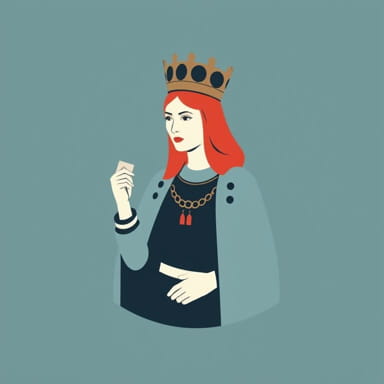
Catherine the Great, one of the most influential rulers in Russian history, reigned from 1762 to 1796 during a period marked by major political, cultural, and intellectual developments. Her rule is remembered for its expansion of Russian territory, its embrace of Enlightenment ideals, and the modernization of the Russian Empire. Despite being born in Prussia, she became a powerful symbol of Russian identity and ambition. Her reign significantly reshaped the empire’s governance, economy, and its role in European affairs. Understanding the legacy of Catherine the Great requires an exploration of her background, reforms, foreign policy, and the societal transformations she initiated.
Early Life and Rise to Power
Born as Sophie Friederike Auguste von Anhalt-Zerbst in 1729, Catherine was a German princess who married into the Russian royal family. Her husband, Peter III, was the heir to the Russian throne, but his unpopular policies and erratic behavior alienated both the nobility and the army. In 1762, after just six months on the throne, Peter was overthrown in a coup d’état, and Catherine ascended as Empress of Russia. Her intelligence, political acumen, and understanding of Russian society allowed her to consolidate power quickly and effectively.
Legitimizing Her Rule
Although she lacked a direct claim to the Russian throne by blood, Catherine secured her position by aligning herself with powerful political allies and promoting herself as the true guardian of Russian interests. She emphasized her commitment to the Orthodox Church and Russian traditions, while at the same time introducing reforms that echoed Enlightenment principles. This blend of pragmatism and idealism became a hallmark of her reign.
Domestic Reforms and Enlightenment Influence
Catherine the Great is often celebrated for her efforts to modernize Russia through Enlightenment-inspired reforms. Her correspondence with key Enlightenment figures such as Voltaire and Diderot reveals her deep engagement with contemporary philosophical thought. However, she tailored these ideas to fit the autocratic structure of the Russian monarchy.
The Nakaz and Legal Reform
One of Catherine’s early and most ambitious projects was the drafting of the Nakaz (Instruction) in 1767. This document was intended to serve as a guide for the new legal code and reflected ideas of justice, equality before the law, and the need to protect personal property. The Nakaz was widely circulated in Europe and praised for its progressive ideals, although few of its recommendations were fully implemented due to internal resistance and the complexity of Russian society.
Education and Culture
Catherine also invested in expanding Russia’s educational and cultural institutions. She established the Smolny Institute for Noble Girls, the first state-funded school for women in Russia. She also supported the development of the Russian Academy and sponsored translations of European texts into Russian. Her patronage of the arts led to a flourishing of Russian literature, theater, and architecture.
Economic and Administrative Policies
To strengthen the empire, Catherine implemented significant changes in the administrative and economic systems. She reorganized the provincial governments, increasing the efficiency of tax collection and judicial processes. The 1775 Statute for the Administration of the Provinces divided the empire into smaller administrative units, making governance more manageable and responsive.
Support for the Nobility
While she championed Enlightenment ideals, Catherine was careful to maintain the loyalty of the nobility, who were the foundation of her support. The 1785 Charter to the Nobility granted nobles greater autonomy over their lands and legal protections. In doing so, Catherine solidified the social hierarchy and strengthened serfdom, binding peasants more tightly to their landlords. This contradiction between enlightened rhetoric and oppressive reality remains a key theme in her legacy.
Expansion of the Russian Empire
Under Catherine the Great, Russia expanded its borders dramatically, solidifying its status as a major European power. Her foreign policy was assertive and strategic, aimed at increasing Russian influence across Eastern Europe and the Black Sea region.
War with the Ottoman Empire
One of her most notable military campaigns was against the Ottoman Empire. The Russo-Turkish Wars (1768-1774 and 1787-1792) resulted in significant territorial gains, including access to the Black Sea and Crimea. The Treaty of Küçük Kaynarca in 1774 granted Russia key ports and the right to protect Orthodox Christians in Ottoman territories, expanding Russian political reach.
Partition of Poland
Catherine played a major role in the three partitions of Poland (1772, 1793, and 1795), which led to the disappearance of Poland as a sovereign state for over a century. These partitions were coordinated with Austria and Prussia and greatly increased Russia’s land holdings and population. While controversial, these actions demonstrated Catherine’s shrewd diplomacy and appetite for territorial expansion.
Challenges and Rebellions
Despite her successes, Catherine’s reign was not without internal challenges. The most significant uprising during her rule was the Pugachev Rebellion (1773-1775), a massive revolt led by Yemelyan Pugachev, who claimed to be the deceased Peter III. The rebellion, fueled by peasant dissatisfaction and the burdens of serfdom, was eventually crushed, but it highlighted the deep social unrest that simmered beneath the surface of Catherine’s enlightened rule.
Response to Unrest
In response, Catherine tightened control over the peasantry and reinforced the authority of the nobility. While she recognized the need for reform, she prioritized stability and order above all, reinforcing autocratic rule and delaying meaningful social change. Her policies ensured the continuation of the feudal system, with long-lasting effects on Russian society.
Legacy of Catherine the Great
Catherine’s reign left an enduring mark on Russia. She modernized its bureaucracy, expanded its borders, and brought it into the intellectual current of Enlightenment Europe. However, her reign also entrenched inequality, deepened serfdom, and maintained absolute monarchy. Historians continue to debate whether she should be remembered primarily as a reformer or as a ruler who used Enlightenment ideals to mask authoritarian rule.
Cultural Contributions
Her support for the arts and education laid the foundation for Russia’s cultural golden age in the 19th century. The Hermitage Museum, originally her private collection, remains one of the most prominent cultural institutions in the world. Catherine’s writings, including her memoirs and letters, offer insights into the mind of a ruler who was both deeply ambitious and intellectually curious.
Russia under Catherine the Great was a land of contradiction: a country that embraced Enlightenment ideas while reinforcing autocracy, a society that expanded outward while remaining deeply hierarchical at home. Her reign reflects the complexities of leadership in a vast and diverse empire. Catherine’s ability to navigate these contradictions made her one of the most remarkable and consequential leaders in Russian and European history.