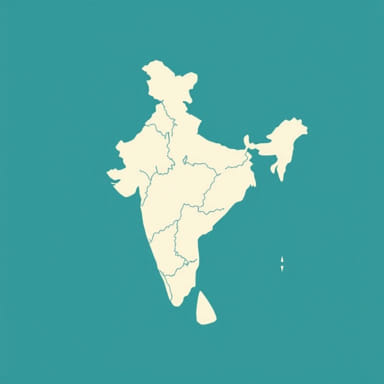
Far to the northeast of mainland India lies a land of misty mountains, dense forests, and vibrant indigenous cultures. This is Arunachal Pradesh, the last easternmost state of India. Known for its untouched natural beauty and cultural richness, Arunachal Pradesh shares international borders with Bhutan to the west, China to the north, and Myanmar to the east. Though remote and often less talked about than other Indian states, its strategic location, ecological importance, and unique heritage make it a fascinating subject of exploration. As the sun rises first in Arunachal Pradesh, it symbolizes the beginning of a new day for India both literally and figuratively.
Geographical Significance
Arunachal Pradesh is India’s easternmost state, with its easternmost point located near Kibithu in the Anjaw district. This point marks the first place in India to see the sunrise each day. The state lies between latitudes 26.28°N and 29.30°N and longitudes 91.20°E and 97.30°E, making it a critical frontier in terms of geopolitical importance. Covering an area of about 83,743 square kilometers, Arunachal Pradesh is the largest of the northeastern states of India, also known as the Seven Sisters.”
Topography and Landscape
The terrain of Arunachal Pradesh is primarily hilly and mountainous, forming part of the Eastern Himalayas. The state’s landscape is dotted with lush valleys, fast-flowing rivers such as the Siang, Subansiri, and Lohit, and dense forests that host a wide range of flora and fauna. Snow-capped peaks such as Kangto and Gorichen add to the grandeur of this relatively isolated state.
Cultural Diversity
Arunachal Pradesh is home to more than 25 major tribes and over 100 sub-tribes, each with its own language, customs, and traditions. The tribal culture is vibrant, colorful, and deeply rooted in the natural environment. Festivals, music, dance, and craftsmanship are integral to everyday life in the region.
Tribal Communities
- MonpaPredominantly found in Tawang and West Kameng districts, they follow Tibetan Buddhism and have cultural ties with Bhutan and Tibet.
- ApataniKnown for their sustainable agricultural practices and intricate facial tattoos (now fading), they reside mainly in the Ziro Valley.
- NyishiThe largest tribe in Arunachal Pradesh, they are primarily found in the central region and follow animist traditions along with Christianity and Hinduism.
- Adi, Galo, Tagin, and MishmiThese tribes occupy the central and eastern regions, each with distinct dialects and traditions.
Festivals and Traditions
Festivals such as Losar (Monpa New Year), Dree (Apatani agricultural festival), and Solung (Adi festival) are celebrated with great enthusiasm. These festivals often include rituals, dances, folk songs, and community feasts. Most festivals are linked to agricultural cycles and the natural world, reflecting the tribes’ close relationship with nature.
Historical and Political Background
The region that now forms Arunachal Pradesh has historically been part of various tribal and Tibetan kingdoms. During British colonial rule, the area was known as the North-East Frontier Agency (NEFA). After India’s independence in 1947, NEFA remained a separate administrative unit under the Ministry of External Affairs. In 1972, it was renamed Arunachal Pradesh and granted Union Territory status. Finally, in 1987, it achieved full statehood as the 24th state of India.
Border Disputes
Due to its proximity to the international border with China, Arunachal Pradesh has been at the center of territorial disputes. China claims the region as part of its territory, referring to it as “South Tibet.” The dispute led to the 1962 Sino-Indian War, and tensions continue periodically. Despite this, Arunachal Pradesh functions fully as an Indian state with representation in the Indian Parliament and democratic institutions at the local level.
Ecological Wealth and Biodiversity
Arunachal Pradesh is considered one of the most biodiverse regions in the world. With elevations ranging from 100 meters to over 7,000 meters, the state hosts a wide array of ecosystems from tropical rainforests to alpine tundra. It is home to over 500 species of orchids, rare birds like the Bengal florican, and mammals such as red pandas, clouded leopards, and Himalayan black bears.
Protected Areas
- Namdapha National ParkOne of the largest protected areas in the Eastern Himalayas, known for its rich biodiversity.
- Mouling National ParkA rugged park with diverse flora and fauna located in the Upper Siang district.
- Dibang Wildlife SanctuaryHome to rare species like the Mishmi takin and snow leopards.
The state’s forests also support a significant number of medicinal plants and have long been a resource base for traditional herbal practices.
Economic Landscape
Arunachal Pradesh’s economy is largely agrarian. The people depend on jhum cultivation (shifting agriculture), terrace farming, and horticulture. Major crops include rice, maize, millet, and pulses. In recent years, horticulture especially the cultivation of oranges, apples, and kiwis has become a growing source of income.
Hydroelectric Potential
Given its river systems and elevation, Arunachal Pradesh has immense potential for hydroelectric power. Several large and small-scale hydro projects are underway or proposed. However, these projects often face opposition due to concerns over displacement, environmental degradation, and cultural loss.
Tourism and Accessibility
Though still relatively unexplored, tourism in Arunachal Pradesh is slowly picking up. Attractions include the Tawang Monastery (the largest in India), the picturesque Ziro Valley, Sela Pass, and the Siang River for rafting. The state also offers rich opportunities for eco-tourism and cultural exploration.
Permits and Travel
Due to its sensitive border location, Indian nationals require an Inner Line Permit (ILP) to visit Arunachal Pradesh. Foreign tourists need a Protected Area Permit (PAP). Improved road infrastructure and air connectivity, including an airport at Itanagar, are making travel to the state more convenient.
Challenges and the Road Ahead
Despite its immense potential, Arunachal Pradesh faces several challenges. These include limited infrastructure, difficult terrain, political sensitivity due to border issues, and a need for balanced development that respects its indigenous cultures and fragile ecosystems.
Education and healthcare access remain limited in many remote areas, though government programs are gradually addressing these gaps. Preservation of local languages and traditions is also a growing concern in the face of modernization and external influences.
Opportunities for Growth
There are strong opportunities for Arunachal Pradesh in sectors such as
- Eco-tourism and adventure tourism
- Organic farming and horticulture
- Hydroelectric and renewable energy
- Cross-border trade (subject to diplomatic resolution)
With sustained investment in connectivity, education, and environmentally conscious development, the state can become a model of sustainable progress in the Himalayan region.
As the last easternmost state of India, Arunachal Pradesh holds a special place in the nation’s geography and identity. It represents a land where tradition meets wilderness, where cultures have thrived in harmony with nature for centuries. Though remote and sometimes overlooked, its strategic significance, natural wealth, and cultural heritage make it one of the most important yet least understood states in India. Understanding Arunachal Pradesh is not just about recognizing a region on the map it’s about acknowledging the diversity and depth of the Indian experience itself.