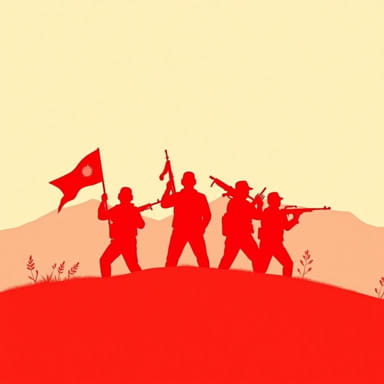
The Maoist insurgency in Nepal was a decade-long conflict that fundamentally reshaped the political landscape of the country. Beginning in 1996, this armed struggle was led by the Communist Party of Nepal (Maoist) and sought to overthrow the monarchy and establish a people’s republic based on Maoist ideology. The insurgency was fueled by deep-rooted social inequalities, economic deprivation, and political exclusion that affected rural Nepal. Over the course of ten years, the conflict resulted in significant loss of life, displacement, and disruption, but ultimately paved the way for the abolition of the monarchy and the establishment of a federal democratic republic.
Origins and Causes of the Maoist Insurgency
Social and Economic Inequalities
Nepal, despite its rich cultural heritage and natural beauty, has long been marked by stark disparities between urban elites and rural populations. The vast majority of Nepalese lived in rural areas with limited access to education, healthcare, and economic opportunities. Caste-based discrimination and feudal land ownership patterns contributed to widespread poverty and marginalization, particularly among ethnic minorities and lower-caste communities. These socio-economic grievances created fertile ground for revolutionary ideas to take root.
Political Exclusion and Instability
The political system of Nepal before the insurgency was dominated by the monarchy and traditional political parties that many citizens viewed as corrupt and ineffective. Efforts at democratization in the 1990s brought multiparty elections, but these changes did not address systemic problems or reduce poverty. The failure of the government to implement meaningful reforms heightened frustrations, particularly among youth and rural populations, which the Maoists capitalized on to gain support.
The Maoist Movement: Goals and Strategies
Communist Party of Nepal (Maoist)
The Maoist insurgency was led by the Communist Party of Nepal (Maoist), which drew inspiration from the Chinese Communist revolution and Mao Zedong’s strategies of protracted people’s war. The party’s goals included dismantling the monarchy, abolishing the existing political system, and establishing a socialist state with land reforms and social justice at its core.
Armed Struggle and Guerrilla Warfare
The Maoists began their armed rebellion in 1996, focusing on rural areas and employing guerrilla tactics such as ambushes, sabotage, and targeted attacks against government forces and infrastructure. They established parallel governments and people’s committees in areas under their control, providing alternative governance to neglected rural communities. This approach helped the Maoists expand their influence and challenge the state’s authority.
Impact of the Insurgency
Human and Economic Costs
The Maoist insurgency had devastating effects on Nepal’s population and economy. Over 13,000 people, including civilians, security forces, and insurgents, lost their lives during the conflict. Many villages were destroyed or abandoned, and thousands of people were displaced. The fighting disrupted agriculture, trade, and tourism, which were vital to Nepal’s economy, leading to widespread hardship.
Political Changes and Peace Process
Despite the violence, the insurgency forced the government and monarchy to recognize the need for change. The peace process began in the mid-2000s, culminating in the Comprehensive Peace Accord signed in 2006. This agreement ended the armed conflict and initiated the Maoists’ entry into mainstream politics. Key political reforms followed, including the abolition of the monarchy in 2008 and the declaration of Nepal as a federal democratic republic.
The Maoists’ Transition to Mainstream Politics
Participation in Elections
After the peace agreement, the Maoists transformed from an insurgent group to a political party, participating in national elections. They became a major force in Nepalese politics, winning a significant number of seats in the Constituent Assembly. This transition was challenging, as it required balancing revolutionary ideals with the realities of parliamentary democracy.
Challenges and Controversies
The Maoists’ political participation was met with both support and criticism. Some viewed them as champions of the marginalized, while others accused them of failing to fully renounce violence or effectively implement reforms. Issues such as integration of former combatants, transitional justice, and constitutional drafting remained contentious throughout the post-conflict period.
Legacy of the Maoist Insurgency
Transformation of Nepal’s Political Landscape
The Maoist insurgency fundamentally altered Nepal’s political structure. The end of the monarchy and establishment of a federal republic were direct outcomes of the conflict. Nepal now has a constitution that recognizes the rights of ethnic and marginalized groups and promotes federalism, aiming to decentralize power and promote inclusivity.
Continuing Social and Economic Challenges
Although political changes have been significant, many of the social and economic problems that fueled the insurgency persist. Poverty, inequality, and underdevelopment continue to affect large segments of the population. The government and civil society remain engaged in efforts to promote development, reconciliation, and social justice.
Summary of Key Facts
- The Maoist insurgency lasted from 1996 to 2006 in Nepal.
- It was led by the Communist Party of Nepal (Maoist), aiming to overthrow the monarchy.
- The conflict caused over 13,000 deaths and displaced thousands of people.
- The Comprehensive Peace Accord in 2006 ended the conflict and began political integration of the Maoists.
- Nepal became a federal democratic republic in 2008 after abolishing the monarchy.
- Challenges such as poverty and social inequality continue to affect Nepal.
The Maoist insurgency in Nepal was a transformative chapter in the country’s history that reflected deep-seated social, economic, and political grievances. While it caused considerable suffering, the conflict ultimately led to major political reforms that reshaped Nepal into a federal democratic republic. The legacy of the insurgency remains complex, as the nation continues to address the underlying causes of conflict and strives for peace, development, and social equity.