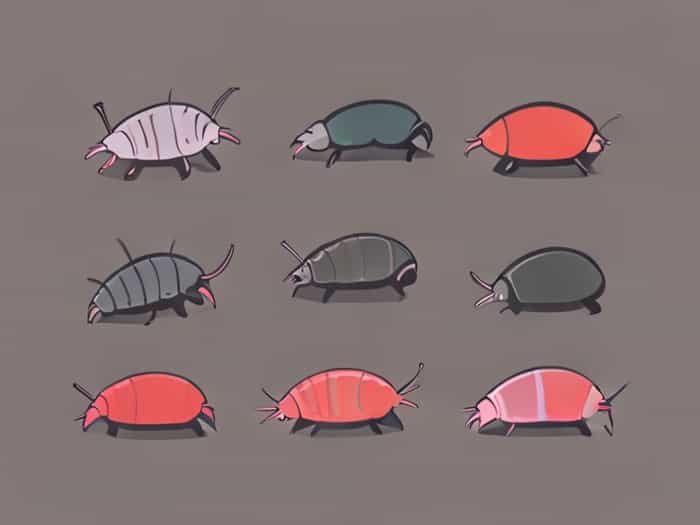
When people talk about roly polys, they are usually referring to small crustaceans that live on land and have the ability to curl into a tight ball when threatened. These creatures, often called pill bugs, woodlice, or Armadillidiidae, are fascinating because they bridge the gap between marine crustaceans and land-dwelling organisms. They are not insects but rather terrestrial isopods, which makes them unique among backyard critters. Exploring the different types of roly polys gives us insight into their adaptations, habitats, and behaviors, as well as how they contribute to ecosystems.
Understanding Roly Polys
Roly polys belong to the order Isopoda, which contains thousands of species. While most isopods live in the ocean, roly polys are among the few that adapted to terrestrial environments. Unlike insects, they breathe through gill-like structures, meaning they need moisture to survive. They are often found under rocks, logs, and leaf litter where the environment is damp. Their defining behavior is conglobation, the ability to roll into a ball to protect themselves from predators and drying out.
Main Types of Roly Polys
Not all roly polys are the same. Several species exist with unique characteristics that distinguish them. Below are some of the main types of roly polys commonly observed
Armadillidium vulgare
This is the classic roly poly most people recognize. Native to Europe but now widespread around the world, Armadillidium vulgare is known for its ability to roll into a perfect ball when disturbed. Its exoskeleton is smooth and dark gray, sometimes with a bluish tint. It prefers moderately moist environments but can tolerate drier conditions compared to other isopods.
Armadillidium nasatum
Another member of the Armadillidium genus, Armadillidium nasatum has a slightly more elongated body than A. vulgare. It does not roll into as tight of a ball, but it still uses conglobation for defense. This species is often found in gardens and farmland, helping decompose organic material.
Armadillidium klugii
Sometimes referred to as the clown roly poly because of its striking spotted pattern, Armadillidium klugii stands out visually compared to the more common gray species. It is native to the Balkans but is popular among hobbyists who keep isopods as pets or for terrariums. The colorful markings serve as a form of mimicry, resembling the warning colors of toxic insects.
Porcellio scaber
Although technically a woodlouse and not a true roly poly, Porcellio scaber is often grouped with them. This species does not roll into a ball but instead relies on its rough, textured body for camouflage. It is one of the most widespread terrestrial isopods and plays an important role in breaking down decaying organic matter.
Cylisticus convexus
This species is unique because of its ability to roll partially into a ball, though not as tightly as Armadillidium species. Cylisticus convexus has a more flattened body, which allows it to hide in narrow spaces. It is commonly found in North America and thrives in moist, dark environments.
Less Common Types of Roly Polys
In addition to the common species, there are lesser-known types of roly polys with distinctive features
- Armadillidium granulatumKnown for its granular, bumpy exoskeleton, which helps it blend with rocky surroundings.
- Armadillidium maculatumAlso called the zebra isopod due to its black-and-white striped pattern, often sought after by isopod enthusiasts.
- Porcellionides pruinosusThis species has a dusty, powder-like coating that gives it a frosted appearance, hence its nickname powdery blue isopod.
- Armadillidium gestroiRecognized for its ability to survive in drier conditions, making it more resilient than other isopods.
Habitats of Different Roly Poly Types
Roly polys are incredibly adaptable, but different species prefer specific habitats
- Gardens and farmlandSpecies like A. nasatum and Porcellio scaber thrive where decaying plant matter is abundant.
- ForestsArmadillidium vulgare and A. klugii are often found under logs and in leaf litter.
- Urban areasMany types, including Cylisticus convexus, adapt to cracks in sidewalks, walls, and damp basements.
- Terrariums and collectionsExotic species such as A. maculatum and A. klugii are popular in the pet trade due to their colors and patterns.
Role of Roly Polys in the Ecosystem
Regardless of species, all types of roly polys play an essential ecological role. They are decomposers, feeding on decaying leaves, wood, and organic debris. This activity recycles nutrients back into the soil, enriching it and supporting plant growth. Some species also help control mold and fungi growth by feeding on them. In turn, roly polys serve as prey for birds, frogs, spiders, and small mammals.
Roly Polys as Pets
In recent years, roly polys have gained popularity as pets and as part of bioactive terrarium setups. Different types are chosen based on their colors, patterns, and adaptability. For example, A. maculatum and A. klugii are favored for their striking appearances, while Porcellionides pruinosus is chosen for its ability to reproduce quickly and thrive in controlled environments. Keeping roly polys requires providing a moist substrate, decaying leaves, and proper ventilation.
Comparing Roly Poly Types
Each type of roly poly has its unique traits that set it apart. For example
- DefenseArmadillidium species roll into balls, while Porcellio scaber relies on camouflage.
- ColorationA. vulgare is usually gray, A. maculatum has stripes, and A. klugii features spots.
- AdaptabilitySome species prefer moisture-rich forests, while others thrive in drier or urban environments.
Why Learning About Roly Polys Matters
Studying the different types of roly polys is not just about identifying small creatures in the garden. It helps us appreciate biodiversity and the interconnectedness of ecosystems. These isopods, though tiny, play an essential role in recycling organic material, supporting soil health, and maintaining balance in nature. They also offer insights into how marine creatures adapted to land, which is valuable from an evolutionary perspective.
The world of roly polys is far more diverse than many people realize. From the common Armadillidium vulgare to the colorful A. maculatum and the resilient Porcellio scaber, each type has its own adaptations and ecological role. Whether admired in the wild, studied in science, or kept in terrariums, these small crustaceans remind us that even the tiniest creatures have important roles to play. By understanding the types of roly polys, we gain a deeper appreciation for the complexity of life that thrives right beneath our feet.