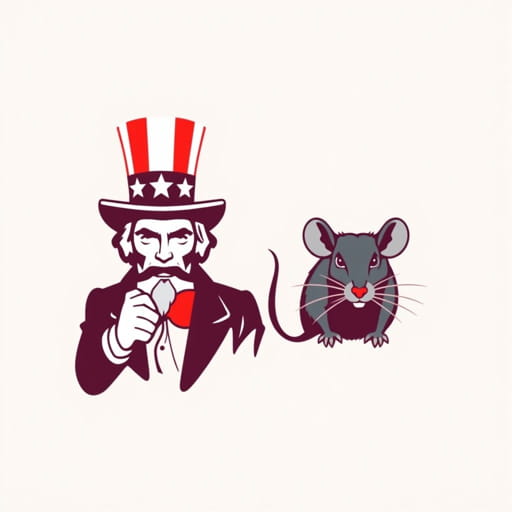
In the political imagery of the early 20th century, few representations are as charged and controversial as the depiction of Uncle Sam confronting the so-called Bolshevik rat. This symbol, blending American patriotism with deep fears of foreign ideologies, captures a unique moment in history where propaganda, revolution, and fear collided. The image was more than art it was a reflection of American anxieties about communism and the rise of Bolshevik influence after the Russian Revolution. Understanding this representation involves examining the historical context of the Red Scare, American identity through Uncle Sam, and the symbolic use of animals in political cartoons.
Historical Background: The Rise of Bolshevism
In 1917, the Bolsheviks, under the leadership of Vladimir Lenin, overthrew Russia’s Provisional Government and began establishing a communist state. This event sent shockwaves through the Western world, especially the United States, which was already involved in World War I. The emergence of Bolshevism represented not only a new form of government but a radical challenge to capitalist democracies. The fear that such revolutionary sentiments could spread to American soil became the foundation for the Red Scare.
The Red Scare in the United States
The first Red Scare (19191920) was marked by intense concern over communist infiltration, labor strikes, and anarchist movements within the United States. Americans, already burdened by economic uncertainty and returning soldiers from war, found in Bolshevism a convenient scapegoat for social unrest. The U.S. government, under Attorney General A. Mitchell Palmer, conducted the infamous Palmer Raids, targeting suspected radicals and immigrants believed to harbor leftist ideologies.
Uncle Sam: Symbol of American Patriotism
Uncle Sam, the personification of the U.S. government and national ideals, had long been used in political posters and cartoons. With his star-spangled outfit and stern expression, he embodied American resolve, justice, and nationalism. During the era of the Bolshevik threat, artists and cartoonists began to position Uncle Sam as a protector of democracy, ready to defend the nation against radical ideologies. His image became central in mobilizing public opinion and justifying anti-communist actions.
Use of Imagery in Political Cartoons
Cartoons have always served as a way to quickly convey complex political messages. Artists often used animals or caricatures to dehumanize opponents and incite emotional reactions. In this case, portraying Bolsheviks as rats was a deliberate tactic. Rats symbolize disease, destruction, and cowardice. By depicting Bolshevik figures as vermin, the cartoonists conveyed a strong message: communism was an invasive, dangerous force that needed extermination.
The Symbolism of the ‘Bolshevik Rat’
One particularly famous cartoon from the 1919 period shows Uncle Sam standing over a massive, grotesque rat labeled ‘Bolshevism.’ In his hand, Uncle Sam holds a club or weapon, ready to strike. The rat, depicted with wild eyes and ragged fur, often clutches a red flag or holds a bomb, reinforcing the association with violence and subversion. These visual cues worked powerfully to stir anti-Bolshevik sentiment in the American populace.
Connection to Immigration and Labor Movements
The fear of the Bolshevik rat was not just about foreign powers it was also about domestic change. During the early 20th century, the U.S. saw a surge in labor strikes and the rise of leftist organizations like the Industrial Workers of the World (IWW). Many of these movements included recent immigrants, especially from Eastern Europe. To many Americans, Bolshevism wasn’t thousands of miles away it was already at their doorstep. The image of the rat, sneaking into cities and factories, played into the fears that immigrants were bringing dangerous ideologies with them.
Media Influence and Propaganda
Newspapers, pamphlets, and posters all played a role in spreading the image of the Bolshevik rat. Whether in editorial cartoons or government-backed propaganda, the narrative remained consistent: Bolshevism was un-American, violent, and a threat to the nation. Uncle Sam, standing firm, became the counter-image one of law, order, and liberty. This dual symbolism reinforced public support for crackdowns on radical groups and justified harsh immigration policies.
Public Response and Cultural Impact
The effectiveness of the Uncle Sam and Bolshevik rat imagery is evident in how deeply it permeated American culture. People began to view strikes and protests through a lens of suspicion. Even peaceful demonstrations were at times interpreted as communist plots. The fear of Bolshevism changed American political discourse, driving a wedge between workers and the state, and pushing policies that favored surveillance, deportations, and restrictions on civil liberties.
Legacy of the Imagery
Though the immediate Red Scare subsided by the mid-1920s, the imagery of Uncle Sam battling the Bolshevik rat left a lasting impression. It laid the groundwork for future anti-communist campaigns, particularly during the McCarthy era in the 1950s. The same themes of suspicion, fear, and patriotic vigilance re-emerged, proving the enduring power of propaganda. The cartoonish battle between good and evil, order and chaos, was easy to understand and emotionally potent.
Criticisms and Reinterpretations
Modern historians and critics have examined this imagery with a more critical eye. Many argue that the portrayal of Bolsheviks as rats dehumanized real political opponents and justified violations of civil rights. Moreover, it has been pointed out that the campaigns often targeted the most vulnerable immigrants, laborers, and dissenters under the guise of national protection. In retrospect, the use of Uncle Sam as a symbol of moral authority is more complex, especially when tied to such divisive rhetoric.
Understanding the Message
The story of Uncle Sam and the Bolshevik rat is more than a moment in political cartooning it is a revealing snapshot of America’s struggles with identity, fear, and change. By analyzing how images were used to shape public perception, we gain insight into the power of visual propaganda and the dynamics of political storytelling. While the literal rat may be gone, the metaphor lives on, reminding us how easily fear can be turned into policy and imagery into ideology.