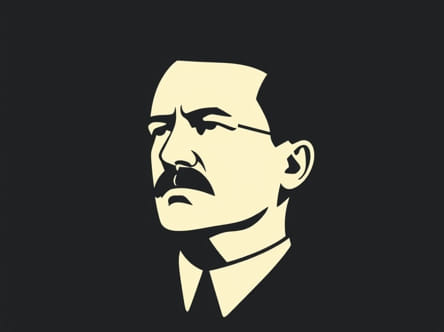
Adolf Hitler and the Nazi Party used the term socialist in their official name National Socialist German Workers’ Party (NSDAP) but this has led to significant confusion and debate about whether Hitler was truly a socialist. To understand the nature of Hitler’s ideology and the policies he pursued, one must go beyond party labels and examine the core principles, economic policies, and political strategies employed by the Nazi regime. Though the word socialist appears in the party name, the actual beliefs and practices of Hitler’s government reveal a very different reality, deeply rooted in nationalism, authoritarianism, racial hierarchy, and opposition to Marxist-style socialism.
The Origins of the Party Name
The term National Socialist was a deliberate political strategy designed to attract a wide range of supporters during the unstable years following World War I. By combining nationalist with socialist, the party hoped to unite working-class Germans with conservative and patriotic elements of society under one broad banner. However, this synthesis was more about propaganda than ideological clarity.
Distinction from Marxist Socialism
Socialism, as traditionally defined, emphasizes collective ownership of the means of production, redistribution of wealth, and the dismantling of class structures. Hitler and the Nazis rejected these principles. They viewed Marxism as a dangerous, foreign ideology, often conflated with Jewish influence in Nazi rhetoric. The Nazis saw the class struggle as divisive and preferred a racial and national unity that excluded perceived outsiders.
Hitler’s Views on Socialism
Adolf Hitler was outspoken in his rejection of both Marxism and democratic socialism. In his bookMein Kampf, he criticized Marxist ideology as destructive to national unity. He believed that socialism should serve the nation, not the working class or international revolution. In this context, his use of the word socialism referred more to a communal sense of national duty and sacrifice than to economic equality or worker control.
Authoritarian Nationalism
At the core of Hitler’s ideology was authoritarian nationalism. The German state under the Nazis was organized around loyalty to the Führer, racial purity, and military strength. These principles stand in stark contrast to socialist ideals, which promote egalitarian governance, worker representation, and inclusive economic systems. Hitler’s government did not seek to empower the working class, but rather to subordinate all social classes to the goals of the regime.
Economic Policy Under the Nazi Regime
The Nazi economy did not follow socialist models of collective ownership or centralized planning for equality. Instead, it maintained private property and corporate enterprise, as long as businesses supported the goals of the state. Hitler’s primary economic goal was rearmament and preparation for war, not the creation of a classless society.
Relationship with Industry
- The Nazis worked closely with large corporations like Krupp, IG Farben, and Volkswagen.
- Business leaders were not expropriated; rather, they were integrated into the war economy.
- Trade unions were banned and replaced with state-controlled labor organizations.
These policies reinforced traditional power structures and increased the influence of industrialists. Economic decisions were centralized, not to serve the workers, but to ensure obedience and productivity toward Nazi objectives.
Anti-Union Measures
One of the first actions the Nazis took after coming to power was to destroy independent labor unions. On May 2, 1933, union offices were raided, leaders arrested, and union funds seized. The German Labor Front (Deutsche Arbeitsfront) was established to replace unions, but it served the regime, not the workers. This move was antithetical to socialist values, which prioritize worker autonomy and collective bargaining rights.
Social Programs and Propaganda
While the Nazis introduced some social programs such as affordable cars, holidays through the Strength Through Joy program, and housing initiatives these were not motivated by socialist principles. They were tools of propaganda and social control, designed to foster loyalty to the state and distract from the regime’s more repressive activities.
State Control vs. Socialist Intent
Though the Nazi regime exerted extensive control over many aspects of life, such control was not exercised to achieve equality or redistribute wealth. The state’s power was used to enforce conformity, promote racial ideology, and eliminate political opposition. State control alone does not define socialism; it is the purpose of that control that matters. In Nazi Germany, the purpose was racial purification and national expansion, not social justice.
Persecution of Socialists and Communists
Another clear indication that Hitler was not a socialist is the violent persecution of actual socialist and communist groups in Germany. From the moment the Nazis came to power, they targeted the German Social Democratic Party (SPD) and the Communist Party (KPD), imprisoning, torturing, and executing their members. The Reichstag Fire of 1933 was used as a pretext to arrest thousands of left-wing activists and dismantle democratic institutions.
Dachau and Political Prisoners
Dachau, the first Nazi concentration camp, was established not for Jews but for political opponents, particularly communists and socialists. These prisoners were subjected to brutal conditions, reflecting the regime’s zero tolerance for leftist ideologies. The Nazi state viewed socialism as a mortal threat and acted decisively to eliminate it.
Misunderstandings About the Word Socialist
The confusion around Hitler being a socialist often arises from the party’s name. However, political labels can be deceptive, especially when used as tools of manipulation. The Nazi use of socialist was a strategic choice intended to draw in working-class voters disillusioned by traditional parties. It did not reflect genuine socialist philosophy or practice.
Political Branding
- National Socialist combined appealing language for both workers and nationalists.
- The term helped the Nazis compete with leftist parties for votes during the Weimar Republic.
- Once in power, the regime abandoned any pretense of socialist policy.
Thus, understanding the context and intent behind the terminology is essential to avoiding misconceptions about Hitler’s beliefs and actions.
Academic Consensus
Most historians and political scientists agree that Hitler was not a socialist. He opposed class equality, collectivism, and workers’ control. His ideology was rooted in hierarchy, ethnic nationalism, and authoritarian rule. Although he used certain rhetoric that echoed socialist concerns, his policies consistently favored conservative elites, suppressed labor rights, and promoted militaristic expansion.
Fascism vs. Socialism
Fascism, the ideological umbrella under which Nazism falls, is fundamentally opposed to socialism. It emphasizes national rebirth, strong centralized leadership, and the suppression of dissent. Fascist regimes tend to align with corporate interests, use aggressive propaganda, and dismantle democratic institutions. None of these align with core socialist principles such as worker empowerment, egalitarian governance, or wealth redistribution.
Adolf Hitler was not a socialist in any meaningful sense of the term. Despite the name of his party, his beliefs, policies, and governance directly opposed the foundations of socialist ideology. He dismantled labor unions, persecuted socialists, upheld private industry, and governed through authoritarian nationalism. The Nazi regime used the term socialist as a political tool, not as a guiding philosophy. To equate Hitler with socialism is to misunderstand both the nature of his dictatorship and the principles of socialism itself. Accurate historical understanding requires looking beyond names and examining actual policy, behavior, and intent.
#kebawah#