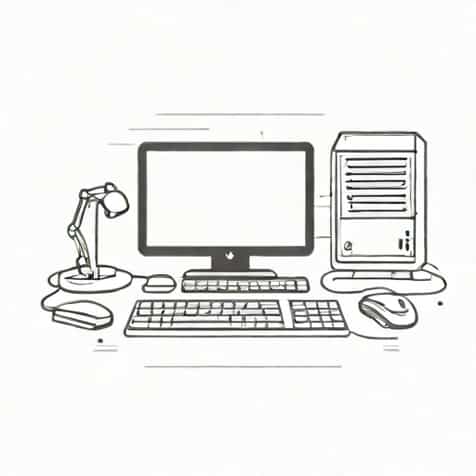
Computers have become an essential part of modern life, powering everything from personal tasks to complex industrial processes. Understanding the components of a computer is crucial for anyone interested in technology, whether for educational purposes, professional work, or personal use. Each component plays a specific role in ensuring the computer functions efficiently, enabling it to process data, store information, and interact with users. By examining the components of a computer, one can gain a deeper appreciation for how hardware and software work together to create a powerful and versatile machine.
Main Components of a Computer
A computer consists of several key components that work together to perform tasks. These components can be broadly categorized into hardware and software, with hardware being the physical parts of the computer and software being the programs that tell the hardware how to operate. The main hardware components include the central processing unit (CPU), memory, storage devices, input and output devices, and the motherboard, among others.
Central Processing Unit (CPU)
The CPU, often referred to as the brain of the computer, is responsible for executing instructions and processing data. It performs arithmetic, logic, control, and input/output operations specified by the software. The CPU consists of two primary parts the arithmetic logic unit (ALU), which handles mathematical and logical operations, and the control unit (CU), which directs the flow of data within the computer.
Memory
Memory is a crucial component that stores data temporarily or permanently. There are different types of memory in a computer
- Random Access Memory (RAM)This is temporary memory used to store data and programs that the CPU is currently working on. RAM is volatile, meaning it loses its contents when the computer is turned off.
- Read-Only Memory (ROM)This memory stores permanent instructions, such as the computer’s firmware or BIOS, and retains its data even when the computer is powered down.
- Cache MemoryA small, high-speed memory located within the CPU that stores frequently accessed data to improve processing speed.
Storage Devices
Storage devices are used to save data and programs for long-term use. Unlike RAM, storage devices retain information even when the computer is turned off. Common storage components include
- Hard Disk Drives (HDD)These use spinning disks to store data magnetically and provide large storage capacity at an affordable cost.
- Solid State Drives (SSD)Faster than HDDs, SSDs use flash memory to store data and improve overall system performance.
- Optical DrivesDevices such as CD, DVD, or Blu-ray drives that use lasers to read and write data.
- External StorageUSB drives, external hard drives, and memory cards offer portable storage options for backing up or transferring data.
Motherboard
The motherboard is the main circuit board that connects all the components of a computer. It provides communication pathways between the CPU, memory, storage, and peripheral devices. Modern motherboards include slots for expansion cards, USB ports, audio connections, and network interfaces. The motherboard is essential for coordinating the operation of the computer and ensuring that all components function together seamlessly.
Input Devices
Input devices allow users to interact with the computer and provide data or commands. Common input devices include
- KeyboardUsed for typing text and executing commands.
- MouseA pointing device that controls the movement of the cursor on the screen.
- ScannerConverts physical documents or images into digital format.
- MicrophoneCaptures audio input for communication or recording purposes.
- TouchscreenAllows direct interaction with the display through touch gestures.
Output Devices
Output devices present processed data to the user. They convert digital information into human-readable form. Common output components include
- MonitorDisplays visual output from the computer, such as text, images, and videos.
- PrinterProduces physical copies of documents or images.
- SpeakersOutput audio for music, alerts, or communication.
- ProjectorsDisplay visual content on large surfaces for presentations or entertainment.
Power Supply Unit (PSU)
The power supply unit converts electrical energy from an outlet into usable power for the computer components. It ensures that the CPU, motherboard, storage devices, and peripheral components receive stable voltage and current. A reliable PSU is essential for maintaining the longevity and performance of the computer.
Expansion Cards and Peripheral Devices
Expansion cards enhance the capabilities of a computer by adding specialized functions. Common examples include
- Graphics Card (GPU)Handles rendering of images and videos, improving visual performance for gaming, design, or multimedia tasks.
- Sound CardEnhances audio output quality and supports advanced audio features.
- Network Interface Card (NIC)Provides wired or wireless connectivity to local networks and the internet.
- USB DevicesExternal components such as webcams, external drives, and keyboards that can be connected for additional functionality.
Software Components
While hardware forms the physical structure of a computer, software controls and manages the hardware to perform useful tasks. Software components include
System Software
System software manages the hardware and provides a platform for running application programs. The operating system (OS) is the most important system software. Examples include Windows, macOS, Linux, and Android. The OS handles file management, memory allocation, device communication, and user interface operations.
Application Software
Application software allows users to perform specific tasks. These programs include word processors, web browsers, multimedia players, and games. Application software interacts with system software to access hardware resources and provide a seamless user experience.
Utility Software
Utility software assists in managing, maintaining, and optimizing computer performance. Common utilities include antivirus programs, disk cleanup tools, backup software, and system monitoring applications. These tools help ensure that the computer operates efficiently and securely.
The components of a computer work together to create a highly functional and versatile machine capable of performing a wide range of tasks. From the central processing unit and memory to input/output devices, storage, motherboard, and software, each component has a specific role that contributes to overall performance. Understanding these components is essential for anyone interested in technology, computer maintenance, or programming. By familiarizing oneself with the hardware and software elements of a computer, users can make informed decisions about upgrades, troubleshooting, and efficient use of technology for personal, educational, or professional purposes. Knowledge of computer components also provides a foundation for exploring more advanced topics such as networking, cybersecurity, and artificial intelligence.