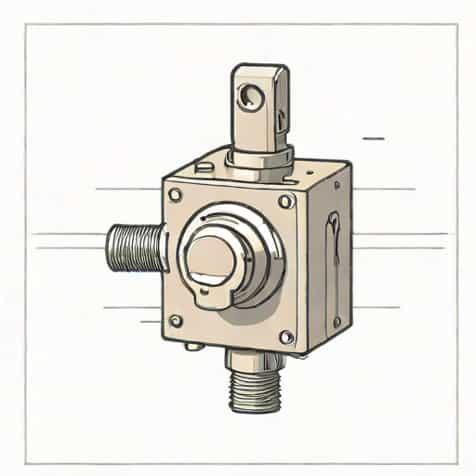
A limit switch is an essential component in many electrical and mechanical systems, providing reliable control and safety functions in industrial and commercial applications. These switches are designed to detect the presence, absence, or position of an object and then actuate a response in a machine or circuit. They are widely used in automation, manufacturing, robotics, and even home appliances, where precise control of movement and safety is crucial. Limit switches help prevent damage to machinery, reduce the risk of accidents, and ensure processes operate smoothly by sending signals that control motors, alarms, or other devices.
Understanding Limit Switches
Limit switches are electromechanical devices that operate when a physical object comes into contact with an actuator or sensing element. Unlike standard switches that require manual operation, limit switches respond automatically when an object reaches a predefined position. This makes them highly valuable for automation systems, where timing and accuracy are critical. The switch’s actuation can open or close electrical contacts to start, stop, or change the direction of a device, depending on the system’s design.
Components of a Limit Switch
A typical limit switch consists of several key components that work together to detect motion and trigger an electrical response
- ActuatorThe part that physically interacts with the moving object, such as a lever, roller, plunger, or cam.
- Switching MechanismThe internal electrical contacts that open or close the circuit when the actuator moves.
- HousingThe protective casing that shields the internal components from dust, moisture, and mechanical damage.
- TerminalsThe points where the limit switch connects to the external electrical circuit.
These components are designed to operate reliably under repeated use and in a variety of environmental conditions, making limit switches durable and suitable for industrial applications.
How Limit Switches Work
The operation of a limit switch is straightforward yet highly effective. When a machine part, door, or other object moves and comes into contact with the actuator, the mechanical movement causes the internal contacts to change state. Depending on the wiring and design, the switch may either complete a circuit to allow current to flow or break a circuit to stop current. This signal can then be used to control motors, trigger alarms, or initiate other responses in the system.
Types of Limit Switches
Limit switches come in several types, each suited for specific applications
- Plunger TypeActivated when a rod or button is pressed directly by a moving object.
- Lever TypeUses a lever arm to sense the movement of objects; commonly found in conveyor systems.
- Roller TypeEquipped with a roller at the end of the actuator to reduce friction and wear during frequent contact.
- Rotary TypeDetects rotational motion and triggers at a specific angle or rotation point.
Each type is selected based on the required sensitivity, durability, and environmental conditions, ensuring accurate and reliable operation in different settings.
Applications of Limit Switches
Limit switches are used in countless industries and devices where controlling motion and ensuring safety are crucial. Some common applications include
- Industrial AutomationUsed in assembly lines, robotic arms, and conveyor systems to detect the position of parts and control machinery movements.
- Elevators and LiftsEnsures doors close completely and prevents the elevator from moving beyond its intended range.
- Garage Doors and GatesDetects the fully open or closed position to stop the motor and prevent damage.
- Machine ToolsProtects equipment by stopping motion when a moving part reaches a critical position.
- Safety InterlocksEnsures machines cannot operate unless guards or doors are correctly positioned, protecting operators from accidents.
Advantages of Using Limit Switches
Limit switches offer several advantages that make them an integral part of modern control systems
- Reliable and durable, capable of operating under harsh conditions.
- Provides precise position detection for accurate machine operation.
- Reduces the risk of mechanical damage or accidents by preventing overtravel.
- Simple to install and integrate into existing control systems.
- Cost-effective solution for monitoring motion and providing safety interlocks.
Limit Switch vs. Proximity Sensor
While both limit switches and proximity sensors detect the position of objects, they operate differently. Limit switches require physical contact with the object, making them mechanically reliable and simple to implement. In contrast, proximity sensors can detect objects without contact, using technologies like infrared, ultrasonic, or magnetic fields. Each has advantages depending on the application limit switches are ideal for rugged environments and direct mechanical detection, while proximity sensors are suited for situations where non-contact sensing is needed.
Maintenance and Safety Considerations
Although limit switches are generally robust, regular maintenance is essential to ensure long-term reliability. Components such as actuators and contacts may wear out over time, especially in high-cycle applications. Inspecting the switch for mechanical wear, cleaning the housing to prevent dust or debris buildup, and checking electrical connections are important maintenance steps. Proper installation and adherence to manufacturer guidelines also enhance safety and performance.
Limit switches play a critical role in modern electrical and mechanical systems, providing reliable position detection, safety, and automation control. Their simple design, durability, and versatility make them an indispensable part of industrial machinery, elevators, doors, and countless other applications. By understanding their operation, types, and applications, engineers and technicians can design safer, more efficient systems that optimize performance while minimizing risks. As technology continues to advance, limit switches remain a fundamental solution for accurate and dependable mechanical and electrical control.