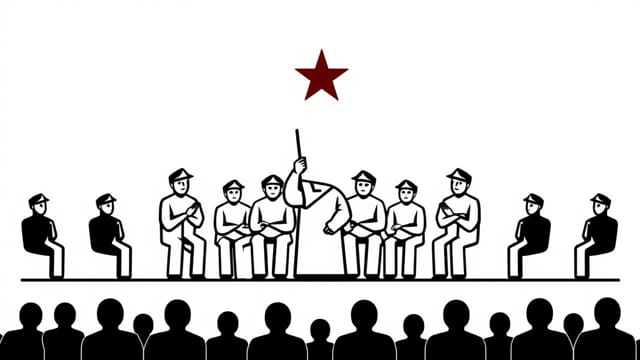
During the Cultural Revolution in China, one of the most controversial and psychologically impactful practices was known as the struggle session. Rooted in Maoist ideology, this method of political persecution was designed to enforce ideological conformity, humiliate opponents, and maintain the Communist Party’s grip on power. Understanding what a Maoist struggle session was requires looking into the mechanics of the Chinese Communist Party’s political climate, the psychological goals of these events, and the long-term social consequences they left behind.
Definition and Origins of the Struggle Session
What Was a Struggle Session?
A struggle session, or douzheng hui in Mandarin, was a form of public humiliation and psychological abuse used by the Chinese Communist Party (CCP) during Mao Zedong’s rule, particularly throughout the 1950s to 1970s. The sessions were intended to make individuals confess to perceived political, social, or ideological crimes. Typically, the accused was brought before a large group of peers or community members, where they were forced to admit their supposed wrongdoings and endure verbal or even physical abuse.
Origins in Communist Ideology
The practice drew inspiration from Soviet methods of interrogation and reeducation but was adapted into something uniquely Maoist. Mao Zedong viewed the struggle session as a tool to eliminate dissent within the party and among intellectuals, landowners, or anyone seen as counter-revolutionary. It was also rooted in the idea of thought reform, a concept that viewed ideology as something that could be corrected through peer pressure and communal punishment.
How a Struggle Session Was Carried Out
Typical Setup
Most struggle sessions followed a standard format:
- The accused was summoned or dragged to a public space like a school, factory, or meeting hall.
- They were made to stand on a raised platform or wear signs detailing their crimes.
- Witnesses or victims often encouraged or coerced stood up and made accusations.
- The accused was pressured to confess and sometimes physically beaten if they refused.
- Sessions could last for hours or even days, repeated until the victim submitted to the political will of the group.
Psychological Intensity
These events were often theatrical and designed for maximum emotional impact. Yelling slogans, forced kneeling, and degrading poses were typical. Victims were sometimes subjected to mock trials without evidence. Many people broke down under the pressure, admitting to false crimes just to end the torment. The public nature of the sessions amplified their power, as they used group dynamics to isolate the accused and generate fear among observers.
Targets of the Struggle Sessions
Landowners and Class Enemies
During the early years of the People’s Republic, particularly during land reform campaigns in the early 1950s, wealthy landowners were frequent targets. They were portrayed as exploiters of the working class, and many were subjected to violent sessions. In some cases, struggle sessions ended in execution.
Intellectuals and Educators
One of the defining aspects of the Cultural Revolution was its hostility toward intellectualism. Teachers, scientists, and writers were labeled as elitists or bourgeois counter-revolutionaries. Many were publicly humiliated, lost their jobs, or committed suicide due to the trauma caused by repeated struggle sessions.
Party Members Themselves
Struggle sessions were not limited to outsiders or dissidents. Even long-standing members of the Communist Party were purged if they were seen as deviating from Maoist thought. The sessions helped eliminate rivals and consolidate Mao’s personal authority.
Purpose and Political Strategy
Conformity Through Fear
The primary purpose of struggle sessions was to enforce loyalty and ideological purity. By making examples of a few, the party ensured that the larger population stayed in line. Fear was an effective tool, and the idea that anyone could be next kept criticism to a minimum.
Mobilization of the Masses
Struggle sessions also served to mobilize ordinary citizens in the political process. Rather than limiting persecution to elite institutions, the sessions encouraged mass participation in class struggle. This democratization of persecution served the dual function of creating a revolutionary culture while also fracturing social bonds that might resist state power.
Distraction from Economic Failures
During times of hardship such as after the disastrous Great Leap Forward struggle sessions redirected public anger away from the Communist Party and toward alleged traitors and enemies. They created scapegoats, allowing the regime to maintain control even amid crisis.
Consequences of the Maoist Struggle Sessions
Long-Term Trauma
Thousands of people died during struggle sessions, either directly from violence or from suicide. Those who survived often lived with deep psychological scars. Families were torn apart, reputations destroyed, and entire communities lived under the shadow of constant political suspicion.
Cultural Damage
The sessions eroded traditional values, especially Confucian ideals of respect for teachers, elders, and intellectuals. The glorification of the peasant and the demonization of knowledge undermined centuries of Chinese cultural heritage.
International Condemnation
Though largely hidden from Western view during Mao’s rule, reports of struggle sessions eventually emerged and contributed to global criticism of China’s human rights record. These sessions became symbols of ideological extremism and state-sponsored cruelty.
Legacy and Modern Reflection
Post-Mao Reforms
After Mao’s death in 1976, the new leadership under Deng Xiaoping denounced the Cultural Revolution and officially ended the practice of struggle sessions. Many victims were posthumously rehabilitated, and surviving persecutors were often quietly removed from power.
Modern Parallels and Warnings
Though the Maoist struggle session as a formal event has ended, its legacy still influences contemporary China. Critics argue that modern social shaming campaigns, surveillance, and public confessions on state television bear disturbing similarities. Globally, the struggle session also serves as a cautionary tale about what happens when ideology overrides justice and when groupthink silences individual conscience.
Historical Importance
Understanding Maoist struggle sessions is crucial for anyone studying 20th-century political history, authoritarian control, or human rights abuses. These events encapsulate the dark extremes of revolutionary zeal and demonstrate how psychological manipulation can be wielded by the state to maintain absolute authority.
In summary, a Maoist struggle session was far more than a political meeting it was a weapon of fear, humiliation, and control. Born out of radical ideology and shaped by paranoia, the struggle session left an indelible mark on China’s history and serves as a grim reminder of the dangers of unchecked political power.